Quotessence
Home / Quotes / Quote by Fyodor Tyutchev

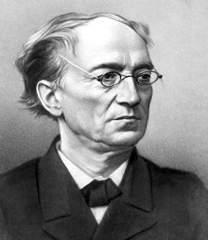
Quote by Fyodor Tyutchev

Author

Fyodor Tyutchev
Fyodor Tyutchev

Fyodor Tyutchev was a prominent Russian poet, born on December 5, 1803, and died on July 27, 1873. His poetry is characterized by profound thought and unique artistic style, which has had a profound impact on Russian literature. more

You May Also Like

“The belief that man is an irresolute creature pulled this way and that by two forces of equal strength, alternately winning and losing the battle for his soul; the conviction that human life is nothing more than an uncertain struggle between heaven and hell; the faith in two opposed entities, Satan and Christ - all this was bound to engender those internal discords in which the soul, excited by the incessant fighting, stimulated as it were by the constant promises and threats, ends up by giving in and prostitutes itself to whichever of the two combatants has been more obstinate in its pursuit.”

“No longer was she merely the dancing-girl who extorts a cry of lust and concupiscence from an old man by the lascivious contortions of her body; who breaks the will, masters the mind of a King by the spectacle of her quivering bosoms, heaving belly and tossing thighs; she was now revealed in a sense as the symbolic incarnation of world-old Vice, the goddess of immortal Hysteria, the Curse of Beauty supreme above all other beauties by the cataleptic spasm that stirs her flesh and steels her muscles, - a monstrous Beast of the Apocalypse, indifferent, irresponsible, insensible, poisoning.”

“At a period when Literature was wont to attribute the grief of living exclusively to the mischances of disappointed love or the jealousy of adulterous deceptions, he had said not a word of these childish maladies, but had sounded those more incurable, more poignant and more profound: wounds that are inflicted by satiety, disillusion and contempt in ruined souls tortured by the present, disgusted with the past, terrified and desperate of the future.”

“Speaking of dust, ‘out of which we came and to which we shall return,’ do you know that after we are dead our corpses are devoured by different kinds of worms according as we are fat or thin? In fat corpses one species of maggot is found, the rhizophagus, while thin corpses are patronized only by the phora. The latter is evidently the aristocrat, the fastidious gourmet which turns up its nose at a heavy meal of copious breasts and juicy at bellies. Just think, there is no perfect equality, even in the manner in which we feed the worms.”

“Woman possesses the cosmic force of an element, an invincible force of destruction, like nature's. She is, in herself alone, all nature! Being the matrix of life, she is by that very fact the matrix of death - since it is from death that life is perpetually reborn, and since to annihilate death would be to kill life at its only fertile source.”

“Children, by nature, are keen, passionate and curious. What was referred to as laziness is often merely an awakening of sensitivity, a psychological inability to submit to certain absurd duties, and a natural result of the distorted, unbalanced education given to them. This laziness, which leads to an insuperable reluctance to learn, is, contrary to appearances, sometimes proof of intellectual superiority and a condemnation of the teacher.”