Quotessence
Home / Quotes / Quote by Augustus De Morgan

Quote by Augustus De Morgan

Work

Memoir of Augustus De Morgan: With Selections from His Letters

This book is a compilation of the memoirs and selected letters of Augustus De Morgan, a notable figure in the fields of mathematics and logic during the 19th century. The memoirs provide a glimpse into his professional achievements and personal experiences, while the letters offer a more intimate view of his thoughts and interactions with peers and contemporaries. The selections are drawn from his extensive correspondence, showcasing his intellectual depth and the evolution of his ideas over time. more

Author
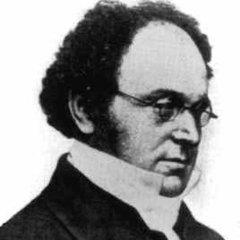
Augustus De Morgan
Augustus De Morgan

Augustus De Morgan was a distinguished British mathematician recognized for his contributions to algebra and logic. Born on June 27, 1806, and passing away on March 18, 1871, De Morgan's work laid the groundwork for modern symbolic logic and he is also renowned for his research in number theory and mathematical analysis. more

You May Also Like

“[About the demand of the Board of Regents of the University of California that professors sign non-Communist loyalty oaths or lose their jobs within 65 days.] No conceivable damage to the university at the hands of hypothetical Communists among us could possibly have equaled the damage resulting from the unrest, ill-will and suspicion engendered by this series of events.”

“Newness only becomes mere evil in its totalitarian format, where all the tension between individual and society, that once gave rise to the category of the new, is dissipated. Today the appeal to newness, of no matter what kind, provided only that it is archaic enough, has become universal, the omnipresent medium of false mimesis. The decomposition of the subject is consummated in his self-abandonment to an ever-changing sameness.”

“So the experience of death is turned into that of the exchange of functionaries, and anything in the natural relationship to death that is not wholly absorbed into the social one is turned over to hygiene. In being seen as no more than the exit of a living creature from the social combine, death has been domesticated: dying merely confirms the absolute irrelevance of the natural organism in face of the social absolute.”

“What has become alien to men is the human component of culture, its closest part, which upholds them against the world. They make common cause with the world against themselves, and the most alienated condition of all, the omnipresence of commodities, their own conversion into appendages of machinery, is for them a mirage of closeness.”