Quotessence
Home / Quotes / Quote by Ronald Syme

Quote by Ronald Syme

“The strength and vitality of an empire is frequently due to the new aristocracy from the periphery.”

Quote by Ronald Syme

Author
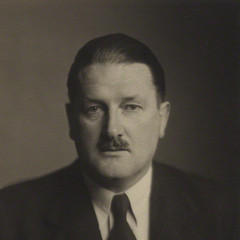
Ronald Syme
Ronald Syme

Ronald Syme was an influential scholar in the 20th century, known for his research on Roman history. more

You May Also Like

“These developments - a massive transfer of land by way of inheritance and purchase, an unprecedented rise in the profitability of land and increasing intermarriage between Celtic and English dynasties - helped to consolidate a new unitary ruling class in place of the more separate and specific landed establishments that had characterised England, Scotland, Wales and Ireland in the Tudor and Stuart eras.”

“As a freshman in college, I was having a lot of trouble adjusting. I took a meditation class to handle anxiety. It really helped. Then as a grad student at Harvard, I was awarded a pre-doctoral traveling fellowship to India, where my focus was on the ancient systems of psychology and meditation practices of Asia.”

“Human beings are many-layered creatures, and do not succumb to the hegemony of others as easily as historians and politicians sometimes imply. Those Welsh, Scottish and Anglo-Irish individuals who became part of the British Establishment in this period did not in the main sell out in the sense of becoming Anglicised look-alikes. Instead, they became British in a new and intensely profitable fashion, while remaining in their own minds and behavior Welsh, or Scottish, or Irish aswell.”

“Today a Scot is leading a British army in France [Field Marshall Douglas Haig], another is commanding the British Grand Fleet at sea [Admiral David Beatty], while a third directs the Imperial General Staff at home [Sir William Roberton]. The Lord Chancellor is a Scot [Viscount Finlay]; so are the Chancellor of the Exchequer and the Foreign Secretary [Bonar Law and Arthur Balfour]. The Prime Minister is a Welshman [David Lloyd George], and the First Lord of the Admiralty is an Irishman [Lord Carson]. Yet no one has ever brought in a bill to give home rule to England!”

“In virtually every Continental state at this time, aristocracies had to live with the risk that their property might be pillaged or confiscated. Only in Great Britain did it prove possible to float the idea that aristocratic property was in some magical and strictly intangible way the people's property also. The fact that hundreds of thousands of men and women today are willing to accept that privately owned country houses and their contents are part of Britain's national heritage is one more proof of how successfully the British elite reconstructed its cultural image in an age of revolution.”

“Recognising that an ostentatious cult of heroism and state service served an important propaganda function for the British elite does not mean, of course, that we should dismiss it as artificial or insincere. All aristocracies have a strong military tradition, and for many British patricians the protracted warfare of the period was a godsend. It gave them a job, and, more important, a purpose, an opportunity to carry out what they had been trained to do since childhood: ride horses, fire guns, exercise their undoubted physical courage and tell other people what to do.”