Quotessence
Home / Quotes / Quote by Gustave Flaubert

Quote by Gustave Flaubert

“DOCTOR. Always preceded by 'The good'. Among men, in familiar conversation, 'Oh! balls, doctor!' Is a wizard when he enjoys your confidence, a jack-ass when you're no longer on terms. All are materialists: 'you can't probe for faith with a scalpel.'”

Quote by Gustave Flaubert

Work

Dictionary of Accepted Ideas

This book serves as a guide to understanding the fundamental terms and principles that are widely recognized and accepted across different disciplines. It includes entries on a broad range of subjects, providing definitions and explanations that are intended to be informative and accessible to a general audience. more

Author
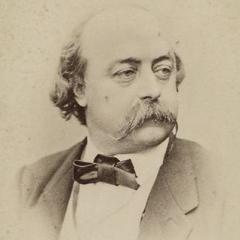
Gustave Flaubert
Gustave Flaubert

Gustave Flaubert, born on December 12, 1821 and died on May 8, 1880, was a prominent French writer of the 19th century. Known for his exquisite literary skills and profound psychological portrayals, Flaubert is best remembered for his masterpiece 'Madame Bovary'. more

You May Also Like

“[About the demand of the Board of Regents of the University of California that professors sign non-Communist loyalty oaths or lose their jobs within 65 days.] No conceivable damage to the university at the hands of hypothetical Communists among us could possibly have equaled the damage resulting from the unrest, ill-will and suspicion engendered by this series of events.”

“Newness only becomes mere evil in its totalitarian format, where all the tension between individual and society, that once gave rise to the category of the new, is dissipated. Today the appeal to newness, of no matter what kind, provided only that it is archaic enough, has become universal, the omnipresent medium of false mimesis. The decomposition of the subject is consummated in his self-abandonment to an ever-changing sameness.”

“So the experience of death is turned into that of the exchange of functionaries, and anything in the natural relationship to death that is not wholly absorbed into the social one is turned over to hygiene. In being seen as no more than the exit of a living creature from the social combine, death has been domesticated: dying merely confirms the absolute irrelevance of the natural organism in face of the social absolute.”

“What has become alien to men is the human component of culture, its closest part, which upholds them against the world. They make common cause with the world against themselves, and the most alienated condition of all, the omnipresence of commodities, their own conversion into appendages of machinery, is for them a mirage of closeness.”