Quotessence
Home / Quotes / Quote by George Orwell

Quote by George Orwell

“El verdadero poder, por el que luchan noche y día, no es el poder sobre las cosas, sino sobre las personas.”

Quote by George Orwell

Book:1984

Work

1984

George Orwell's '1984' is a seminal work of literature that explores themes of government control, individuality, and the erosion of privacy. The story is set in a future where the world is divided into three superstates, each engaged in perpetual war. The protagonist, Winston Smith, works for the Ministry of Truth and is disillusioned with the oppressive regime. The novel delves into the psychological and societal consequences of living under constant surveillance and the struggle for truth and freedom. more
Author

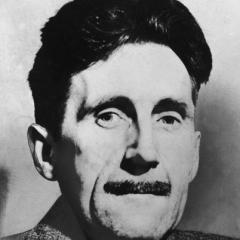
George Orwell
George Orwell

George Orwell, born Eric Arthur Blair, was a British novelist and political critic. Known for his sharp social criticism and profound insights into totalitarianism, Orwell is best remembered for his novels '1984' and 'Animal Farm', which remain influential to this day. more

You May Also Like

“Even cavemen who could barely think, they must have seen it, that sky; and tribal people bossed around by their village chiefs; even shackled slaves who might briefly feel freed simply because the sky was so vast, and for a few moments their eyes could own a rich emptiness that they had a right to see, just like anyone else. Because every one of earth's people who felt small, eventually they must have discovered how they could look upward. And maybe that simple black sky might have whispered to them the very same thing we are feeling now, "Never give up hope.”

“El Ejército es Terrorismo Legal (Soneto de Alto el Fuego) Cualquier planeta que confunda armas con valentía es un planeta de simios. Al priorizar el ejército sobre la educación, solo construimos un mundo de terrorismo. El ejército es sólo terrorismo legal, Para comprender esto hay que ser humano. ¡Qué saben los monos de la paz y el amor, Cuando las armas son emblema del patriotismo! No necesitamos el desarme civil, Necesitamos un desarme universal absoluto. Sólo una prohibición mundial de la producción de armas, Puede facilitar un paradigma de convivencia pacífica. ¡Veamos qué nación tiene el corazón y conciencia, Para legislar prohibición absoluta de las armas! ¡Veamos quiénes son la primera gente civilizada, Veamos qué nación es la primera pacificadora! ¿Para qué sirve un alto el fuego? ¡Acabemos con toda guerra! Disolvamos todos los militares, y desviamos ese dinero a vivienda, educación y atención médica.”

“Continuo a pensare, a pensare, e comincia a sembrarmi che le persone sensibili e intelligenti che vivranno dopo di noi, se poi ce ne saranno, faticheranno a capire come tutto ciò sia potuto accadere, stenteranno a capire la nascita dell’idea stessa dell’omicidio, e a maggior ragione dell’omicidio di massa. Uccidere. In che senso? Perché? Come può annidarsi, questa idea, negli oscuri anfratti delle circonvoluzioni cerebrali di un comune essere umano, nato da una madre, un essere che è stato un bambino che succhiava al seno, che andava a scuola?… Comune come milioni di altri, con mani e piedi sui quali crescono le unghie, mentre sulle guance - se per esempio si tratta di un uomo - cresce la barba, un essere che si affligge, sorride, si guarda allo specchio, ama teneramente una donna, si brucia con un fiammifero, e per quel che lo riguarda non ha nessuna voglia di morire - insomma, comune in tutto, tranne che per una patologica mancanza di immaginazione. Un essere umano normale capisce che non solo lui, ma anche gli altri vogliono vivere. Alla vista, o anche solo al pensiero delle altrui sofferenze, s’immedesima, in ogni caso prova almeno un dolore morale. E alla fine non riuscirà ad alzare la mano per colpire”.”