“The woman who fights against her father still has the possibility of leading an instinctive, feminine existence, because she rejects only what is alien to her. But when she fights against the mother she may, at the risk of injury to her instincts, attain to greater consciousness, because in repudiating the mother she repudiates all that is obscure, instinctive, ambiguous, and unconscious in her own nature.”
Quote by Carl Jung
Work
The Archetypes and the Collective Unconscious
This book delves into the theories of Carl Jung, focusing on the idea that archetypes are universal patterns of thought and imagery that influence human behavior and creativity. It examines the various archetypes, such as the hero, the mother, and the trickster, and their manifestation in dreams, myths, and literature. more
Author
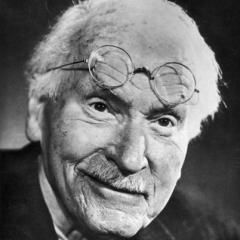
Carl Jung
Carl Jung, born on July 26, 1875, and died on June 6, 1961, was a renowned Swiss psychiatrist and psychologist. His theories have had a profound impact on fields such as psychology, psychiatry, and religious studies. Jung proposed the theory of personality types, the concept of the collective unconscious, and founded analytical psychology. more
You May Also Like
Source: Mysterium coniunctionis, an inquiry into the separation and synthesis of psychic opposites in alchemy
Source: The Collected Works of C.G. Jung: Civilization in transition
Source: The Undiscovered Self
Source: The Undiscovered Self
Source: The Undiscovered Self
“No psychic value can disappear without being replaced by another of equivalent intensity.”
Source: Modern Man in Search of a Soul
Source: Memories, dreams, reflections
Source: Man and His Symbols