Quotessence
Home / Quotes / Quote by Neil Armstrong

Quote by Neil Armstrong

“Yeah, I wasn't chosen to be first. I was just chosen to command that flight. Circumstance put me in that particular role. That wasn't planned by anyone.”

Quote by Neil Armstrong

Author
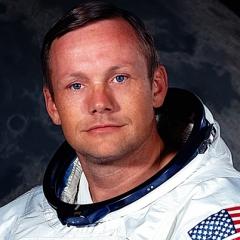
Neil Armstrong
Neil Armstrong

Neil Armstrong, born on August 5, 1930, in Ohio, United States, was an American astronaut and the first human to walk on the Moon. On July 20, 1969, as the commander of Apollo 11, Armstrong made history by becoming the first person to set foot on the lunar surface. His famous quote, 'That's one small step for man, one giant leap for mankind,' has become an iconic statement in human space exploration. more

You May Also Like

“The barbarians, who possessed no books, no secular knowledge, no education, except in the schools of the clergy, and who had scarcely acquired the rudiments of religious instruction, turned with childlike attachment to men whose minds were stored with the knowledge of Scripture, of Cicero, of St. Augustine; and in the scanty world of their ideas, the Church was felt to be something infinitely vaster, stronger, holier than their newly founded States.”

“Neither an enlightened philosophy, nor all the political wisdom of Rome, nor even the faith and virtue of the Christians availed against the incorrigible tradition of antiquity. Something was wanted, beyond all the gifts of reflection and experience - a faculty of self government and self control, developed like its language in the fibre of a nation, and growing with its growth.”

“The idea that the object of constitutions is not to confirm the predominance of any interest, but to prevent it; to preserve with equal care the independence of labour and the security of property; to make the rich safe against envy, and the poor against oppression, marks the highest level attained by the statesmanship of Greece.”

“The State is competent to assign duties and draw the line between good and evil only in its immediate sphere. Beyond the limits of things necessary for its well-being, it can only give indirect help to fight the battle of life by promoting the influences which prevail against temptation--religion, education, and the distribution of wealth.”

“The epoch of doubt and transition during which the Greeks passed from the dim fancies of mythology to the fierce light of science was the age of Pericles, and the endeavour to substitute certain truth for the prescriptions of impaired authorities, which was then beginning to absorb the energies of the Greek intellect, is the grandest movement in the profane annals of mankind, for to it we owe, even after the immeasurable progress accomplished by Christianity, much of our philosophy and far the better part of the political knowledge we possess.”

“The freeway experience ... is the only secular communion Los Angeles has. Mere driving on the freeway is in no way the same as participating in it. Anyone can "drive" on the freeway, and many people with no vocation for it do, hesitating here and resisting there, losing the rhythm of the lane change, thinking about where they came from and where they are going. Actual participation requires total surrender, a concentration so intense as to seem a kind of narcosis, a rapture-of-the-freeway. The mind goes clean. The rhythm takes over.”