Quotessence
Home / Quotes / Quote by Naomi Klein

Quote by Naomi Klein

“Not so long ago, disasters were periods of social levelling, rare moments when atomized communities put divisions aside and pulled together. Increasingly, however disasters are the opposite: they provide windows into a cruel and ruthlessly divided future in which money and race buy survival.”

Quote by Naomi Klein

Work

The Shock Doctrine: The Rise of Disaster Capitalism

Naomi Klein's book delves into the history of economic shock therapy, analyzing how it has been used to advance capitalist policies in the wake of major disasters and conflicts. The book argues that these policies often exacerbate inequality and undermine democracy. more

Author
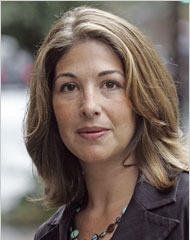
Naomi Klein
Naomi Klein

Naomi Klein is a Canadian author and activist recognized for her work on social justice and environmental issues. Born on May 8, 1970, she has authored several influential books that have gained international acclaim. more

You May Also Like

“The universal experience of living through a great shock is the feeling of being completely powerless: in the face of awesome forces, parents lose their ability to save their children, spouses are separated, homes - places of protection - become death traps. The best way to recover from helplessness turns out to be helping - having the right to be part of a communal recovery.”

“I had a dream about you. In my dream I stole all your money, kidnapped your parents, and mailed you mannequin parts spray-painted red in a series of packages that also included ransom notes. Then, towards the end of the dream, the cops surrounded my cave and swarmed in to arrest me. Sweating, my eyes shot open, and I realized it was a dream. “Of course it’s a dream,” I thought. “The cops have no idea where my cave is, and your first package has yet to be delivered.””

“Colter searched for original Mexican tiles to use as patterns for copies, and during the search, a barrel of old tile letters was found in a cellar corner. She decided to use the letters on the walls of the Cocina Cantina to spell out old Spanish proverbs about eating and drinking. Above the bar was "A vuestra salud" [to your health], and in another room, "Not with whom you were born, but with whom you pasture.”

“The shielings were seasonal. Every fall, the crofters moved their cattle to the richer lowland pastures near the village, and over the winter, the cattle nibbled them to nubbins. In spring, the crofters drove the skinny cows up to the shielings, the sloping mountain pastures, so that the lowland pastures could recover. It wasn't just a place. It was a way of living. All through the warmer months, families lived in simple summer bothies with just bundles of heather as beds, and they ate oatmeal and cheese and butter and milk from the cows they watched, and they sang songs and traded stories under the stars. It was the very best of a simple life, and it was very different from the very best of castle life.”

“Still with her head out the window, she had spied a stone-fenced pasture beyond the gardens. Half a dozen glorious white horses grazed there, the faint dapples of their coats gleaming like silver coins in the sunshine. As she watched, a coal-gray foal galloped in a circle around its elders, tossing its head and flicking its tail. "Such beautiful horses!" she called to the footman. "Yes, miss. My lord's Andalusians." "Indeed! I thought they must be!" Suddenly she couldn't wait to escape the confines of the carriage. For a moment she felt like her usual self, thrumming with energy, avid to run through the gardens to the pasture, to lean across the stone fence to admire those horses.”

“Ποιο είναι το χρέος μας; Να στεκόμαστε μπροστά στην άβυσσο με αξιοπρέπεια. Να μη φωνάζουμε, μήτε να γελούμε για να κρύψουμε το φόβο μας. Μήτε να σφαλίζουμε τα μάτια. Ήσυχα, σιωπηλά, να μάθουμε να κοιτάζουμε το βάραθρο χωρίς ελπίδα και φόβο.”