Quotessence
Home / Quotes / Quote by Agatha Christie

Quote by Agatha Christie

Work

Death on the Nile

This novel is renowned for its intricate plot and vivid setting, blending historical detail with a gripping detective story. more
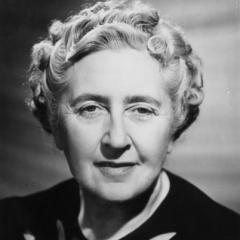
Author

Agatha Christie
Agatha Christie

Agatha Christie, a renowned British detective novel writer, is known as the Queen of Detective Fiction. She was born on September 15, 1890, and passed away on January 12, 1976. Christie's works are characterized by intricate plots, unique reasoning, and vivid characters, and have had a profound impact on detective fiction worldwide. more

You May Also Like

“Abuse grows from attitudes and values, not feelings. The roots are ownership, the trunk is entitlement, and the branches are control.”

“Men as Victims: Challenging Cultural Myths Judith Herman’s recent treatise on “complex PTSD" (Herman, 1992) is an extremely articulate and compelling analysis of some of the failings of the current PTSD diagnosis, and of some of the psychological legacies of prolonged, repeated trauma. However, there was one aspect of the article which concerned me and which I wish to address. Throughout the article, "Complex PTSD: A Syndrome in Survivors of Prolonged and Repeated Trauma," whenever reference is made by pronoun to perpetrators or "captors," the pronoun "he" or "him' is used. There are four such references. Whenever reference is made by pronoun to victims or survivors, the pronoun "her" or "she" is used. There are 11 such references. This is not simply an issue of the use of sexist language, which it is. By uniformly linking perpetration with males and victimhood with females, a misconception is perpetuated, one that is shared by the public and by mental health professionals. While there is evidence that most perpetrators of sexual abuse are male, and that there are more female victims of sexual abuse than male victims, it is not true that all perpetrators are male and all victims are female. In fact, in the article, some of the traumas from which Dr. Herman was deriving her argument—political torture, concentration camp survivors, for example—affect as many males as females. Even in the case of sexual abuse, there is increasing evidence that the sexual abuse of males is far more prevalent than has heretofore been believed. Research on male sexual victimization lags more than a decade behind that of female victimization, but several recent studies have reported prevalence rates near or above 20% (Finkelhor et at, 1990; Urquiza, 1988, cited in Urquiza and Keating, 1990; Lisak and Luster, 1992).”

“Some who question the authenticity of the memories of abuse do so in part because of the intensity and sincerity of the accused persons who deny the abuse . . . the current denials of those accused of sexual abuse are not proof that the allegations are false. Research with known rapists, pedophiles, and incest offenders has illustrated that they often exhibit a cognitive distortion –a tendency to justify, minimize, or rationalize their behavior (Gudjonsson, 1992). Because accused persons are motivated to verbally and even mentally deny an abusive past, simple denials cannot constitute cogent evidence that the victim’s memories are not authentic. Loftus, E. (1993). The reality of repressed memories. American Psychologist, 48, 518-537.”