Quotessence
Home / Quotes / Quote by Nora Ephron

Quote by Nora Ephron

Work

I Feel Bad About My Neck and Other Thoughts on Being a Woman

Browse quotes and source details for this work. more

Author
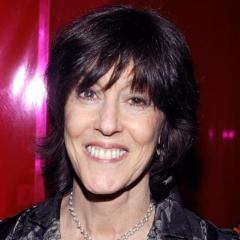
Nora Ephron
Nora Ephron

Nora Ephron was an American journalist, screenwriter, playwright, and author. Born on May 19, 1941, and passing away on June 26, 2012, Ephron made significant contributions to the entertainment industry with her witty and insightful storytelling. She is best known for her romantic comedies, which often explore complex themes of love and relationships. more

You May Also Like

“If loneliness or sadness or happiness could be expressed through food, loneliness would be basil. It’s not good for your stomach, dims your eyes, and turns your mind murky. If you pound basil and place a stone over it, scorpions swarm toward it. Happiness is saffron, from the crocus that blooms in the spring. Even if you add just a pinch to a dish, it adds an intense taste and a lingering scent. You can find it anywhere but you can’t get it at any time of the year. It’s good for your heart, and if you drop a little bit in your wine, you instantly become drunk from its heady perfume. The best saffron crumbles at the touch and instantaneously emits its fragrance. Sadness is a knobby cucumber, whose aroma you can detect from far away. It’s tough and hard to digest and makes you fall ill with a high fever. It’s porous, excellent at absorption, and sponges up spices, guaranteeing a lengthy period of preservation. Pickles are the best food you can make from cucumbers. You boil vinegar and pour it over the cucumbers, then season with salt and pepper. You enclose them in a sterilized glass jar, seal it, and store it in a dark and dry place. WON’S KITCHEN. I take off the sign hanging by the first-floor entryway. He designed it by hand and silk-screened it onto a metal plate. Early in the morning on the day of the opening party for the cooking school, he had me hang the sign myself. I was meaning to give it a really special name, he said, grinning, flashing his white teeth, but I thought Jeong Ji-won was the most special name in the world. He called my name again: Hey, Ji-won. He walked around the house calling my name over and over, mischievously — as if he were an Eskimo who believed that the soul became imprinted in the name when it was called — while I fried an egg, cautiously sprinkling grated Emmentaler, salt, pepper, taking care not to pop the yolk. I spread the white sun-dried tablecloth on the coffee table and set it with the fried egg, unsalted butter, blueberry jam, and a baguette I’d toasted in the oven. It was our favorite breakfast: simple, warm, sweet. As was his habit, he spread a thick layer of butter and jam on his baguette and dunked it into his coffee, and I plunked into my cup the teaspoon laced with jam, waiting for the sticky sweetness to melt into the hot, dark coffee. I still remember the sugary jam infusing the last drop of coffee and the moist crumbs of the baguette lingering at the roof of my mouth. And also his words, informing me that he wanted to design a new house that would contain the cooking school, his office, and our bedroom. Instead of replying, I picked up a firm red radish, sparkling with droplets of water, dabbed a little butter on it, dipped it in salt, and stuck it into my mouth. A crunch resonated from my mouth. Hoping the crunch sounded like, Yes, someday, I continued to eat it. Was that the reason I equated a fresh red radish with sprouting green tops, as small as a miniature apple, with the taste of love? But if I cut into it crosswise like an apple, I wouldn't find the constellation of seeds.”

“Most of what presents itself to us in the marketplace as a product is in truth a web of relationships, between people, yes, but also between ourselves and all the other species on which we still depend. Eating and drinking especially implicate us in the natural world in ways that the industrial economy, with its long and illegible supply chains, would have us forget. The beer in that bottle, I'm reminded as soon as I brew it myself, ultimately comes not from a factory but from nature - from a field of barley snapping in the wind, from a hops vine clambering over a trellis, from a host of invisible microbes feasting on sugars. It took the carefully orchestrated collaboration of three far-flung taxonomic kingdoms - plants, animals, and fungi - to produce that ale. To make it yourself once in a while, to handle the barley and inhale the aroma of hops and yeast, becomes, among other things, a form of observance, a weekend ritual of remembrance.”

“Cookies don't make us fat. They're not to blame for our obesity epidemic. You know what else isn't to blame? Fast food, chips, candy, technology, soda, or anything else. The choices we make over a prolonged period time determine the width of our backsides and size of our pants. No one food, company, or activity is responsible for our obesity epidemic.”

“Comfort foods they may have been, but helpful foods they most definitely were not. By merging my identity with certain foods and thinking of them as old friends, I found myself in the food equivalent of a co-dependent, destructive relationship. I was allowing food to have the power of defining me as a person. And those foods had defined me, all right; they'd defined me as fat, miserable, out of breath, lacking in energy and self-worth, and looking terrible in sweat pants. If I was going to insist on relating to food as a friend, then clearly I needed new friends.”