Quotessence
Home / Quotes / Quote by Arthur Schopenhauer

Quote by Arthur Schopenhauer

Work

On the Suffering of the World

This book delves into the profound and varied aspects of human suffering, examining its origins, manifestations, and implications across different cultures and societies. more

Author
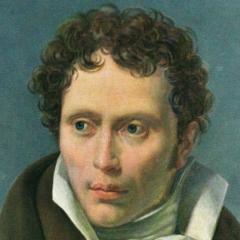
Arthur Schopenhauer
Arthur Schopenhauer

Arthur Schopenhauer was a prominent German philosopher born on February 22, 1788, and died on September 21, 1860. He is one of the most important figures in 19th-century German philosophy and is known for his unique pessimistic philosophical ideas. more

You May Also Like

“When war is waged, it is for the purpose of safeguarding or increasing one's capacity to make war. International politics are wholly involved in this vicious cycle. What is called national prestige consists in behaving always in such a way as to demoralize other nations by giving them the impression that, if it comes to war, one would certainly defeat them. What is called national security is an imaginary state of affairs in which one would retain the capacity to make war while depriving all other countries of it.”

“Let us not forget that violence does not live alone and is not capable of living alone: it is necessarily interwoven with falsehood. Between them lies the most intimate, the deepest of natural bonds. Violence finds its only refuge in falsehood, falsehood its only support in violence. Any man who has once acclaimed violence as his method must inexorably choose falsehood as his principle.”

“Man is appealed to be guided in his acts, not merely by love, which is always personal, or at best tribal, but by his perception of his oneness with each human being. In the practice of mutual aid, which we can re-trace to the earliest beginnings of evolution, we thus find the positive and undoubted origin of our ethical conceptions; and we can affirm that in the ethical progress of man, mutual support- not mutual struggle- has had the leading part.”

“Those who keep the masses of men in subjection by exercising force and cruelty deprive them at once of two vital foods, liberty and obedience; for it is no longer within the power of such masses to accord their inner consent to the authority to which they are subjected. Those who encourage a state of things in which the hope of gain is the principle motive take away from men their obedience, for consent which is its essence is not something which can be sold.”

“Why does everyone take for granted that we don't learn to grow arms, but rather, are designed to grow arms? Similarly, we should conclude that in the case of the development of moral systems; there's a biological endowment which in effect requires us to develop a system of moral judgment and a theory of justice, if you like, that in fact has detailed applicability over an enormous range.”

“Of all the differences between man and the lower animals, the moral sense or conscience is by far the most important. This sense, as Mackintosh remarks, "has a rightful supremacy over every other principle of human action"; it is summed up in that short but imperious word "ought," so full of high significance. It is the most noble of all the attributes of man, leading him without a moment's hesitation to risk his life for that of a fellow-creature; or after due deliberation, impelled simply by the deep feeling of right or duty, to sacrifice it in some great cause.”