“Many [Tudor-era religious radicals] believed then, exactly as Christian fundamentalists do today, that they lived in the 'last days' before Armageddon and, again just as now, saw signs all around in the world that they took as certain proof that the Apocalypse was imminent. Again like fundamentalists today, they looked on the prospect of the violent destruction of mankind without turning a hair. The remarkable similarity between the first Tudor Puritans and the fanatics among today's Christian fundamentalists extends to their selective reading of the Bible, their emphasis on the Book of Revelation, their certainty of their rightness, even to their phraseology. Where the Book of Revelation is concerned, I share the view of Guy, that the early church fathers released something very dangerous on the world when, after much deliberation, they decided to include it in the Christian canon." [From the author's concluding Historical Note]”
Quote by C.J. Sansom
Work
Revelation is a book of the New Testament that is widely regarded as a visionary account of the end of the world and the final judgment. It is believed to be the last book of the Bible and is often interpreted as a revelation from God to His prophet, John. The text is filled with symbolic imagery and apocalyptic themes, detailing events such as the fall of Babylon, the return of Christ, and the eternal destinies of both the righteous and the wicked. more
Author
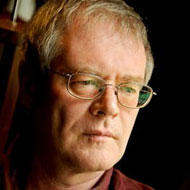
C.J. Sansom is a British writer renowned for his historical novels set in medieval England. Born in 1952, he has made a name for himself with his intricate and captivating narratives that frequently explore the political and social intricacies of the era. Sansom's writing is celebrated for its thorough historical research and compelling storytelling. more