Quotessence
Home / Quotes / Quote by Charles Dickens

Quote by Charles Dickens

“حتى هؤلاء حنوا آخر الامر، بعد ان بسط الموت يده نحوهم، الى نظرة قصيرة الى وجه الطبيعة”

Quote by Charles Dickens

Work

Oliver Twist

Oliver Twist is a classic novel that follows the life of an orphan boy born in a workhouse. After daring to ask for more food, Oliver is punished and eventually runs away to London. There, he is taken in by a group of young pickpockets led by the cunning Fagin. The story explores themes of poverty, social injustice, and the struggle between good and evil as Oliver encounters both cruel and compassionate characters, ultimately seeking a place where he belongs. more
Author

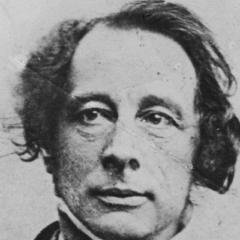
Charles Dickens
Charles Dickens

Charles Dickens, a British writer born on February 7, 1812, and died on June 9, 1870, is one of the greatest novelists of the 19th century. Known for his profound social criticism and vivid narrative style, Dickens' works extensively cover social reality, revealing various issues in the British society of the time. more

You May Also Like

“Jealousy is but a manifestation of artha’s corruptive influence on man which in due course became the insurmountable hurdle for him on the path of moksha. It is in man’s power to curtail it to manage his passage to moksha. One needs only to understand the physics of jealousy to appreciate the chemistry of its affects on human nature.”

“Ain’t No Sinner (The Sonnet) When we think ourselves weak, We become weak. When we think ourselves sinner, We become sinner most meek. Yes we are fundamentally cruel and divisionistic, Yes the evil in us is stronger than our good. That's because our ancestors survived through cruelty, They didn't have much scope to practice their good. But we ain’t our ancestors in our way of life, We don’t have to watch out for predators in every bush. Then why do we still behave like predators ourselves, Why don’t we break this tribalistic tradition of ambush! No more cruelty either on ourselves or on those around! Embolden your backbone into a fountain of kinship unbound.”

“It is clear that spiritual naturalism can be used to defend any ‘positive’, i.e. existing, norm. For it can always be argued that these norms would not be in force if they did not express some traits of human nature. [...] In fact, this form of naturalism is so wide and so vague that it may be used to defend anything. There is nothing that has ever occurred to man which could not be claimed to be ‘natural’; for if it were not in his nature, how could it have occurred to him? Looking back at this brief survey, we may perhaps discern two main tendencies which stand in the way of adopting a critical dualism. The first is a general tendency towards monism, that is to say, towards the reduction of norms to facts. The second lies deeper, and it possibly forms the background of the first. It is based upon our fear of admitting to ourselves that the responsibility for our ethical decisions is entirely ours and cannot be shifted to anybody else; neither to God, nor to nature, nor to society, nor to history. All these ethical theories attempt to find somebody, or perhaps some argument, to take the burden from us. But we cannot shirk this responsibility. Whatever authority we may accept, it is we who accept it. We only deceive ourselves if we do not realize this simple point.”