Quotessence
Home / Quotes / Quote by Anthony Capella

Quote by Anthony Capella

“This was the gastronomic heartland of Italy, where every inch of the fertile soil was cultivated. In Parma he visited shops festooned with hams, each one postmarked with the stamps of a dozen different inspectors---the regions of Italy are fiercely protective of their produce, and only a handful of towns between the Enza and Stirone Rivers are allowed to designate themselves as true producers of prosciutto di Parma. Because the huge lofts in which the hams are aged are always left open to the wind, the villages of the Enza valley seemed scented with the aromatic sweetness of the meat as he drove through them. In the valley to the north of Parma, he sampled culatello di zibello, perhaps the greatest of all Parma's pork products and for that reason almost never exported, even to other parts of Italy: a pig's rump, marinated in salt and spices, then sewn inside a pig's bladder and aged for eighteen months in the humid air of the flat river basin, a process so delicate that almost half the hams are spoiled before they are ready, but which leaves the rest incomparably delicious.”

Quote by Anthony Capella

Work

The Food of Love

Browse quotes and source details for this work. more

Author
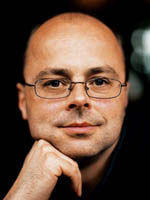
Anthony Capella
Anthony Capella

Anthony Capella, born in 1962, is an individual whose profession and category remain unknown. His life experience and contributions are currently limited in information. more

You May Also Like

“… dreamy Tuscan landscape whose peculiar spell is to make you think that it’s yours forever. That you’re here to stay. That time actually stopped the moment you left the highway and drove down a pine-flanked road that steals your breath each time you spot the house whose sole purpose on earth, it seems, is to compress in the space of seven days the miracle of a lifetime.”

“The sight of the centuries-old stone walls never failed to captivate me, evoking a sense of history and grandeur. Stepping inside, I was greeted by the timeless beauty of the castle's architecture. The walls whispered stories of the past, while the ornate furnishings and artwork adorned each room with elegance. It was a place where time seemed to stand still, allowing me to escape the hustle and bustle of daily life and immerse myself in the tranquil atmosphere. I wandered through the halls, taking in the breathtaking views of the Ligurian coastline that stretched out before me. The waters sparkled under the sun's warm embrace, inviting me to lose myself in its vastness.”

“It makes Celia furious that around ninety percent of the women on Italian TV are fabulous specimens with great legs, superb chests and hair as glossy as a mink's pelt, and that every prime-time programme, whether it be a games show or football analysis, seems to require the presence of an attractive young woman with no discernible function other than to be decorative. She shakes her head in disbelief at the shopping channels, with their delirious women screaming about the wonders of the latest buttock-firming apparatus, and bald blokes in shiny suits shouting ‘Buy my carpets! Buy my jewellery, for God's sake!' hour after hour after hour. She can't resolve the contradictions of a country where spontaneous generosity is as likely to be encountered as petty deviousness; where a predilection for emetically sentimental ballads accompanies a disconcertingly hard-headed approach to interpersonal relationships (friends summarily discarded, to be barely acknowledged when they pass on the streets); where veneration for tradition competes with an infatuation with the latest technology, however low the standard of manufacture (the toilet in Elisabetta's apartment wouldn't look out of place on the Acropolis, but it doesn't flush properly; her brother-in-law's Ferrari is as fragile as a newborn giraffe); where sophistication and the maintenance of ‘la bella figura’ are of primary importance, while the television programmes are the most infantile and demeaning in the world; where there's a church on every corner yet religion often seems a form of social decoration, albeit a form of decoration that's essential to life - 'It's like the wallpaper is holding the house up,’ Celia wrote from Rome. She'll never make sense of Italy, but that's the attraction, or a major part of it, which is something Charlie will never understand, she says. But he does understand it to an extent. He can understand how one might find it interesting for a while, for the duration of a holiday; he just doesn't understand how an English person - an English woman, especially - could live there.”

“Tínhamos que encarar o rosto obsceno daquela realidade que nos tocou no destino. Aquele barquinho naufragado estava cheio de somalis, essa era realidade! Cheio de homens e mulheres, de seres humanos reduzidos a larvas. Aquela embarcação de papel estava cheia de gente com o nariz como o meu, com a boca como a minha, com os meus cotovelos. Todos nós da diáspora somali, no dia em que ficamos sabendo dessa notícia, não sabíamos o que fazer com os nossos corpos. Os que morreram nas costas da ilha de Lampedusa tinham provocado não somente uma comoção sem igual, mas um mal-estar. Por que eles morreram e nós estávamos vivos? Por que o destino nos dividiu em dois? A estação melhorou muitíssimo nos últimos anos. De uma parte, houve a restauração feita pela prefeitura, de outra, várias comunidades migrantes também se organizaram. Há lojinhas de todo tipo. Quer colocar aplique no cabelo? Quer um pouco de cardamomo para os chás condimentados do seu recanto? Quer um tecido com a história da rainha de Sabá para pendurar nas paredes de casa? Em Termini, encontram-se coisas fantásticas: de saris a raiz de rummay para escovar os dentes, e até goiabada que os brasileiros comem com queijo e chamam romanticamente de 'Romeu & Julieta'. E também quantidades infinitas de eenjera e zighinì. Moha, em sua época de ouro, pintou e bordou. Eu e minha mãe éramos espectadoras mudas das confusões que ele armava. Por um período, ele teve até três nomes. Louis para as mulheres que achavam que ele fosse sul-americano, Ali para as brancas que não sabiam pronunciar seu verdadeiro nome (e todas as vezes lhe diziam 'Que massa, como Ali Babá', e Amedeo para as mais duras na queda e experientes. Só disse seu nome verdadeiro à mulher que se tornou, por fim, a mulher da sua vida. 'Eu não queria estragar o nome. É o que me sobrou da Somália, além de vocês.”

“Thomas Edison hailed him as the "genius of the modern age”; Gandhi, as a “superman.” Winston Churchill pledged to stand by him in his “struggle against the bestial appetites of Leninism.” Newspapers in Rome, host to the Vatican, referred to him as “the incarnation of God.” In the end, people who had worshipped [Benito Mussolini's] every move hung his corpse upside down next to his mistress’s near a gas station in Milan.”