Quotessence
Home / Authors / Aleksandar Hemon Books
Aleksandar Hemon

Aleksandar Hemon Books

Writer

Nowhere Man

A source page for quotes linked to Aleksandar Hemon.
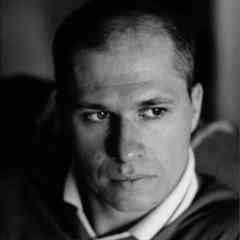
0 quotes

Related Quotes

“He drunkenly recognized that the lust was part of something bigger, of a craving to pursue pleasure unreasonably, beyond the right and wrong, to go as far as his body took him. In the body there is no absolute, or free, will, but the body is determined to desire this or that by a cause that is also determined by another, and this again by another, and so on to infinity.”

“Se quedó quieto, observando, aspirando el olor de la muerte. El cuello de Bernie estaba muy delgado, pero los lóbulos de las orejas, que ya habían alcanzado un tamaño enorme, eran grandes y carnosos. El cuerpo que yacía en aquella cama de hospital no debería pertenecer al padre que Joshua conocía. ¿Adónde había ido a parar el verdadero Bernie?”

“-the apartment had been directly in the sight line of a Serb sniper across the river. Teta-Jozefina was a devout Catholic, but she somehow managed to believe in essential human goodness, despite all the abundant evidence to the contrary surrounding her. She felt that the sniper was essentially a good man because during the siege, she said, he had often shot over her and her husband's heads to warn them that he was watching and that they shouldn't move so carelessly in their own apartment.”

“There's a psychological mechanism, I've come to believe, that prevents most of us from imagining the moment of our own death. For if it were possible to imagine fully that instant of passing from consciousness to nonexistence, with all the attendant fear and humiliation of absolute helplessness, it would be very hard to live. It would be unbearably obvious that death is inscribed in everything that constitutes life, that any moment of your existence may be only a breath away from being the last. We would be continuously devastated by the magnitude of that inescapable fact. Still, as we mature into our mortality, we begin to gingerly dip our horror-tingling toes into the void, hoping that our mind will somehow ease itself into dying, that God or some other soothing opiate will remain available as we venture into the darkness of non-being.”

“I do not know how old I was when I learned to play chess. I could not have been older than eight, because I still have a chessboard on whose side my father inscribed, with a soldering iron, “Saša Hemon 1972.” I loved the board more than chess—it was one of the first things I owned. Its materiality was enchanting to me: the smell of burnt wood that lingered long after my father had branded it; the rattle of the thickly varnished pieces inside, the smacking sound they made when I put them down, the board’s hollow wooden echo. I can even recall the taste—the queen’s tip was pleasantly suckable; the pawns’ round heads, not unlike nipples, were sweet. The board is still at our place in Sarajevo, and, even if I haven’t played a game on it in decades, it is still my most cherished possession, providing incontrovertible evidence that there once lived a boy who used to be me.”

“There’s a psychological mechanism, I’ve come to believe, that prevents most of us from imagining the moment of our own death. For if it were possible to imagine fully that instant of passing from consciousness to nonexistence, with all the attendant fear and humiliation of absolute helplessness, it would be very hard to live, as it would be unbearably obvious that death is inscribed in everything that constitutes life, that any moment of our existence is a breath away from being the last one. We would be continuously devastated by the magnitude of that inescapable moment, so our minds wisely refuse to consider it. Still, as we mature into mortality, we gingerly dip our horror-tingling toes in the void, hoping that the mind will somehow ease itself into dying, that God or some other soothing opiate will remain available as we venture deeper into the darkness of nonbeing. But how can you possibly ease yourself into the death of your child? For one thing, it is supposed to happen well after your own dissolution into nothingness. Your children are supposed to outlive you by several decades, in the course of which they’ll live their lives, happily devoid of the burden of your presence, eventually completing the same mortal trajectory as their parents: oblivion, denial, fear, the end. They’re supposed to handle their own mortality, and no help in that regard (other than forcing them to confront death by way of your dying) can come from you—death ain’t a science project. And even if you could imagine your child’s death, why would you?”

“One of the most common platitudes we heard was that “words failed.” But words were not failing us at all. It was not true that there was no way to describe our experience. We had plenty of language to talk to each other about the horror of what was happening, and talk we did. If there was a communication problem it was that there were too many words; they were far too heavy and too specific to be inflicted upon others. If something was failing it was the functionality of routine, platitudinous language—the comforting clichés were now inapplicable and perfectly useless. We instinctively protected other people from the knowledge we possessed; we let them think that words failed, because we knew they didn’t want to be familiar with the vocabulary we used daily. We were sure they didn’t want to know what we did; we didn’t want to know it either.”