Quotessence
Home / Authors / Brenda Ueland Books
Brenda Ueland

Brenda Ueland Books

Journalist

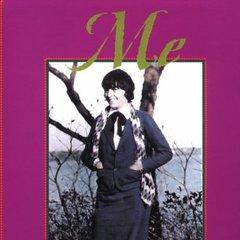
Me

A source page for quotes linked to Brenda Ueland.
0 quotes

Me: A Memoir

A source page for quotes linked to Brenda Ueland.

0 quotes

Related Quotes

“When Van Gogh was a young man in his early twenties, he was in London studying to be a clergyman. He had no thought of being an artist at all. he sat in his cheap little room writing a letter to his younger brother in Holland, whom he loved very much. He looked out his window at a watery twilight, a thin lampost, a star, and he said in his letter something like this: "it is so beautiful I must show you how it looks." And then on his cheap ruled note paper, he made the most beautiful, tender, little drawing of it. When I read this letter of Van Gogh's it comforted me very much and seemed to throw a clear light on the whole road of Art. Before, I thought that to produce a work of painting or literature, you scowled and thought long and ponderously and weighed everything solemnly and learned everything that all artists had ever done aforetime, and what their influences and schools were, and you were extremely careful about *design* and *balance* and getting *interesting planes* into your painting, and avoided, with the most astringent severity, showing the faintest *acedemical* tendency, and were strictly modern. And so on and so on. But the moment I read Van Gogh's letter I knew what art was, and the creative impulse. It is a feeling of love and enthusiasm for something, and in a direct, simple, passionate and true way, you try to show this beauty in things to others, by drawing it. And Van Gogh's little drawing on the cheap note paper was a work of art because he loved the sky and the frail lamppost against it so seriously that he made the drawing with the most exquisite conscientiousness and care.”

“(about William Blake) As for Blake's happiness--a man who knew him said: "If asked whether I ever knew among the intellectual, a happy man, Blake would be the only one who would immediately occur to me." And yet this creative power in Blake did not come from ambition. ...He burned most of his own work. Because he said, "I should be sorry if I had any earthly fame, for whatever natural glory a man has is so much detracted from his spiritual glory. I wish to do nothing for profit. I wish to live for art. I want nothing whatever. I am quite happy." ...He did not mind death in the least. He said that to him it was just like going into another room. On the day of his death he composed songs to his Maker and sang them for his wife to hear. Just before he died his countenance became fair, his eyes brightened and he burst into singing of the things he saw in heaven.”

“(about William Blake) [Blake] said most of us mix up God and Satan. He said that what most people think is God is merely prudence, and the restrainer and inhibitor of energy, which results in fear and passivity and "imaginative death." And what we so often call "reason" and think is so fine, is not intelligence or understanding at all, but just this: it is arguing from our *memory* and the sensations of our body and from the warnings of other people, that if we do such and such a thing we will be uncomfortable. "It won't pay." "People will think it is silly." "No one else does it." "It is immoral." But the only way you can grow in understanding and discover whether a thing is good or bad, Blake says, is to do it. "Sooner strangle an infant in its cradle than nurse unacted desires." For this "Reason" as Blake calls it (which is really just caution) continually nips and punctures and shrivels the imagination and the ardor and the freedom and the passionate enthusiasm welling up in us. It is Satan, Blake said. It is the only enemy of God. "For nothing is pleasing to God except the invention of beautiful and exalted things." And when a prominent citizen of his time, a logical, opining, erudite, measured, rationalistic, Know-it-all, warned people against "mere enthusiasm," Blake wrote furiously (he was a tender-hearted, violent and fierce red-haired man): "Mere enthusiasm is the All in All!”

“In fact that is why the lives of most women are so vaguely unsatisfactory. They are always doing secondary and menial things (that do not require all their gifts and ability) for others and never anything for themselves. Society and husbands praise them for it (when they get too miserable or have nervous breakdowns) though always a little perplexedly and half-heartedly and just to be consoling. The poor wives are reminded that that is just why wives are so splendid -- because they are so unselfish and self-sacrificing and that is the wonderful thing about them! But inwardly women know that something is wrong. They sense that if you are always doing something for others, like a servant or nurse, and never anything for yourself, you cannot do others any good. You make them physically more comfortable. But you cannot affect them spiritually in any way at all. For to teach, encourage, cheer up, console, amuse, stimulate or advise a husband or children or friends, you have to be something yourself. [...]"If you would shut your door against the children for an hour a day and say; 'Mother is working on her five-act tragedy in blank verse!' you would be surprised how they would respect you. They would probably all become playwrights.”

“In the same way there is much, much in all of us, but we do not know it. No one ever calls it out in us, unless we are lucky enough to know intelligent, imaginative, sympathetic people who love us and have the magnanimity to encourage us, to believe in us, by listening, by praise, by appreciation, by laughing. If you are going to write, you must become aware of this richness in you and come to believe in it and know it is there so that you can write opulently with with self-trust. Once you become aware of it, have faith in it, you will be all right. But it is like this: if you have a million dollars in the bank and don't know, it doesn't so you any good.”

“Yes, I hate orthodox criticism. I don't mean great criticism, like that of Matthew Arnold and others, but the usual small niggling, fussy-mussy criticism, which thinks it can improve people by telling them where they are wrong, and results only in putting them in straitjackets of hesitancy and self-consciousness, and weazening all vision and bravery. ...I hate it because of all the potentially shining, gentle, gifted people of all ages, that it snuffs out every year. It is a murderer of talent. And because the most modest and sensitive people are the most talented, having the most imagination and sympathy, these are the very first ones to get killed off. It is the brutal egotists that survive.”

“I hate orthodox criticism. I don't mean great criticism, like that of Matthew Arnold and others, but the usual small niggling, fussy-mussy criticism, which thinks it can improve people by telling them where they are wrong, and results only in putting them in straitjackets of hesitancy and self-consciousness, and weazening all vision and bravery.”

“vivisection is not the same thing as scientific progress. There is such a thing as scientific progress. But this wholesale dedication of scientists to vivisection, which is the easy and cheap way, actually prevents them from scientific progress, for true progress is difficult and requires genius and imagination in its devoted workers.”

“Science and vivisection make no appeal to a theological idea, much less a political one. You can argue with a theologian or a politician, but doctors are sacrosanct. They know; you do not. Science has its mystique much more powerful than any religion active today.”

“running is the right thing to do! I am free, healthy with a good complexion. It is that automobile addict who should be ashamed: driving in a sealed car in warmed-over carbon monoxide and smoking a seegar. I am the Goddess! He is a bug in a monkey nut!”

“Unless you listen, people are weazened in your presence; they become about a third of themselves. Unless you listen, you can't know anybody. Oh, you will know facts and what is in the newspapers and all of history, perhaps, but you will not know one single person. You know, I have come to think listening is love, that's what it really is.”

“Now some people when they sit down to write and nothing special comes, no good ideas, are so frightened that they drink a lot of strong coffee to hurry them up, or smoke packages of cigarettes, or take drugs or get drunk. They do not know that ideas come slowly, and that the more clear, tranquil and unstimulated you are, the slower the ideas come, but the better they are.”

“I readan article by a highly educated man wherein he told with what conscientious pains he had brought up all his children tobe skeptical of everything, never to believe anything in life or religion or their own feelings without submitting it to many rational doubts, to have a persistent, thoroughly skeptical, doubting attitude toward everything.... I think he might as well have taken them out in the backyard and killed them with an ax.”

“To have the external pressure of a job removed is very astonishing. Your own will is now your only motor and it has no horse-power. Sometimes I think that perhaps the most competent business men, and lawyers and doctors, who must be at the office at nine o'clock every morning, do not realize this and take more credit for initiative and industry than they deserve. And it is why all the bright women of the world, who if more were expected of them, might do important work, but who instead have a chronic feeling of ineffectiveness and sloth.”

“Don't think of yourself as an intestinal tract and tangle of nerves in the skull, that will not work unless you drink coffee. Think of yourself as incandescent power, illuminated perhaps and forever talked to by God and his messengers.... Think if Tiffany's made a mosquito, how wonderful we would think it was!”

“When you will, make a resolution, set your jaw, you are expressing an imaginative fear that you won't do the thing. If you knew you would do the thing, you would smile happily and set about it. And this fear (since the imagination is always creative) comes about presently and you slide down into the complete slump of several weeks or years - the very thing you dreaded and set your jaw against.”