Quotessence
Home / Authors / Donald Barthelme Books
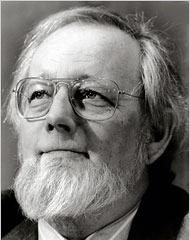
Donald Barthelme

Donald Barthelme Books

Author

Sixty stories

A source page for quotes linked to Donald Barthelme.
0 quotes

Snow White

A source page for quotes linked to Donald Barthelme.

0 quotes

Forty Stories

A source page for quotes linked to Donald Barthelme.

0 quotes

The King

A source page for quotes linked to Donald Barthelme.

0 quotes

City Life

A source page for quotes linked to Donald Barthelme.

0 quotes

Great Days

A source page for quotes linked to Donald Barthelme.

0 quotes

Paraguay

A source page for quotes linked to Donald Barthelme.

0 quotes

Sadness

A source page for quotes linked to Donald Barthelme.

0 quotes

The Dead Father

A source page for quotes linked to Donald Barthelme.

0 quotes

Related Quotes

“But the lie had to be a good one, because if your lie is badly done it makes everyone feel wretched, liar and lied-to alike plunged into the deepest lackadaisy, and everyone just feels like going into the other room and drinking a glass of water, or whatever is available there, whereas if you can lie really well then get dynamite results, 35 percent report increased intellectual understanding, awareness, insight, 40 percent report more tolerance, acceptance of others, liking for self, 29 percent report they receive more personal and more confidential information from people and that others become more warm and supportive toward them--all in consequence of a finely orchestrated, carefully developed untruth.”

“There is no moment that exceeds in beauty that moment when one looks at a woman and finds that she is looking at you in the same way that you are looking at her. The moment in which she bestows that look that says, "Proceed with your evil plan, sumbitch." The initial smash on glance. The, the drawing near. This takes a long time, it seems like months, although only minutes pass, in fact. Languor is the word that describes this part of the process. Your persona floats toward her persona, over the Sea of Hesitation. Many weeks pass before they meet, but the weeks are days, or seconds. Still, everything is decided. You have slept together in the glance.”

“You told me that Kafka was not a thinker, and that a "genetic" approach to his work would disclose that much of it was only a kind of very imaginative whining. That was during the period when you were going in for wrecking operations, feeling, I suppose, that the integrity of your own mental processes was best maintained by a series of strong, unforgiving attacks. You made quite an impression on everyone, in those days: you ruffled blouse, you long magenta skirt slit to the knee, the dagger thrust into your boot. "Is that a metaphor?" I asked, pointing to the dagger; you shook your head, smiled, said no.”

“Is that true," I asked, "that song?" "It is a metaphor," said Mrs. Davis, "it has metaphorical truth." "And the end of the mechanical age," I said, "is that a metaphor?" "The end of the mechanical age," said Mrs. Davis, "is in my judgment an actuality straining to become a metaphor. One must wish it luck, I suppose. One must cheer it on. Intellectual rigor demands that we give these damned metaphors every chance, even if they are inimical to personal well-being and comfort. We have a duty to understand everything, whether we like it or not–a duty I would scant if I could." At that moment the water jumped into the boat and sank us.”

“Everyone in Paraguay has the same fingerprints. There are crimes but people chosen at random are punished for them. Everyone is liable for everything. An extension of the principle, there but for the grace of God go I. Sexual life is very free. There are rules but these are like the rules of chess, intended to complicate and enrich the game. I made love to Jean Mueller while her husband watched. There have been certain technical refinements. The procedures we use (called here “impalement”) are used in Paraguay but also new techniques I had never before encountered, “dimidiation” and “quartering.” These I found very refreshing.”

“-It is true that I am part of the laughing-aristocrat structure, Charles said. I don't mean I am one of them. I mean I am their creature. They hold me in thrall. Laughing aristocrats who invented the cost-plus contract . . . Laughing aristocrats who invented the real estate broker . . . Laughing aristocrats who invented Formica . . . Laughing aristocrats wiping their surfaces clean with a damp cloth . . . Charles poured himself another brilliant green Heineken. -To the struggle!”

“The death of God left the angels in a strange position. They were overtaken suddenly by a fundamental question. One can attempt to imagine the moment. How did they look at the instant the question invaded them, flooding the angelic consciousness, taking hold with terrifying force? The question was, "What are angels?" New to questioning, unaccustomed to terror, unskilled in aloneness, the angels (we assume) fell into despair.”

“What an artist does, is fail. Any reading of the literature, (I mean the literature of artistic creation), however summary, will persuade you instantly that the paradigmatic artistic experience is that of failure. The actualization fails to meet, equal, the intuition. There is something "out there" which cannot be brought "here". This is standard. I don't mean bad artists, I mean good artists. There is no such thing as a "successful artist" (except, of course, in worldly terms).”

“The question so often asked of modern painting, "What is it?", contains more than the dull skepticism of the man who is not going to have the wool pulled over his eyes. It speaks of a fundamental placement in relation to the work, that of a voyager in the world coming upon a strange object. The reader reconstitutes the work by his active participation, by approaching the object, tapping it, shaking it, holding it to his ear to hear the roaring within. It is characteristic of the object that it does not declare itself all at once, in a rush of pleasant naïveté.”

“We like books that have a lot of dreck in them, matter which presents itself as not wholly relevant (or indeed, at all relevant) but which, carefully attended to, can supply a kind of "sense" of what is going on. This "sense" is not to be obtained by reading between the lines (for there is nothing there, in those white spaces) but by reading the lines themselves looking at them and so arriving at a feeling not of satisfaction exactly, that is too much to expect, but of having read them, of having "completed" them.”

“Naked girls with the heads of Marx and Malraux prone and helpless in the glare of the headlights, tried to give them a little joie de vivre but maybe it didn't take, their constant bickering and smallness, it's like a stroke of lightning, the world reminds you of its power, tracheotomies right and left, I am spinning, my pretty child, don't scratch, pick up your feet, the long nights, spent most of my time listening, this is a test of the system, this is only a test.”

“Now it is necessary to court her, and win her, and put on this clean dressing gown, and cut my various nails, and drink something that will kill the millions of germs in my mouth, and say something flattering, and be witty and bonny, and hale and kinky, all just to ease this wrinkle in the groin. It seems a high price.”

“I keep wondering if, say, there is intelligent life on other planets, the scientists argue that something like two percent of the other planets have the conditions, the physical conditions, to support life in the way it happened here, did Christ visit each and every planet, go through the same routine, the Agony in the Garden, the Crucifixion, and so on.”