Quotessence
Home / Authors / Edward Bernays
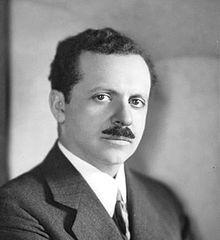
Edward Bernays

Edward Bernays Quotes

Public Relations Consultant

Filter quotes by topic

Famous Edward Bernays Quotes

“The conscious and intelligent manipulation of the organised habits and opinions of the masses is an important element in democratic society. Those who manipulate this unseen mechanism of society constitute an invisible government which is the true ruling power of our country.”

“The minority has discovered a powerful help in influencing majorities. It has been found possible so to mold the mind of the masses that they will throw their newly gained strength in the desired direction. In the present structure of society, this practice is inevitable. Whatever of social importance is done today, whether in politics, finance, manufacture, agriculture, charity, education, or other fields, must be done with the help of propaganda. Propaganda is the executive arm of the invisible government.”

“The invisible government tends to be concentrated in the hands of the few because of the expense of manipulating the social machinery which controls the opinions and habits of the masses. To advertise on a scale which will reach fifty million persons is expensive. To reach and persuade the group leaders who dictate the public's thoughts and actions is likewise expensive.”

“It is not necessary for the politician to be the slave of the public's group prejudices, if he can learn how to mold the mind of the voters in conformity with his own ideas of public welfare and public service. The important thing for the statesman of our age is not so much to know how to please the public, but to know how to sway the public. Those who manipulate this unseen mechanism of society constitute an invisible government which is the true ruling power of our country.”

“We have voluntarily agreed to let an invisible government sift the data and high-spot the outstanding issues so that our field of choice shall be narrowed to practical proportions. From our leaders and the media they use to reach the public, we accept the evidence and the demarcation of issues bearing upon public questions; from some ethical teacher, be it a minister, a favorite essayist, or merely prevailing opinion, we accept a standardized code of social conduct to which we conform most of the time.”