Quotessence
Home / Authors / Edward Bernays
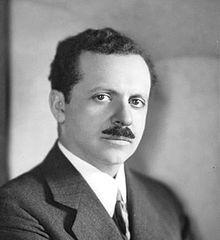
Edward Bernays

Edward Bernays Quotes

Public Relations Consultant

Filter quotes by topic

Famous Edward Bernays Quotes

“We are governed, our minds are molded, our tastes formed, our ideas suggested, largely by men we have never heard of. This is a logical result of the way in which our democratic society is organized. Vast numbers of human beings must cooperate in this manner if they are to live together as a smoothly functioning society.”

“It is not necessary for the politician to be the slave of the public's group prejudices, if he can learn how to mold the mind of the voters in conformity with his own ideas of public welfare and public service. The important thing for the statesman of our age is not so much to know how to please the public, but to know how to sway the public. Those who manipulate this unseen mechanism of society constitute an invisible government which is the true ruling power of our country.”

“If you can influence the leaders, either with or without their conscious cooperation, you automatically influence the group which they sway. But men do not need to be actually gathered together in a public meeting or in a street riot, to be subject to the influences of mass psychology. Because man is by nature gregarious he feels himself to be member of a herd, even when he is alone in his room with the curtains drawn.”

“If we understand the mechanisms and motives of the group mind, it is now possible to control and regiment the masses according to our will without their knowing it In almost every act of our daily lives, whether in the sphere of politics or business, in our social conduct or our ethical thinking, we are dominated by the relatively small number of persons who understand the mental processes and social patterns of the masses. It is they who pull the wires which control the public mind.”

“Mass production is only profitable if its rhythm can be maintained.. that is, if it can continue to sell its product in steady or increasing quantity. The result is that while, under the handicraft or small-unit system of production that was typical a century ago, demand created the supply, today supply must actively seek to create its corresponding demand.”