Quotessence
Home / Authors / Edward Gibbon
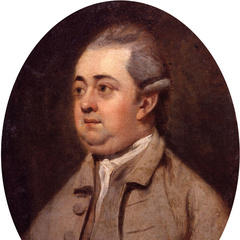
Edward Gibbon

Edward Gibbon Quotes

Historian

Filter quotes by topic

Famous Edward Gibbon Quotes

“In the second century of the Christian era, the Empire of Rome comprehended the fairest part of the earth, and the most civilised portion of mankind. The frontiers of that extensive monarchy were guarded by ancient renown and disciplined valour. The gentle but powerful influence of laws and manners had gradually cemented the union of the provinces. Their peaceful inhabitants enjoyed and abused the advantages of wealth and luxury.”

“Whatever evils either reason or declamation have imputed to extensive empire, the power of Rome was attended with some beneficial consequences to mankind; and the same freedom of intercourse which extended the vices, diffused likewise the improvements of social life.”

“It was with the utmost difficulty that ancient Rome could support the institution of six vestals; but the primitive church was filled with a great number of persons of either sex who had devoted themselves to the profession of perpetual chastity.”

“But the sages of Greece and Rome turned aside from the awful spectacle, and, pursuing the ordinary occupations of life and study, appeared unconscious of any alterations in the moral of physical government of the world.”

“Constantinople was the principal seat and fortress of Arianism; and, in a long interval of forty years, the faith of the princes and prelates who reigned in the capital of the East was rejected in the purer schools of Rome and Alexandria.”

“A small number of temples was protected by the fears, the venality, the taste, or the prudence of the civil and ecclesiastical governors. The temple of the Celestial Venus at Carthage, whose sacred precincts formed a circumference of two miles, was judiciously converted into a Christian church; and a similar consecration has preserved inviolate the majestic dome of the Pantheon at Rome.”

“The ancients were destitute of many of the conveniences of life which have been invented or improved by the progress of industry; and the plenty of glass and linen has diffused more real comforts among the modern nations of Europe than the senators of Rome could derive from all the refinements of pompous or sensual luxury.”

“At the hour of midnight the Salerian gate was silently opened, and the inhabitants were awakened by the tremendous sound of the Gothic trumpet. Eleven hundred and sixty-three years after the foundation of Rome, the Imperial city, which had subdued and civilised so considerable a part of mankind, was delivered to the licentious fury of the tribes of Germany and Scythia.”

“Inclined to peace by his temper and situation, it was easy for [Augustus] to discover that Rome, in her present exalted situation, had much less to hope than to fear from the chance of arms; and that, in the prosecution of remote wars, the undertaking became every day more difficult, the event more doubtful, and the possession more precarious and less beneficial.”

“But [the Arabs'] friendship was venal, their faith inconstant, their enmity capricious: it was an easier task to excite than to disarm these roving barbarians; and, in the familiar intercourse of war, they learned to see, and to despise, the splendid weakness both of Rome and of Persia.”

“The savage nations of the globe are the common enemies of civilized society; and we may inquire, with anxious curiosity, whether Europe is still threatened with a repetition of those calamities, which formerly oppressed the arms and institutions of Rome.”

“Women [in ancient Rome] were condemned to the perpetual tutelage of parents, husbands, or guardians; a sex created to please and obey was never supposed to have attained the age of reason and experience. Such, at least, was the stern and haughty spirit of the ancient law . . .”

“[The] events by which the fate of nations is not materially changed, leave a faint impression on the page of history, and the patience of the reader would be exhausted by the repetition of the same hostilities [between Rome and Persia], undertaken without cause, prosecuted without glory, and terminated without effect.”

“The decline of Rome was the natural and inevitable effect of immoderate greatness. Prosperity ripened the principle of decay; the cause of the destruction multiplied with the extent of conquest; and, as soon as time or accident and removed the artificial supports, the stupendous fabric yielded to the pressure of its own weight. The story of the ruin is simple and obvious: and instead of inquiring why the Roman Empire was destroyed we should rather be surprised that it has subsisted for so long.”