Quotessence
Home / Authors / Edward Gibbon
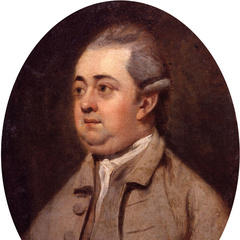
Edward Gibbon

Edward Gibbon Quotes

Historian

Filter quotes by topic

Famous Edward Gibbon Quotes

“Whatever evils either reason or declamation have imputed to extensive empire, the power of Rome was attended with some beneficial consequences to mankind; and the same freedom of intercourse which extended the vices, diffused likewise the improvements of social life.”

“The virtue of Marcus Aurelius Antoninus was of a severer and more laborious kind. It was the well-earned harvest of many a learned conference, of many a patient lecture, and many a midnight lucubration. At the age of twelve years, he embraced the rigid system of the Stoics, which taught him to submit his body to his mind, his passions to his reason; to consider virtue as the only good, vice as the only evil, all things external as things indifferent.”

“Yet the arts of Severus cannot be justified by the most ample privileges of state reason. He promised only to betray; he flattered only to ruin; and however he might occasionally bind himself by oaths and treaties, his conscience, obsequious to his interest, always released him from the inconvenient obligation.”

“The German huts, open on every side to the eye of indiscretion or jealousy, were a better safeguard of conjugal fidelity than the walls, the bolts, and the eunuchs of a persian harem. To this reason, another may be added of a more honourable nature. The Germans treated their women with esteem and confidence, consulted them on every occasion of importance, and fondly believed that in their breasts resided a sanctity and wisdom more than human.”

“It is incumbent on us diligently to remember that the kingdom of heaven was promised to the poor in spirit, and that minds afflicted by calamity and the contempt of mankind cheerfully listen to the divine promise of future happiness; while, on the contrary, the fortunate are satisfied with the possession of this world; and the wise abuse in doubt and dispute their vain superiority of reason and knowledge.”

“But how shall we excuse the supine inattention of the Pagan and philosophic world to those evidences which were presented by the hand of Omnipotence, not to their reason, but to their senses? During the age of Christ, of his apostles, and their first disciples, the doctrine which they preached was confirmed by innumerable prodigies. The lame walked, the blind saw, the sick were healed, the dead were raised, daemons were expelled, and the laws of Nature were frequently suspended for the benefit of the church.”

“The science of the church is neglected for the study of geometry, and they lose sight of Heaven while they are employed in measuring the earth. Euclid is perpetually in their hands. Aristotle and Theophrastus are the objects of their admiration; and they express an uncommon reverence for the works of Galen. Their errors are derived from the abuse of the arts and sciences of the infidels, and they corrupt the simplicity of the gospel by the refinements of human reason.”

“Genius may anticipate the season of maturity; but in the education of a people, as in that of an individual, memory must be exercised, before the powers of reason and fancy can be expanded: nor may the artist hope to equal or surpass, till he has learned to imitate, the works of his predecessors.”

“Women [in ancient Rome] were condemned to the perpetual tutelage of parents, husbands, or guardians; a sex created to please and obey was never supposed to have attained the age of reason and experience. Such, at least, was the stern and haughty spirit of the ancient law . . .”

“The peace of the Eastern church was invaded by a swarm of fanatics [monks], incapable of fear, or reason, or humanity; and the Imperial troops acknowledged, without shame, that they were much less apprehensive of an encounter with the fiercest Barbarians.”

“The desire of perfection became the ruling passion of their soul; and it is well known, that while reason embraces a cold mediocrity, our passions hurry us, with rapid violence, over the space which lies between the most opposite extremes.”

“'I believe in o­ne God and Mohammed the Apostle of God,' is the simple and invariable profession of Islam. The intellectual image of the Deity has never been degraded by any visible idol; the honours of the prophet have never transgressed the measure of human virtue, and his living precepts have restrained the gratitude of his disciples within the bounds of reason and religion.”