Quotessence
Home / Authors / Edward Gibbon
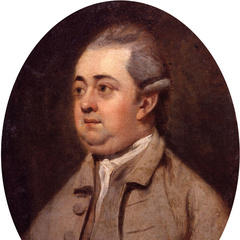
Edward Gibbon

Edward Gibbon Quotes

Historian

Filter quotes by topic

Famous Edward Gibbon Quotes

“Yet the arts of Severus cannot be justified by the most ample privileges of state reason. He promised only to betray; he flattered only to ruin; and however he might occasionally bind himself by oaths and treaties, his conscience, obsequious to his interest, always released him from the inconvenient obligation.”

“The chaste severity of the fathers in whatever related to the commerce of the two sexes flowed from the same principle -- their abhorrence of every enjoyment which might gratify the sensual and degrade the spiritual nature of man. It was their favourite opinion, that if Adam had preserved his obedience to the Creator, he would have lived for ever in a state of virgin purity, and that some harmless mode of vegetation might have peopled paradise with a race of innocent and immortal beings.”

“We stand in need of such reflections to comfort us for the loss of some illustrious characters, which in our eyes might have seemed the most worthy of the heavenly present. The names of Seneca, of the elder and the younger Pliny, of Tacitus, of Plutarch, of Galen, of the slave Epictetus, and of the emperor Marcus Antoninus, adorn the age in which they flourished, and exalt the dignity of human natures.”

“But this inestimable privilege was soon violated: with the knowledge of truth the emperor imbibed the maxims of persecution; and the sects which dissented from the catholic church were afflicted and oppressed by the triumph of Christianity. Constantine easily believed that the heretics, who presumed to dispute his opinions or to oppose his commands, were guilty of the most absurd and criminal obstinacy; and that a seasonable application of moderate severities might save those unhappy men from the danger of an everlasting condemnation.”

“Philosophy had instructed Julian to compare the advantages of action and retirement; but the elevation of his birth and the accidents of his life never allowed him the freedom of choice. He might perhaps sincerely have preferred the groves of the Academy and the society of Athens; but he was constrained, at first by the will, and afterwards by the injustice of Constantius, to expose his person and fame to the dangers of Imperial greatness; and to make himself accountable to the world and to posterity for the happiness of millions.”

“Instead of pressing, with the foremost of the crowd, into the palace of Constantinople, Libanius calmly expected his arrival at Antioch; withdrew from court on the first symptoms of coldness and indifference; required a formal invitation for each visit; and taught his sovereign an important lesson, that he might command the obedience of a subject, but that he must deserve the attachment of a friend.”

“The triumph of the Romans was indeed sullied by their treatment of the captive king, whom they hung on a gibbet without the knowledge of their indignant general. This disgraceful act of cruelty which might be imputed to the fury of the troops, was followed by the deliberate murder of Withicab, the son of Vadomair; a German prince, of a weak and sickly constitution, but of a daring and formidable spirit.”

“Sixty thousand blacks are annually embarked from the coast of Guinea, never to return to their native country; but they are embarked in chains: and this constant emigration, which, in the space of two centuries, might have furnished armies to overrun the globe, accuses the guilt of Europe and the weakness of Africa.”

“The simple circumstantial narrative (did such a narrative exist) of the ruin of a single town, of the misfortunes of a single family, might exhibit an interesting and instructive picture of human manners; but the tedious repetition of vague and declamatory complaints would fatigue the attention of the most patient reader.”

“The orator, who may be silent without danger, may praise without difficulty and without reluctance; and posterity will confess that the character of Theodosius might furnish the subject of a sincere and ample panegyric. The wisdom of his laws and the success of his arms rendered his administration respectable in the eyes both of his subjects and of his enemies. He loved and practised the virtues of domestic life, which seldom hold their residence in the palaces of kings.”

“The valuable library of Alexandria was pillaged or destroyed; and near twenty years afterwards, the appearance of the empty shelves excited the regret and indignation of every spectator whose mind was not totally darkened by religious prejudice. The compositions of ancient genius, so many of which have irretrievably perished, might surely have been excepted from the wreck of idolatry, for the amusement and instruction of succeeding ages.”

“In the most rigorous [Roman] laws, a wife was condemned to support a gamester, a drunkard, or a libertine, unless he were guilty of homicide, poison, or sacrilege, in which cases the marriage, as it should seem, might have been dissolved by the hand of the executioner.”

“Such was the unhappy condition of the Roman emperors, that, whatever might be their conduct, their fate was commonly the same. A life of pleasure or virtue, of severity or mildness, of indolence or glory, alike led to an untimely grave; and almost every reign is closed by the same disgusting repetition of treason and murder.”

“I will not dissemble the first emotions of joy on the recovery of my freedom, and, perhaps, the establishment of my fame. But my pride was soon humbled, and a sober melancholy was spread over my mind, by the idea that I had taken an everlasting leave of an old and agreeable companion, and that whatsoever might be the future date of my History, the life of the historian must be short and precarious.”

“Hope, the best comfort of our imperfect condition, was not denied to the Roman slave; and if he had any opportunity of rendering himself either useful or agreeable, he might very naturally expect that the diligence and fidelity of a few years would be rewarded with the inestimable gift of freedom.”