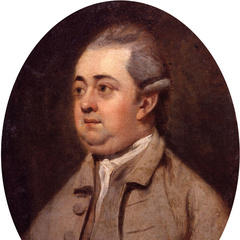
“Such was the unhappy condition of the Roman emperors, that, whatever might be their conduct, their fate was commonly the same. A life of pleasure or virtue, of severity or mildness, of indolence or glory, alike lead to an untimely grave; and almost every reign is closed by the same disgusting repetition of treason and murder.”
Source: The Decline and Fall of the Roman Empire 1: 180-395
“Vicissitudes of fortune, which spares neither man nor the proudest of his works, which buries empires and cities in a common grave.”
Source: The History of the Decline and Fall of the Roman Empire
“Active valour may often be the present of nature; but such patient diligence can be the fruit only of habit and discipline.”
Source: The History of the Decline and Fall of the Roman Empire
“History is indeed little more than the register of the crimes, follies, and misfortunes of mankind.”
“But the power of instruction is seldom of much efficacy, except in those happy dispositions where it is almost superfluous.”
Source: The History of the Decline and Fall of the Roman Empire
“Of the various forms of government which have prevailed in the world, an hereditary monarchy seems to present the fairest scope for ridicule.”
Source: The History of the Decline and Fall of the Roman Empire
“All that is human must retrograde if it does not advance.”
“The various modes of worship which prevailed in the Roman world were all considered by the people as equally true; by the philosopher as equally false; and by the magistrate as equally useful.”
“In the second century of the Christian era, the empire of Rome comprehended the fairest part of the earth, and the most civilized portion of mankind.”
Source: The History of the Decline and Fall of the Roman Empire
“In the second century of the Christian era, the Empire of Rome comprehended the fairest part of the earth, and the most civilised portion of mankind. The frontiers of that extensive monarchy were guarded by ancient renown and disciplined valour. The gentle but powerful influence of laws and manners had gradually cemented the union of the provinces. Their peaceful inhabitants enjoyed and abused the advantages of wealth and luxury.”
Source: Decline and Fall of the Roman Empire
“The image of a free constitution was preserved with decent reverence: the Roman senate appeared to possess the sovereign authority, and devolved on the emperors all the executive powers of government. During a happy period (A.D. 98-180) of more than fourscore years, the public administration was conducted by the virtue and abilities of Nerva, Trajan, Hadrian, and the two Antonines.”
Source: The Decline and Fall of the Roman Empire (Edited and Abridged): Abridged Edition
“That public virtue which among the ancients was denominated patriotism, is derived from a strong sense of our own interest in the preservation and prosperity of the free government of which we are members. Such a sentiment, which had rendered the legions of the republic almost invincible, could make but a very feeble impression on the mercenary servants of a despotic prince; and it became necessary to supply that defect by other motives, of a different, but not less forcible nature; honour and religion.”
Source: The Decline and Fall of the Roman Empire (Edited and Abridged): Abridged Edition
“Under a democratical government the citizens exercise the powers of sovereignty; and those powers will be first abused, and afterwards lost, if they are committed to an unwieldy multitude.”
Source: The History of the Decline and Fall of the Roman Empire
“Among the innumerable monuments of architecture constructed by the Romans, how many have escaped the notice of history, how few have resisted the ravages of time and barbarism! And yet even the majestic ruins that are still scattered over Italy and the provinces, would be sufficient to prove that those countries were once the seat of a polite and powerful empire.”
Source: Decline and Fall of the Roman Empire
“Whatever evils either reason or declamation have imputed to extensive empire, the power of Rome was attended with some beneficial consequences to mankind; and the same freedom of intercourse which extended the vices, diffused likewise the improvements of social life.”
Source: The Decline and Fall of the Roman Empire:
“Agriculture is the foundation of manufactures; since the productions of nature are the materials of art. Under the Roman empire, the labour of an industrious and ingenious people was variously, but incessantly employed, in the service of the rich. In their dress, their table, their houses, and their furniture, the favourites of fortune united every refinement of conveniency, of elegance, and of splendour, whatever could soothe their pride or gratify their sensuality.”
Source: The History of the Decline and Fall of the Roman Empire, 1: With Maps
“The character of the tribunes was, in every respect, different from that of the consuls. The appearance of the former was modest and humble; but their persons were sacred and inviolable. Their force was suited rather for opposition than for action. They were instituted to defend the oppressed, to pardon offences, to arraign the enemies of the people, and, when they judged it necessary, to stop, by a single word, the whole machine of government.”
Source: THE HISTORY OF THE DECLINE AND FALL OF THE ROMAN EMPIRE (All 6 Volumes): From the Height of the Roman Empire, the Age of Trajan and the Antonines - to the Fall of Byzantium; Including a Review of the Crusades, and the State of Rome during the Middle Ages
“To resume, in a few words, the system of the Imperial government, as it was instituted by Augustus, and maintained by those princes who understood their own interest and that of the people, it may be defined an absolute monarchy disguised by the forms of a commonwealth. The masters of the Roman world surrounded their throne with darkness, concealed their irresistible strength, and humbly professed themselves the accountable ministers of the senate, whose supreme decrees they dictated and obeyed.”
Source: THE HISTORY OF THE DECLINE AND FALL OF THE ROMAN EMPIRE (All 6 Volumes): From the Height of the Roman Empire, the Age of Trajan and the Antonines - to the Fall of Byzantium; Including a Review of the Crusades, and the State of Rome during the Middle Ages
“Augustus was sensible that mankind is governed by names; nor was he deceived in his expectation, that the senate and people would submit to slavery, provided they were respectfully assured that they still enjoyed their ancient freedom.”
Source: The History of the Decline and Fall of the Roman Empire
“The two Antonines (for it is of them that we are now speaking) governed the Roman world forty-two years, with the same invariable spirit of wisdom and virtue. ... Their united reigns are possibly the only period of history in which the happiness of a great people was the sole object of government.”
Source: The Decline and Fall of the Roman Empire (Edited and Abridged): Abridged Edition
“Antoninus diffused order and tranquility over the greatest part of the earth. His reign is marked by the rare advantage of furnishing very few materials for history; which is, indeed, little more than the register of the crimes, follies, and misfortunes of mankind.”
Source: The Modern Library Essential World History 4-Book Bundle: The Decline and Fall of the Roman Empire (Abridged); Montcalm and Wolfe; History of the Conquest of Mexico; The Naval War of 1812
“The virtue of Marcus Aurelius Antoninus was of a severer and more laborious kind. It was the well-earned harvest of many a learned conference, of many a patient lecture, and many a midnight lucubration. At the age of twelve years, he embraced the rigid system of the Stoics, which taught him to submit his body to his mind, his passions to his reason; to consider virtue as the only good, vice as the only evil, all things external as things indifferent.”
Source: The History of the Decline and Fall of the Roman Empire
“Yet the arts of Severus cannot be justified by the most ample privileges of state reason. He promised only to betray; he flattered only to ruin; and however he might occasionally bind himself by oaths and treaties, his conscience, obsequious to his interest, always released him from the inconvenient obligation.”
Source: Decline and Fall of the Roman Empire
“His manners were less pure, but his character was equally amiable with that of his father. Twenty-two acknowledged concubines, and a library of sixty-two thousand volumes, attested the variety of his inclinations, and from the productions which he left behind him, it appears that the former as well as the latter were designed for use rather than ostentation.”
Source: The History of the Decline and Fall of the Roman Empire
“The subject, however various and important, has already been so frequently, so ably, and so successfully discussed, that it is now grown familiar to the reader, and difficult to the writer.”
Source: The History of the Decline and Fall of the Roman Empire
“The Germans, in the age of Tacitus, were unacquainted with the use of letters; and the use of letters is the principal circumstance that distinguishes a civilised people from a herd of savages incapable of knowledge or reflection. Without that artificial help, the human memory soon dissipates or corrupts the ideas intrusted to her charge; and the nobler faculties of the mind, no longer supplied with models or with materials, gradually forget their powers; the judgment becomes feeble and lethargic, the imagination languid or irregular.”
Source: The History of the Decline and Fall of the Roman Empire
“The possession and the enjoyment of property are the pledges which bind a civilised people to an improved country.”
Source: Decline and Fall of the Roman Empire
“The comparative view of the powers of the magistrates, in two remarkable instances, is alone sufficient to represent the whole system of German manners. The disposal of the landed property within their district was absolutely vested in their hands, and they distributed it every year according to a new division. At the same time, they were not authorised to punish with death, to imprison, or even to strike, a private citizen.”
Source: Decline and Fall of the Roman Empire
“Although the progress of civilisation has undoubtedly contributed to assuage the fiercer passions of human nature, it seems to have been less favourable to the virtue of chastity, whose most dangerous enemy is the softness of the mind. The refinements of life corrupt while they polish the intercourse of the sexes. The gross appetite of love becomes most dangerous when it is elevated, or rather, indeed, disguised by sentimental passion.”
Source: Decline and Fall of the Roman Empire
“The elegance of dress, of motion, and of manners gives a lustre to beauty, and inflames the senses through the imagination. Luxurious entertainments, midnight dances, and licentious spectacles, present at once temptation and opportunity to female frailty. From such dangers the unpolished wives of the barbarians were secured by poverty, solitude, and the painful cares of a domestic life.”
Source: The history of the decline and fall of the Roman empire, with notes by Milman and Guizot. Ed. by W. Smith
“The German huts, open on every side to the eye of indiscretion or jealousy, were a better safeguard of conjugal fidelity than the walls, the bolts, and the eunuchs of a persian harem. To this reason, another may be added of a more honourable nature. The Germans treated their women with esteem and confidence, consulted them on every occasion of importance, and fondly believed that in their breasts resided a sanctity and wisdom more than human.”
Source: The Modern Library Essential World History 4-Book Bundle: The Decline and Fall of the Roman Empire (Abridged); Montcalm and Wolfe; History of the Conquest of Mexico; The Naval War of 1812
“The love of liberty was the ruling passion of these Germans; the enjoyment of it, their best treasure; the word that expressed that enjoyment the most pleasing to their ear. They deserved, they assumed, they maintained the honourable epithet of Franks or Freemen; which concealed, though it did not extinguish, the peculiar names of the several states of the confederacy.”
Source: The History of the Decline and Fall of the Roman Empire
“Such, indeed, is the policy of civil war: severely to remember injuries, and to forget the most important services. Revenge is profitable, gratitude is expensive.”
Source: The History of the Decline and Fall of the Roman Empire
“On the slightest touch the unsupported fabric of their pride and power fell to the ground. The expiring senate displayed a sudden lustre, blazed for a moment, and was extinguished for ever.”
Source: The History of the Decline and Fall of the Roman Empire
“The most distinguished merit of those two officers was their respective prowess, of the one in the combats of Bacchus, of the other in those of Venus.”
Source: The History of the Decline and Fall of the Roman Empire
“Philosophy, with the aid of experience, has at length banished the study of alchymy; and the present age, however desirous of riches, is content to seek them by the humbler means of commerce and industry.”
Source: The History of the Decline and Fall of the Roman Empire
“His sumptuous tents, and those of his satraps, afforded an immense booty to the conqueror; and an incident is mentioned which proves the rustic but martial ignorance of the legions in the elegant superfluities of life. A bag of shining leather, filled with pearls, fell into the hands of a private soldier; he carefully preserved the bag, but he threw away its contents, judging that whatever was of no use could not possibly be of any value.”
Source: The History of the Decline and Fall of the Roman Empire, 1
“It is seldom that minds long exercised in business have formed any habits of conversing with themselves, and in the loss of power they principally regret the want of occupation.”
Source: The History of the Decline and Fall of the Roman Empire
“The knowledge that is suited to our situation and powers, the whole compass of moral, natural, and mathematical science, was neglected by the new Platonists; whilst they exhausted their strength in the verbal disputes of metaphysics, attempted to explore the secrets of the invisible world, and studied to reconcile Aristotle with Plato, on subjects of which both these philosophers were as ignorant as the rest of mankind.”
Source: The History of the Decline and Fall of the Roman Empire
“There are two very natural propensities which we may distinguish in the most virtuous and liberal dispositions, the love of pleasure and the love of action. If the former is refined by art and learning, improved by the charms of social intercourse, and corrected by a just regard to economy, to health, and to reputation, it is productive of the greatest part of the happiness of private life.”
Source: History of the Decline and Fall of the Roman Empire V1: the History Focus
“The love of action is a principle of a much stronger and more doubtful nature. It often leads to anger, to ambition, and to revenge; but when it is guided by the sense of propriety and benevolence, it becomes the parent of every virtue, and, if those virtues are accompanied with equal abilities, a family, a state, or an empire may be indebted for their safety and prosperity to the undaunted courage of a single man.”
Source: The History of the Decline and Fall of the Roman Empire
“To the love of pleasure we may therefore ascribe most of the agreeable, to the love of action we may attribute most of the useful and respectable, qualifications. The character in which both the one and the other should be united and harmonised would seem to constitute the most perfect idea of human nature.”
Source: The History of the Decline and Fall of the Roman Empire
“In their censures of luxury the fathers are extremely minute and circumstantial; and among the various articles which excite their pious indignation, we may enumerate false hair, garments of any colour except white, instruments of music, vases of gold or silver, downy pillows, white bread, foreign wines, public salutations, the use of warm baths, and the practice of shaving the beard, which, according to Tertullian, is a lie against our own faces, and am impious attempt to improve the works of the Creator.”
Source: The History of the Decline and Fall of the Roman Empire
“The chaste severity of the fathers in whatever related to the commerce of the two sexes flowed from the same principle -- their abhorrence of every enjoyment which might gratify the sensual and degrade the spiritual nature of man. It was their favourite opinion, that if Adam had preserved his obedience to the Creator, he would have lived for ever in a state of virgin purity, and that some harmless mode of vegetation might have peopled paradise with a race of innocent and immortal beings.”
Source: History of the Decline and Fall of the Roman Empire V1: the History Focus
“It was with the utmost difficulty that ancient Rome could support the institution of six vestals; but the primitive church was filled with a great number of persons of either sex who had devoted themselves to the profession of perpetual chastity.”
Source: The History of the Decline and Fall of the Roman Empire
“But the human character, however it may be exalted or depressed by a temporary enthusiasm, will return by degrees to its proper and natural level, and will resume those passions that seem the most adapted to its present condition.”
Source: Decline and Fall of the Roman Empire
“If this Punic war was carried on without any effusion of blood, it was owing much less to the moderation than to the weakness of the contending prelates.”
Source: The Decline and Fall of the Roman Empire (Edited and Abridged): Abridged Edition
“It is incumbent on us diligently to remember that the kingdom of heaven was promised to the poor in spirit, and that minds afflicted by calamity and the contempt of mankind cheerfully listen to the divine promise of future happiness; while, on the contrary, the fortunate are satisfied with the possession of this world; and the wise abuse in doubt and dispute their vain superiority of reason and knowledge.”
Source: The History of the Decline and Fall of the Roman Empire
“We stand in need of such reflections to comfort us for the loss of some illustrious characters, which in our eyes might have seemed the most worthy of the heavenly present. The names of Seneca, of the elder and the younger Pliny, of Tacitus, of Plutarch, of Galen, of the slave Epictetus, and of the emperor Marcus Antoninus, adorn the age in which they flourished, and exalt the dignity of human natures.”
Source: EDWARD GIBBON Premium Collection: Historiographical Works, Memoirs & Letters: Including
“But how shall we excuse the supine inattention of the Pagan and philosophic world to those evidences which were presented by the hand of Omnipotence, not to their reason, but to their senses? During the age of Christ, of his apostles, and their first disciples, the doctrine which they preached was confirmed by innumerable prodigies. The lame walked, the blind saw, the sick were healed, the dead were raised, daemons were expelled, and the laws of Nature were frequently suspended for the benefit of the church.”
Source: The History of the Decline and Fall of the Roman Empire