Quotessence
Home / Authors / Edward Gibbon
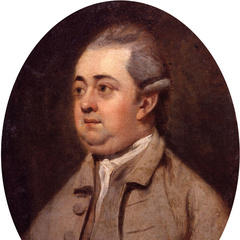
Edward Gibbon

Edward Gibbon Quotes

Historian

Filter quotes by topic

Famous Edward Gibbon Quotes

“The image of a free constitution was preserved with decent reverence: the Roman senate appeared to possess the sovereign authority, and devolved on the emperors all the executive powers of government. During a happy period (A.D. 98-180) of more than fourscore years, the public administration was conducted by the virtue and abilities of Nerva, Trajan, Hadrian, and the two Antonines.”

“That public virtue which among the ancients was denominated patriotism, is derived from a strong sense of our own interest in the preservation and prosperity of the free government of which we are members. Such a sentiment, which had rendered the legions of the republic almost invincible, could make but a very feeble impression on the mercenary servants of a despotic prince; and it became necessary to supply that defect by other motives, of a different, but not less forcible nature; honour and religion.”

“The two Antonines (for it is of them that we are now speaking) governed the Roman world forty-two years, with the same invariable spirit of wisdom and virtue. ... Their united reigns are possibly the only period of history in which the happiness of a great people was the sole object of government.”

“The virtue of Marcus Aurelius Antoninus was of a severer and more laborious kind. It was the well-earned harvest of many a learned conference, of many a patient lecture, and many a midnight lucubration. At the age of twelve years, he embraced the rigid system of the Stoics, which taught him to submit his body to his mind, his passions to his reason; to consider virtue as the only good, vice as the only evil, all things external as things indifferent.”

“Although the progress of civilisation has undoubtedly contributed to assuage the fiercer passions of human nature, it seems to have been less favourable to the virtue of chastity, whose most dangerous enemy is the softness of the mind. The refinements of life corrupt while they polish the intercourse of the sexes. The gross appetite of love becomes most dangerous when it is elevated, or rather, indeed, disguised by sentimental passion.”

“The love of action is a principle of a much stronger and more doubtful nature. It often leads to anger, to ambition, and to revenge; but when it is guided by the sense of propriety and benevolence, it becomes the parent of every virtue, and, if those virtues are accompanied with equal abilities, a family, a state, or an empire may be indebted for their safety and prosperity to the undaunted courage of a single man.”

“The manly pride of the Romans, content with substantial power, had left to the vanity of the East the forms and ceremonies of ostentatious greatness. But when they lost even the semblance of those virtues which were derived from their ancient freedom, the simplicity of Roman manners was insensibly corrupted by the stately affectation of the courts of Asia.”

“The barbarians of Germany had felt, and still dreaded, the arms of the young Caesar; his soldiers were the companions of his victory; the grateful provincials enjoyed the blessings of his reign; but the favourites, who had opposed his elevation, were offended by his virtues; and they justly considered the friend of the people as the enemy of the court.”

“Julian was not insensible of the advantages of freedom. From his studies he had imbibed the spirit of ancient sages and heroes; his life and fortunes had depended on the caprice of a tyrant; and, when he ascended the throne, his pride was sometimes mortified by the reflection that the slaves who would not dare to censure his defects were not worthy to applaud his virtues.”

“Fashion was the only law, pleasure the only pursuit, and the splendour of dress and furniture was the only distinction of the citizens of Antioch. The arts of luxury were honoured; the serious and manly virtues were the subject of ridicule; and the contempt for female modesty and reverent age announced the universal corruption of the capital of the East.”

“The orator, who may be silent without danger, may praise without difficulty and without reluctance; and posterity will confess that the character of Theodosius might furnish the subject of a sincere and ample panegyric. The wisdom of his laws and the success of his arms rendered his administration respectable in the eyes both of his subjects and of his enemies. He loved and practised the virtues of domestic life, which seldom hold their residence in the palaces of kings.”

“[The] liberty of divorce does not contribute to happiness and virtue. The facility of separation would destroy all mutual confidence, and inflame every trifling dispute . . .”

“The aspiring efforts of genius, or virtue, either in active or speculative life, are measured, not so much by their real elevation, as by the height to which they ascend above the level of their age and country; and the same stature, which in a people of giants would pass unnoticed, must appear conspicuous in a race of pygmies.”

“A jurisdiction thus vague and arbitrary was exposed to the most dangerous abuse: the substance, as well as the form, of justice were often sacrificed to the prejudices of virtue, the bias of laudable affection, and the grosser seductions of interest or resentment.”

“Such was the unhappy condition of the Roman emperors, that, whatever might be their conduct, their fate was commonly the same. A life of pleasure or virtue, of severity or mildness, of indolence or glory, alike led to an untimely grave; and almost every reign is closed by the same disgusting repetition of treason and murder.”

“It was [Totila's] constant theme, that national vice and ruin are inseparably connected; that victory is the fruit of moral as well as military virtue; and that the prince, and even the people, are responsible for the crimes which they neglect to punish.”

“[Every age], however destitute of science or virtue, sufficiently abounds with acts of blood and military renown.”

“'I believe in o­ne God and Mohammed the Apostle of God,' is the simple and invariable profession of Islam. The intellectual image of the Deity has never been degraded by any visible idol; the honours of the prophet have never transgressed the measure of human virtue, and his living precepts have restrained the gratitude of his disciples within the bounds of reason and religion.”