Quotessence
Home / Authors / Erich Maria Remarque
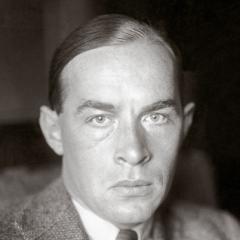
Erich Maria Remarque

Erich Maria Remarque Quotes

Author

Filter quotes by topic

Famous Erich Maria Remarque Quotes

“How senseless is everything that can ever be written, done, or thought, when such things are possible. It must be all lies and of no account when the culture of a thousand years could not prevent this stream of blood being poured out, these torture-chambers in their hundreds of thousands. A hospital alone shows what war is.”

“We were eighteen and had begun to love life and the world; and we had to shoot it to pieces. The first bomb, the first explosion, burst in our hearts. We are cut off from activity, from striving, from progress. We believe in such things no longer, we believe in the war." - All Quiet On The Western Front, Ch. 5”

“But now, for the first time, I see you are a man like me. I thought of your hand-grenades, of your bayonet, of your rifle; now I see your wife and your face and our fellowship. Forgive me, comrade. We always see it too late. Why do they never tell us that you are poor devils like us, that your mothers are just as anxious as ours, and that we have the same fear of death, and the same dying and the same agony - forgive me, comrade; how could you be my enemy?”

“Let the months and years come, they can take nothing from me, they can take nothing more. I am so alone, and so without hope that I can confront them without fear. The life that has borne me through these years is still in my hands and my eyes. Whether I have subdued it, I know not. But so long as it is there it will seek its own way out, heedless of the will that is within me." -All Quiet On The Western Front, Chapter 12”

“Little by little things began to assume a new aspect. The sense of insecurity vanished, words came of themselves, I was no longer so painfully conscious of everything I said. I drank on and felt the great soft wave approach and embrace me; the dark hour began to fill with pictures and stealthily the noiseless procession of dreams appeared again superimposed on the dreary, grey landscape of existence.”

“I had the feeling of slipping down a smooth bottomless pit. It had nothing to do with Breuer and the people. It had nothing to do with Pat even. It was the melancholy secret that reality can arouse desires but never satisfy them; that love begins with a human being but does not end in him; and that everything can be there: a human being, love, happiness, life — and that yet in some terrible way it is always too little, and grows ever less the more it seems.”

“I did not want to think so much about her. I wanted to take her as an unexpected, delightful gift, that had come and would go again — nothing more. I meant not to give room to the thought that it could ever be more. I knew too well that all love has the desire for eternity and that therein lies its eternal torment. Nothing lasts. Nothing.”

“The music enchanted the air. It was like the south wind, like a warm night, like swelling sails beneath the stars, completely and utterly unreal... It made everything spacious and colourful, the dark stream of life seemed pulsing in it; there were no burdens any more, no limits; there existed only glory and melody and love, so that one simply could not realize that, at the same time as this music was, outside there ruled poverty and torment and despair.”

“This book is to be neither an accusation nor a confession, and least of all an adventure, for death is not an adventure to those who stand face to face with it. It will try simply to tell of a generation of men who, even though they may have escaped shells, were destroyed by the war.”

“Kat and Kropp get in an argument over the war as they rest from an hour’s worth of drill (occasioned by Tjaden’s not saluting a major properly). Kat believes the war would be over if leaders gave all the participants “the same grub and the same pay,” as he says in a rhyme. Kropp believes the leaders of each country should fight each other in an arena to settle the war; the “wrong” people currently do the fighting.”

“I want that quiet rapture again. I want to feel the same powerful, nameless urge that I used to feel when I turned to my books. The breath of desire that then arose from the coloured backs of the books, shall fill me again, melt the heavy, dead lump of lead that lies somewhere in me and waken again the impatience of the future, the quick joy in the world of thought, it shall bring back again the lost eagerness of my youth. I sit and wait.”

“And even if these scenes from our youth were given back to us we would hardly know what to do. The tender, secret influence that passed from them into us could not rise again. We might be amongst them and move in them; we might remember and love them and be stirred by the sight of them. But it would be like gazing at the photograph of a dead comrade; those are his features, it is his face, and the days we spent together take on a mournful life in the memory; but the man himself it is not.”

“We're no longer young men. We've lost any desire to conquer the world. We are refugees. We are fleeing from ourselves. From our lives. We were eighteen years old, and we had just begun to love the world and to love being in it; but we had to shoot at it. The first shell to land went straight for our hearts. We've been cut off from real action, from getting on, from progress. We don't believe in those things any more; we believe in the war.”