Quotessence
Home / Authors / G. H. Hardy
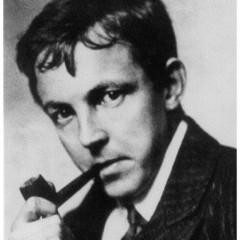
G. H. Hardy

G. H. Hardy Quotes

Mathematician

Filter quotes by topic

Famous G. H. Hardy Quotes

“I am obliged to interpolate some remarks on a very difficult subject: proof and its importance in mathematics. All physicists, and a good many quite respectable mathematicians, are contemptuous about proof. I have heard Professor Eddington, for example, maintain that proof, as pure mathematicians understand it, is really quite uninteresting and unimportant, and that no one who is really certain that he has found something good should waste his time looking for proof.”

“A mathematician, like a painter or poet, is a maker of patterns. If his patterns are more permanent than theirs, it is because they are made with ideas.”

“No mathematician should ever allow him to forget that mathematics, more than any other art or science, is a young man's game. ... Galois died at twenty-one, Abel at twenty-seven, Ramanujan at thirty-three, Riemann at forty. There have been men who have done great work later; ... [but] I do not know of a single instance of a major mathematical advance initiated by a man past fifty. ... A mathematician may still be competent enough at sixty, but it is useless to expect him to have original ideas.”

“[Regarding mathematics,] there are now few studies more generally recognized, for good reasons or bad, as profitable and praiseworthy. This may be true; indeed it is probable, since the sensational triumphs of Einstein, that stellar astronomy and atomic physics are the only sciences which stand higher in popular estimation.”

“A chess problem is genuine mathematics, but it is in some way "trivial" mathematics. However, ingenious and intricate, however original and surprising the moves, there is something essential lacking. Chess problems are unimportant. The best mathematics is serious as well as beautiful-"important" if you like, but the word is very ambiguous, and "serious" expresses what I mean much better.”

“I believe that mathematical reality lies outside us, that our function is to discover or observe it, and that the theorems which we prove, and which we describe grandiloquently as our "creations," are simply the notes of our observations.”

“I have never done anything 'useful'. No discovery of mine has made, or is likely to make, directly or indirectly, for good or ill, the least difference to the amenity of the world... Judged by all practical standards, the value of my mathematical life is nil; and outside mathematics it is trivial anyhow. I have just one chance of escaping a verdict of complete triviality, that I may be judged to have created something worth creating. And that I have created something is undeniable: the question is about its value.”

“Reductio ad absurdum, which Euclid loved so much, is one of a mathematician's finest weapons. It is a far finer gambit than any chess play: a chess player may offer the sacrifice of a pawn or even a piece, but a mathematician offers the game.”

“The mathematician's patterns, like the painter's or the poet's must be beautiful; the ideas, like the colours or the words must fit together in a harmonious way. Beauty is the first test: there is no permanent place in the world for ugly mathematics.”

“Most people have some appreciation of mathematics, just as most people can enjoy a pleasant tune; and there are probably more people really interested in mathematics than in music. Appearances suggest the contrary, but there are easy explanations. Music can be used to stimulate mass emotion, while mathematics cannot; and musical incapacity is recognized (no doubt rightly) as mildly discreditable, whereas most people are so frightened of the name of mathematics that they are ready, quite unaffectedly, to exaggerate their own mathematical stupidity”

“It is a melancholy experience for a professional mathematician to find himself writing about mathematics. The function of a mathematician is to do something, to prove new theorems, to add to mathematics, and not to talk about what he or other mathematicians have done. Statesmen despise publicists, painters despise art-critics, and physiologists, physicists, or mathematicians have usually similar feelings: there is no scorn more profound, or on the whole more justifiable, than that of the men who make for the men who explain. Exposition, criticism, appreciation, is work for second-rate minds.”

“Mathematics is not a contemplative but a creative subject; no one can draw much consolation from it when he has lost the power or the desire to create; and that is apt to happen to a mathematician rather soon. It is a pity, but in that case he does not matter a great deal anyhow, and it would be silly to bother about him.”

“I remember once going to see him [Ramanujan] when he was lying ill at Putney. I had ridden in taxi-cab No. 1729, and remarked that the number seemed to me rather a dull one, and that I hoped it was not an unfavourable omen. "No," he replied, "it is a very interesting number; it is the smallest number expressible as a sum of two cubes in two different ways."”

“If a man is in any sense a real mathematician, then it is a hundred to one that his mathematics will be far better than anything else he can do, and that he would be silly if he surrendered any decent opportunity of exercising his one talent in order to do undistinguished work in other fields. Such a sacrifice could be justified only by economic necessity of age.”

“I do not remember having felt, as a boy, any passion for mathematics, and such notions as I may have had of the career of a mathematician were far from noble. I thought of mathematics in terms of examinations and scholarships: I wanted to beat other boys, and this seemed to be the way in which I could do so most decisively.”

“When the world is mad, a mathematician may find in mathematics an incomparable anodyne. For mathematics is, of all the arts and sciences, the most austere and the most remote, and a mathematician should be of all men the one who can most easily take refuge where, as Bertrand Russell says, "one at least of our nobler impulses can best escape from the dreary exile of the actual world."”