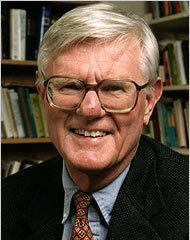
The Purpose of the Past: Reflections on... A source page for quotes linked to Gordon S. Wood. 0 quotes
“Academics have given up trying to recover an honest picture of the past and have decided that their history-writing should be simply an instrument of moral hand-wringing.” HistoryHumilityStorytelling Author:Gordon S. Wood
“Much of history is fragmentary and essentially anachronistic – condemning the past for not being more like the present. It has no real interest in the pastness of the past.” HumilityPerspective Author:Gordon S. Wood
“Intellectual activity in a culture is not a one-way flow between the great minds and passive recipients; it is a discourse, a complex marketplace-like conglomeration of intellectual exchanges involving many participants all trying to manipulate the ideas available to them in order to explain, justify, lay blame for, or otherwise make sense of what is happening around them. Everyone, not just the great minds, participates in this complicated process.” PhilosophyHistoryHistory Of Thought Book:The Purpose of the Past: Reflections on the Uses of History Source: The Purpose of the Past: Reflections on the Uses of History
“[John] Adams was the best and most colorful stylist among the Founders. Although [Tomas] Jefferson is widely regarded as the smoothest writer, Adams is by far the most engaging and imaginative.” FoundersEngagingImaginativeColorfulStylistTomas Jefferson Author:Gordon S. Wood
“[John Adams's] vividly descriptive prose is supremely quotable. Adams wears his heart on his sleeve and reveals all of his ambitions, doubts, and insecurities, especially in his diary, which is one of the greatest and most readable in all of American literature.” HeartLiteratureDoubtAmbitionProseInsecurityDiariesSleevesAmerican Literature Author:Gordon S. Wood
“[John] Adams never hid his jealousy and resentment of the other Founders, especially Benjamin Franklin.” ResentmentFoundersFranklin Author:Gordon S. Wood
“[John] Adams's letters to [his wife] Abigail are wonderful. In his letters, he is loving, humorous, preachy, learned, and saucy. He speaks to her with almost complete abandon, revealing all of his sensuous and vulnerable nature.” SpeakWifeWonderfulHumorousLettersVulnerableAbandonRevealingSensuousAbigail Author:Gordon S. Wood
“[John Adams] diary, of course, is even more revealing of his feelings. Both his letters to [his wife] Abigail and his diary tell us what he really thinks about people and events.” PeopleThinkingFeelingsCoursesWifeEventsLettersRevealingDiariesAbigail Author:Gordon S. Wood
“[John Adams] letters courting Abigail Smith are especially priceless. In one of 1764 he addresses her as "Miss Adorable" and says that "By the same Token that the Bearer hereof satt up with you last night I hereby order you to give him, as many Kisses, and as many Hours of your Company after 9 O'Clock as he shall please to Demand and charge them to my Account."” GivingLastsNightOrderHoursCompanyMissingPleaseDemandKissingLettersAccountsClockAddressesLast NightPricelessAdorableTokensAbigail Author:Gordon S. Wood
“I think [John's Adams] descriptions of the personalities of [Benjamin] Franklin and [Tomas] Jefferson and others were pretty accurate. It is only when he felt he was wronged by them that he lets loose his anger and resentment.” ThinkingFeltPersonalityDescriptionResentmentAccurateFranklinWrongedAnger And ResentmentTomas Jefferson Author:Gordon S. Wood
“[John Adams] is impressed with [Tomas] Jefferson's learning, but noted his silence during the debates in the Congress: "I never heard him utter three Sentences together."” TogetherThreeSilenceHeardCongressSentencesDebateImpressedTomas Jefferson Author:Gordon S. Wood
“[John's Adams] description of [Benjamin] Franklin in a letter to [his wife] Abigail in 1775 is laudatory. Only when he experiences all the adulation paid to Franklin in Paris does he begin to change his tune.” DoeWifeLettersPaidParisTunesDescriptionFranklinAdulationAbigail Author:Gordon S. Wood
“[Benjamin] Franklin may be a great philosopher, [John Adams] told his diary in 1779, but "as a Legislator in America he has done very little."” MayLittlesDoneAmericaPhilosopherDiariesFranklinLegislatorsGreat Philosophers Author:Gordon S. Wood
“By 1782 [John Adams] had come to feel for [Benjamin] Franklin "no other sentiments than Contempt or Abhorrence."” FeelsSentimentsContemptFranklinAbhorrence Author:Gordon S. Wood
“I think [John] Adams was correct when he said that his May resolutions were "an Epocha, a decisive Event," and tantamount to a declaration of independence.” ThinkingMaySaidEventsIndependenceResolutionDeclarationDeclaration Of Independence Author:Gordon S. Wood
“[John Adams] always felt that his contribution to bringing about independence went unappreciated, especially after the 1790s when [Tomas] Jefferson began to be lauded as the "author" of the Declaration of Independence.” FeltIndependenceContributionDeclarationDeclaration Of IndependenceTomas Jefferson Author:Gordon S. Wood
“The Declaration [of Independence] was a committee report, and [Tomas] Jefferson was simply the draftsman. [John] Adams's crucial role in bringing about independence in the Continental Congress has tended to get forgotten.” RolesIndependenceForgottenCongressReportsCrucialCommitteesDeclarationDeclaration Of IndependenceContinentalTomas JeffersonDraftsman Author:Gordon S. Wood
“[John] Adams never had an optimistic view of human nature, and his experience in the Congress and abroad only deepened his suspicion that his fellow Americans might not have the character to sustain a republican government.” HumansCharacterGovernmentMightViewsHuman NatureRepublicanFellowsCongressOptimisticSuspicionRepublican Government Author:Gordon S. Wood
“As early as 1776, [John Adams] expressed his doubts about America's capacity for virtue. "I have seen all along my Life, Such Selfishness, and Littleness even in New England, that I sometimes tremble to think that, altho We are engaged in the best Cause that ever employed the Human Heart, yet the Prospect of success is doubtfull not for Want of Power or of Wisdom, but of Virtue."” ThinkingWantHumansHeartSometimesAmericaCausesVirtueDoubtCapacityEnglandSelfishnessEngagedHuman HeartEmployedNew England Author:Gordon S. Wood
“By the time [John Adams] came to write his Defence of the Constitutions of the United States in 1787 he had as dark a view of the American character as that of any critic in our history.” WritingStatesCharacterDarkUnitedViewsUnited StatesConstitutionCriticsDefenceConstitution Of The United StatesAmerican Character Author:Gordon S. Wood
“I think [John Adams] developed a much deeper suspicion of France and the other European powers than he had earlier. He lost much if not all of the utopian thinking about international politics and diplomacy expressed in his Model Treaty of 1776 and became much more cynical about the world.” IfsThinkingWorldLostModelsInternationalDeeperFranceCynicalSuspicionDiplomacyTreatiesUtopian Author:Gordon S. Wood
“[John] Adams's perception of Europe, and especially France, was clearly different than [Tomas] Jefferson's. For Jefferson, the luxury and sophistication of Europe only made American simplicity and virtue appear dearer. For Adams, by contrast, Europe represented what America was fast becoming - a society consumed by luxury and vice and fundamentally riven by a struggle between rich and poor, gentlemen and commoners.” MadeDifferentAmericaPoorStruggleVirtueRichBecomingPerceptionEuropeSimplicityVicesLuxuryFranceGentlemanContrastConsumedRich And PoorSophisticationCommonersTomas Jefferson Author:Gordon S. Wood
“[John Adams] experience with the French philosophers only convinced him further of the need for a bicameral legislature representing the two principal social orders and, equally important, an independent executive.” NeedsTwoImportantOrderSocialIndependentPhilosopherConvincedExecutivesPrincipalLegislatureRepresentingSocial OrderFrench Philosopher Author:Gordon S. Wood
“Perhaps more significant than his experience in Europe, though, was [John] Adams's experience in his own country, and his extensive reading on the history of the English constitution. In 1779, he had an opportunity to try out his ideas by framing the Massachusetts constitution.” TryingIdeasCountryReadingOpportunityEuropeConstitutionSignificantMassachusettsFramingExtensive Reading Author:Gordon S. Wood
“The Massachusetts constitution was written much later than the other revolutionary state constitutions, and thus it avoids some of the earlier mistakes. The executive is stronger, with a limited veto; the senate is more formidable; and the judiciary is independent.” StatesMistakeWrittenConstitutionStrongerIndependentRevolutionaryExecutivesSenateFormidableJudiciaryMassachusettsVeto Author:Gordon S. Wood
“[The Massachusetts constitution] resembles the federal Constitution of 1787 more closely than any of the other revolutionary state constitutions. It was also drawn up by a special convention, and it provided for popular ratification - practices that were followed by the drafters of the federal Constitution of 1787 and subsequent state constitution-makers.” StatesPracticeSpecialConstitutionRevolutionaryMakersConventionsMassachusetts Author:Gordon S. Wood
“[John] Adams's letters reveal his persistence and determination to win over the Dutch against all odds and to convince them and the other peoples of Europe of the potential greatness of the United States and of the importance of the Revolution to the world.” WorldStatesWinningUnitedUnited StatesGreatnessRevolutionEuropeDeterminationLettersImportancePersistenceConvinceOddsDutchAgainst All Odds Author:Gordon S. Wood
“Americans, [John Adams] wrote in 1780, believed that their "revolution is as much for the benefit of the generality of Mankind in Europe, as for their own."” MankindRevolutionBenefitsEuropeGeneralities Author:Gordon S. Wood
“[John] Adams said his objective in writing his Defence of the Constitutions of the United States and his Davila essays was to counter what he thought was the unfair criticism of the American state constitutions made by the French philosophers, especially [Anne Robert Jacques] Turgot.” WritingMadeSaidStatesUnitedUnited StatesCriticismConstitutionPhilosopherObjectivesUnfairEssaysDefenceConstitution Of The United StatesFrench Philosopher Author:Gordon S. Wood
“[John Adams' writings] had indicted the United States for slavishly copying the English constitution by erecting bicameral legislatures in their state constitutions, most drafted in 1776.” WritingStatesUnitedUnited StatesConstitutionLegislatureCopying Author:Gordon S. Wood
“Creating senates, the French critics said, implied that there was another social order besides the people represented in the houses of representatives. [John] Adams actually agreed with that implication and argued that the aristocracy and the people had to have separate houses; this was the only way the power of the aristocracy could be contained.” PeopleWaySaidOrderHouseSocialCreatingCriticsSenateRepresentativesImplicationsAristocracySocial OrderImpliedHouse Of Representatives Author:Gordon S. Wood
“[John] Adams was arguing that a separate social order existed that needed to be embodied in senates and his fellow Americans could not accept this and accused him rightly of being obsessed with the English constitution.” OrderSocialAcceptingNeededConstitutionFellowsArguingObsessedSenateAccusedSocial Order Author:Gordon S. Wood
“[John] Adams identified himself with the political theories of [James] Harrington, [John] Locke, and [Charles-Louis] Montesquieu, whose ideas of constitutionalism, he believed, were applicable to all peoples everywhere; they were his contribution to what he called "the divine science of politics."” IdeasPoliticalDivineTheoryContributionPolitical TheoryMontesquieuConstitutionalism Author:Gordon S. Wood
“I think [John Adams's] influence on the federal Constitution was indirect. Many including James Madison mocked the first volume of Adams's Defence of the Constitutions of the United States in 1787. But his Massachusetts constitution was a model for those who thought about stable popular governments, with its separation of powers, its bicameral legislature, its independent judiciary, and its strong executive.” ThinkingFirstsStatesGovernmentStrongUnitedUnited StatesInfluenceModelsConstitutionIndependentIncludingSeparationExecutivesStableVolumeDefenceLegislatureJudiciaryIndirectMassachusettsMadisonConstitution Of The United StatesSeparation Of PowersIndependent Judiciary Author:Gordon S. Wood
“It was [John's Adams] Massachusetts constitution if anything that influenced people.” PeopleIfsConstitutionMassachusetts Author:Gordon S. Wood
“[ Massachusetts constitution] was [John Adams] attempt to justify that structure by the traditional notion of social estates - that the executive represented the monarchical estate, the senate the aristocratic estate, and the house of representatives the estate of the people.” PeopleHouseSocialConstitutionStructureNotionTraditionalJustifyExecutivesSenateRepresentativesEstatesMassachusettsHouse Of RepresentativesAristocratic Author:Gordon S. Wood
“This rationale, which justified the mixed constitution of Great Britain, might have made some sense in 1776, but by 1787 most American thinkers had come to believe that all parts of their balanced governments represented in one way or another the sovereign people. They had left the Aristotelian idea of mixed estates - monarchy, aristocracy, and democracy - way behind. [John] Adams had not, and his stubbornness on this point caused him no end of trouble.” PeopleWayBelieveMadeIdeasEndsGovernmentMightLeftBehindsDemocracyTroubleConstitutionOne WayBritainThinkerBalancedEstatesSovereignJustifiedMonarchyAristocracyStubbornnessGreat BritainRationale Author:Gordon S. Wood
“The relationship between [John] Adams and [Tomas] Jefferson was extraordinary. They differed on every conceivable issue, except on the Revolution and the love of their country.” CountryIssuesRevolutionExtraordinaryTomas Jefferson Author:Gordon S. Wood
“[John Adams and Tomas Jefferson] shared experience in 1775 - 1776 in bringing about the separation from Britain and their service in Europe cemented a friendship that in the end withstood the most serious political and religious differences that one could imagine, especially their differences over the French Revolution. It was probably Jefferson's obsession with politeness and civility that kept the relationship from becoming irreparably broken.” EndsPoliticalDifferencesReligiousImagineSeriousBrokenRevolutionBecomingEuropeSeparationObsessionBritainCivilityPolitenessFrench RevolutionShared ExperiencesTomas JeffersonReligious Differences Author:Gordon S. Wood
“After [Tomas] Jefferson's defeat of [John] Adams in the presidential election of 1800, they didn't communicate with one another for more than a decade.” ElectionDefeatCommunicateDecadesPresidentialPresidential ElectionTomas Jefferson Author:Gordon S. Wood
“A mutual friend, Benjamin Rush, brought [Tomas Jefferson and John Adams] together in 1812, and they went on to exchange letters for the rest of their lives. But in their correspondence they tended to avoid the most controversial issues, such as slavery.” TogetherIssuesLettersSlaveryMutualControversialCorrespondenceControversial IssuesTomas Jefferson Author:Gordon S. Wood
“Again and again [Tomas] Jefferson deftly sidesteps many of [John] Adams's often provocative remarks. They both felt the correspondence, which was written for posterity, was too important to risk by being too candid with one another.” ImportantFeltWrittenRiskAgain And AgainRemarksPosterityProvocativeCorrespondenceCandidTomas Jefferson Author:Gordon S. Wood
“[Tomas] Jefferson believed that the United States was a chosen nation with a special responsibility to spread democracy around the world.” WorldStatesNationsUnitedResponsibilityUnited StatesDemocracySpecialSpreadChosenAround The WorldTomas Jefferson Author:Gordon S. Wood
“More than any other figure in our history [Tomas] Jefferson is responsible for the idea of American exceptionalism.” IdeasFiguresResponsibleExceptionalismAmerican ExceptionalismTomas Jefferson Author:Gordon S. Wood
“Deeply versed in history, [John Adams] said over and over that America had no special providence, no special role in history, that Americans were no different from other peoples, that the United States was just as susceptible to viciousness and corruption as any other nation. In this regard, at least, Jefferson's vision has clearly won the day.” SaidDifferentStatesAmericaNationsUnitedVisionRolesUnited StatesSpecialRegardCorruptionProvidenceSusceptible Author:Gordon S. Wood
“History is the queen of the humanities. It teaches wisdom and humility, and it tells us how things change through time.” HumanityTeachHumilityQueensThings ChangeRough Times Author:Gordon S. Wood