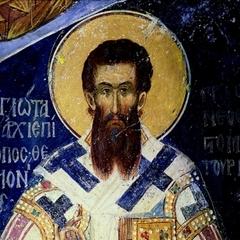
“We know that prayer in and of itself cannot save us, but carrying it out before God can. For when the Lord's eyes are upon us He sanctifies us, as the sun warms everything upon which it shines.” KnowsEyeChristianPrayerLordSunShiningOrthodoxOrthodox ChristianSanctify Author:Gregory Palamas
“When we become incorruptible and immortal, and attain to the blessed state of conformity with Christ, we will be ever with the Lord (as Scripture says), gaining fulfillment in the purest contemplations of His visible theophany which will illuminate us with its most brilliant rays, just as it illuminated the disciples at the time of the most divine Transfiguration.” SaidStatesLightChristianChristLordOpinionDivineBlessedSaintBrilliantFulfillmentContemplationVisibleRevelationsImmortalOrthodoxConformityRaysDiscipleOrthodox ChristianTransfiguration Author:Gregory Palamas
“The Lord came to send fire upon the earth (cf. Lk. 12:49), and through participation in this fire He makes divine not just the human substance which He assumed for our sake, but every person who is found worthy of communion with Him.” HumansPersonsGodEarthChristianFoundReligiousLordFireDivineBibleAssumingSakeWorthyChristian InspirationalSubstanceOrthodoxTrust In GodCommunionParticipationOrthodox ChristianCommitment To GodIntimacy With GodGod Within UsCfsCommunion With GodConnecting With GodBible Verse Book:The homilies Source: The homilies
“Let none of you have a soul which is barren and without fruit. Let nobody be unloving or unreceptive to the spiritual seed. May each of you eagerly accept the celestial seed, the word of salvation (cf. Lk. 8:11), and by your own efforts bring it to perfection as a heavenly work and fruit pleasing to God. Let no one make a beginning of a good work which brings no fruit to perfection (cf. Lk. 8:14), nor declare his faith in Christ only with His tongue.” MaySoulChristianSpiritualChristEffortAcceptingPerfectionSalvationFruitTongueSeedsHeavenlyOrthodoxGood WorkOrthodox ChristianCelestialBarrenCfs Author:Gregory Palamas
“It is pointless for someone to say that he has faith in God if he does not have the works which go with faith. What benefit were their lamps to the foolish virgins who had no oil (Mt. 25:1-13), namely, deeds of love and compassion?” IfsDoeChristianCompassionBenefitsDeedsOilFoolishOrthodoxHave FaithFaith In GodVirginsLampsPointlessOrthodox ChristianLove And CompassionHave Faith In God Book:The homilies Source: The homilies
“If, as we have said, we commemorate each of the saints with hymns and appropriate songs of praise, how much more should we celebrate the memory of Peter and Paul, the supreme leaders of the pre-eminent company of the apostles? They are the fathers and guides of all Christians: apostles, martyrs, holy ascetics, priests, hierarchs, pastors and teachers.” WorldShouldLightChristianSongFatherMemoriesCommonCompanyLeaderTeachVirtueTeacherMastersHolyPraiseSaintGuidesSupremeCelebrateChiefsAppropriatePriestsOrthodoxPeterPastorMartyrApostlesOrthodox ChristianShepherdsGodlinessHymnsBuilder Author:Gregory Palamas
“They have not understood that the Lord's Cross discloses the entire dispensation of His coming in the flesh, and contains within it the whole mystery of this dispensation. Extending in all directions, it embraces everything above, below, around and between.” MenWholeChristianLordMysterySonGloryCrossesEmbraceFleshOrthodoxLiftingOrthodox ChristianExtendingLifting Up Author:Gregory Palamas
“'Now we are the sons of God'. This is the starting point of adoption. However, 'it does not yet appear what we shall be: but we know that, when He shall appear, we shall be like Him; for we shall see Him as He is' (I Jn. 3:2). This is the perfection of adoption of sons and renewal which God bestowed on us in Christ, and of which John says in his Gospel that, 'Christ gave power to become the sons of God, even to them that believe on His name: which were born, not of blood, nor of the will of the flesh nor of the will of man, but of God' (Jn. 1:12-13).” KnowsMenBelieveDoeChristianNamesChristBornBloodSonPerfectionStartingFleshOrthodoxAdoptionRenewalOrthodox ChristianStarting Point Author:Gregory Palamas
“The recovery of spiritual sight and the healing of physical blindness have much in common. Some of those whose bodily eyes were blind received their sight at once, like the man who heard and immediately saw and was healed. Others recovered their sight gradually as in the case of the man, who, before he was completely cured, said, “I see men as trees, walking”. It is the same with those whose spiritual eyes were healed.” MenSaidEyeChristianSpiritualCommonHealingCasesSawsHeardTreeStageHe ManWalkingSightBlindRecoveryOrthodoxBlindnessHealedOrthodox ChristianSpiritual Eyes Author:Gregory Palamas
“... whenever Christ, the Bridegroom of pure souls, is mystically united with each soul, He gives the Father occasion to rejoice over this as at a wedding. It is Christ Himself Who says, 'Joy shall be in heaven over one sinner who repents' (Lk. 15:7). For joy, according to the Apostle, is the fruit of the Holy Spirit (Gal. 5:22), Who through conversion brings back to Christ those living in repentance, and reunites them with Him. And this joy embraces both those in heaven and godly men on earth. That is why there is joy in heaven over one repentant sinner.” MenGivingSoulEarthChristianJoySpiritFatherHeavenChristUnitedHolyPureEmbraceFruitConversionOccasionsHoly SpiritSinnerOrthodoxRepentanceRejoiceGodlyRepentApostlesOrthodox ChristianGalsPure SoulBridegroomGodly Man Author:Gregory Palamas
“...although divided in His various powers and energies, in each of His works the Holy Spirit is wholly present and active, undividedly divided, partaken of while remaining complete, like the sun's ray.” ChristianSpiritEnergySunHolyVariousActiveHoly SpiritOrthodoxDividedRaysOrthodox Christian Author:Gregory Palamas
“...night possessed us and the shadow of death encompassed us, for we had fallen into sin and lost the power of sight which was ours by God's grace and by which we were able to perceive the light that bestows true life. Night and death had been poured out on our human nature, not because of any change in the true light, but because we had turned aside and no longer had any inclination towards the life-bearing light. In the last times, however, the Giver of eternal light and Source of true life has had mercy upon us.” HumansLightAbleChristianLastsNightLostSinGraceHuman NatureSourceEternalShadowMercySightPerceiveFallenOrthodoxPossessedLast TimeInclinationGiverOrthodox ChristianGod's GraceTrue LifeShadow Of DeathEternal Light Author:Gregory Palamas
“Given that we desire long life, should we not take eternal life into account? If we long for a kingdom which, however enduring, has an end, and glory and joy which, great as they are, will fade, and wealth that will perish with this present life, and we labour for the sake of such things; ought we not to seek the kingdom, glory, joy and riches which, as well as being all-surpassing, are unfading and endless, and ought we not to endure a little constraint in order to inherit it?” IfsShouldWellsLittlesLongEndsChristianJoyDesireOrderGivenWealthOughtEternalGloryAccountsEndureSakeRichesEndlessKingdomsLabourOrthodoxFadesLong LifeEternal LifeConstraintsOrthodox ChristianSurpassingPresent Life Author:Gregory Palamas
“...angels... are always being filled full of light, becoming ever more radiant and making blessed use of their natural ability to change. They dance for joy around the First Light, look continuously towards Him and are enlightened directly by Him, as they tirelessly sing the praises of the Fount of light and, being ministers of light, transmit illuminating grace to those lower beings who are being enlightened.” FirstsLooksUseLightChristianJoyNaturalAbilityGraceBecomingAngelPraiseBlessedFilledMinistersEnlightenedOrthodoxOrthodox ChristianRadiantTransmitIlluminatingAbility To ChangeNatural Ability Author:Gregory Palamas
“If... God highly exalted Christ because He humbled Himself, suffered dishonour, was tempted and endured a shameful cross and death for our sake, how will He save, glorify and raise us up if we neither choose humility, nor show love to our fellows, nor gain our souls by enduring temptation (cf. Lk. 21:19), nor follow the saving Guide through the 'strait gate' and along the 'narrow way' leading to eternal life (Mt. 7:14)? To this end we were called, says Peter, the chief Apostle, ' Because Christ also suffered for us, leaving us an example that we should follow His steps' (I Pet. 2:21).” IfsWayShouldSoulEndsShowsChristianChristStepsExampleHumilityEternalGainsCrossesRaisesFellowsEndureLeavingSakeGuidesTemptationSavingChiefsPetOrthodoxGatesPeterTemptedEternal LifeApostlesOrthodox ChristianShamefulExaltedGlorifyCfsDishonour Author:Gregory Palamas
“...those called by Christ's name should order their lives. They should persevere in prayers and supplications and, in imitation of the angels, have their eyes lifted up to the Master above the heavens, praising and blessing Him with irreproachable conduct, and waiting for His mystical Coming. As the Psalmist says to Him, 'I will sing and will behave myself wisely in a perfect way. O when wilt Thou come unto me?' (Ps. 101:2).” WayShouldEyeChristianOrderNamesHeavenWaitingChristPrayerPerfectMastersBlessingAngelPraiseBehaveOrthodoxImitationMysticalPersevereOrthodox ChristianSupplication Author:Gregory Palamas
“[Our Lord Jesus Christ] was... carried up to heaven (Lk. 24:50-51). With a radiant cloud for a chariot, He ascended in glory (cf. Acts 1:9), entered the Holy of Holies not made by hands and sat down on the right hand of the heavenly majesty, making our human substance share His own throne and divinity.” HumansMadeHandsChristianJesusHeavenChristLordShareHolyGloryJesus ChristCloudsSubstanceSatDivinityHeavenlyOrthodoxThronesMajestyOur LordOrthodox ChristianRadiantLord Jesus ChristCfsChariotsOur Lord Jesus Christ Author:Gregory Palamas
“We start... imitation of Christ with Holy Baptism, which symbolizes the Lord's Burial and Resurrection. Virtuous living and conduct in accord with the Gospel are its intermediate stage, and its perfection is victory through spiritual struggles against the passions, which procures painless, indestructible, heavenly life.” ChristianSpiritualPassionChristLordStruggleStageVictoryHolyPerfectionHeavenlyOrthodoxResurrectionVirtuousImitationAccordOrthodox ChristianBaptismBurialIndestructiblePainless Author:Gregory Palamas
“...the grace of the Spirit takes possession of the quiet soul, and gives it a taste of the unspeakable good things to come, which no passionate and negligent eye has seen, nor ear heard, neither have entered into the heart of such a man (cf. I Cor. 2:9). This taste is the earnest of these good things, and the heart which accepts these pledges becomes spiritual and receives assurance of its salvation.” MenGivingHeartSoulEyeChristianSpiritualSpiritAcceptingGraceHeardTasteQuietEarsSalvationGood ThingsPassionatePossessionOrthodoxAssuranceEarnestPledgeOrthodox ChristianUnspeakableCfs Author:Gregory Palamas
“...if anyone looks with faith at the mystical table and the Bread of Life placed on it, he sees the Person of the Word of God, Who was made flesh for our sake and dwelt among us (John 1:14). If he shows himself a worthy receptacle, he will not only see but become a partaker of Him, receive Him to dwell within him, and be filled with His divine grace.” IfsLooksPersonsMadeShowsChristianGraceDivineTablesFilledSakeWorthyFleshBreadOrthodoxWord Of GodMysticalOrthodox ChristianDivine GraceBread Of Life Author:Gregory Palamas
“'Go to My brethren, and say unto them, I ascend unto My Father, and your Father, and to My God, and your God' (Jn. 20:!7). He is our Father by grace through the Spirit of adoption (Rom. 8:15), but His Father by nature on account of His divinity. Similarly, He is our God as the creator of our human nature, but His God by reason of the dispensation whereby He became man. He made these distinctions so that we might understand the difference.” MenHumansMadeReasonMightChristianSpiritFatherDifferencesGraceHuman NatureAccountsCreatorDistinctionDivinityOrthodoxAdoptionOur FatherOrthodox ChristianBrethren Author:Gregory Palamas
“...the wise providence of God orders our affairs in many different ways and lovingly bestows on each one of us what is appropriate and profitable both for virtuous deeds and the mysteries of faith.” WayDifferentChristianOrderWiseMysteryAffairDeedsDifferent WaysAppropriateOrthodoxVirtuousProvidenceProfitableOrthodox Christian Book:The homilies Source: The homilies
“Grace comes immediately to meet some of those who strive, giving them assurance of the earnest of their inheritance (cf. Eph. 1:14), letting them taste the promised prizes, as if stretching out a loving hand to welcome them and anointing them for further struggles. With others, however, grace waits for the end of the struggle, and prepares for them the crown of patience as well. As one of the God-bearing Fathers says, 'Some receive holy rewards before their labours, some during labours, and some when they depart' (St. John Climacus).” IfsGivingWellsEndsHandsChristianFatherWaitingStruggleGraceHolyTasteRewardsStriveWelcomeLabourPrizeOrthodoxCrownsAssuranceEarnestInheritanceOrthodox ChristianStretchingCfsAnointingLoving Hands Author:Gregory Palamas
“Being bodiless, God is nowhere, but as God He is everywhere. If there were a mountain, a place or any part of Creation where God was not, then He would be found to be in some way circumscribed. So He is everywhere and in everything. In what way is this so? Is He contained not by each part but by the whole? No, because then that would be a body. He embraces and encompasses everything, and is Himself everywhere and also above everything, worshipped by true worshippers in His Spirit and Truth.” IfsWayWholeBodyWould BeChristianSpiritFoundCreationMountainEmbraceOrthodoxOrthodox ChristianWorshippers Author:Gregory Palamas
“The heavenly Father Whom we worship is the Father of the Truth, namely, of the only-begotten Son, and has the Spirit of Truth, the Holy Spirit, and those who worship Him in these Two do so because they believe in these Persons and act through Them. For the Apostle tells us that it is through the Spirit that we worship and pray (cf. Rom. 8:26), and God's only-begotten Son says, 'No man cometh unto the Father, but by Me' (John 14:6).” MenBelievePersonsTwoChristianSpiritFatherSonPrayingHolyWorshipHoly SpiritHeavenlyOrthodoxApostlesOrthodox ChristianHeavenly FatherCfs Book:The homilies Source: The homilies
“While He [the Lord Jesus] was sitting alone by the well, 'There cometh a woman of Samaria to draw water' (John 4:7). As man, the Lord was thirsty, and saw that someone who was naturally thirsty was coming to quench her thirst. As God, however, He also saw that her heart was athirst for the water of salvation, although she did not know Him Who could give it to her. So He hastened to reveal Himself to her longing soul for, as it is written, He Himself longs for those who long for Him (cf. Ps. 9:10; Prov. 7:15).” KnowsMenGivingWellsHeartLongSoulChristianJesusWaterLordSawsWrittenDrawsSittingSalvationLongingOrthodoxThirstOrthodox ChristianThirstyCfsQuenchSitting Alone Author:Gregory Palamas