Quotessence
Home / Authors / Marguerite Duras Books
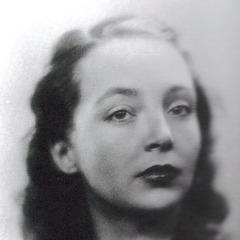
Marguerite Duras

Marguerite Duras Books

Writer

Practicalities

A source page for quotes linked to Marguerite Duras.
0 quotes

The Lover

A source page for quotes linked to Marguerite Duras.

0 quotes

Writing

A source page for quotes linked to Marguerite Duras.

0 quotes

La douleur

A source page for quotes linked to Marguerite Duras.

0 quotes

Summer rain

A source page for quotes linked to Marguerite Duras.

0 quotes

Outside

A source page for quotes linked to Marguerite Duras.

0 quotes

L'Amant

A source page for quotes linked to Marguerite Duras.

0 quotes

C'est tout

A source page for quotes linked to Marguerite Duras.

0 quotes

Emily L.

A source page for quotes linked to Marguerite Duras.

0 quotes

Green Eyes

A source page for quotes linked to Marguerite Duras.

0 quotes

The Vice-Consul

A source page for quotes linked to Marguerite Duras.

0 quotes

Related Quotes

“Hélène Lagonelle’s body is heavy, innocent still, her skin’s as soft as that of certain fruits, you almost can’t grasp her, she’s almost illusory, it’s too much. She makes you want to kill her, she conjures up a marvelous dream of putting her to death with your own hands. Those flour-white shapes, she bears them unknowingly, and offers them for hands to knead, for lips to eat, without holding them back, without any knowledge of them and without any knowledge of their fabulous power. I’d like to eat Hélène Lagonelle’s breasts as he eats mine in the room in the Chinese town where I go every night to increase my knowledge of God. I’d like to devour and be devoured by those flour-white breasts of hers. I am worn out with desire for Hélène Lagonelle. I am worn out with desire. I want to take Hélène Lagonelle with me to where every evening, my eyes shut, I have imparted to me the pleasure that makes you cry out. I’d like to give Hélène Lagonelle to the man who does that to me, so he may do it in turn to her. I want it to happen in my presence, I want her to do it as I wish, I want her to give herself where I give myself. It’s via Hélène Lagonelle’s body, through it, that the ultimate pleasure would pass from him to me. A pleasure unto death.”

“Sometimes,’ she said, ‘I think I must have invented him.’ I know all I want to about your child,’ Chauvin said harshly. Anne Desbaresdes moaned again, louder than before. Again she put her hand on the table. His eyes followed her movement and finally, painfully, he understood and lifted his own leaden hand and placed it on hers. Their hands were so cold they were touching only in intention, an illusion, in order for this to be fulfilled, for the sole reason that it should be fulfilled, none other, it was no longer possible. And yet, with their hands frozen in this funereal pose, Anne Desbaresdes stopped moaning. One last time,’ she begged, ‘tell me about it one last time.’ Chauvin hesitated, his eyes somewhere else, still fixed on the back wall. Then he decided to tell her about it as if it were a memory. He had never dreamed, before meeting her, that he would one day want anything so badly.’ And she acquiesced completely?’ Wonderfully.’ Anne Desbaresdes looked at Chauvin absently. Her voice became thin, almost childlike. I'd like to understand why his desire to have it happen one day was so wonderful?’ Chauvin still avoided looking at her. Her voice was steady, wooden, the voice of a deaf person. There's no use trying to understand. It's beyond understanding.’ You mean there are some things like that that can't be gone into?’ I think so.’ Anne Desbaresdes' expression became dull, almost stupid. Her lips had turned pale, they were gray and trembled as though she were on the verge of tears. She does nothing t try and stop him?’ she whispered. No. Have a little more wine.’ She sipped her wine. He also drank, and his lips on the glass were also trembling. Time,’ he said Does it take a long time, a very long time?’ Yes, a very long time. But I don't know anything.’ He lowered his voice. ‘Like you, I don't know anything. Nothing at all.’ Anne Desbaresdes forced back her tears. Her voice was normal, momentarily awake. She will never speak again,’ she said.”

“Years after the war, after marriages, children, divorces, books, he came to Paris with his wife. He phoned her. It's me. She recognized him at once from the voice. He said, I just wanted to hear your voice. She said, it's me, hello. He was nervous, afraid, as before. His voice suddenly trembled. And with the trembling, suddenly, she heard again the voice of China. He knew she'd begun writing books, he'd heard about it through her mother whom he'd met again in Saigon. And about her younger brother, and he'd been grieved for her. Then he didn't know what to say. And then he told her. Told her that it was as before, that he still loved her, he could never stop loving her, that he'd love her until death.”

“Quella notte, perduta tra tante e tante notti, la ragazza, di questo era certa, l'aveva trascorsa su quella nave e c'era quando ciò era successo, quando era esplosa la musica di Chopin sotto il cielo luminescente. Non c'era un alito di vento e la musica si era propagata per tutto il piroscafo buio, come un'ingiunzione del cielo, chi sa per che cosa, come un ordine divino dall'ignoto significato. E la ragazza si era alzata come per andare a uccidersi a sua volta, a buttarsi a sua volta in mare e poi aveva pianto, perché aveva pensato all'uomo di Cholen e tutto a un tratto non era più sicura di non averlo amato, solo che quell'amore non l'aveva visto perché si era perso nella storia come acqua nella sabbia e lei lo ritrovava soltanto ora, nell'istante della musica sul mare.”

“Ho cominciato a scrivere in un ambiente in cui dovevo farlo con pudore. Scrivere, allora, era un impegno morale. Adesso scrivere sembra spesso non sia più niente. Talvolta me ne rendo conto: scrivere, o è mescolare tutto in un viaggio che ha per destinazione la vanità e il vento, o non è niente ; o si mescola tutto in una unità per sua natura indefinibile, o si fa soltanto della pubblicità. Ma molto spesso non ho un'opinione, vedo che tutti gli spazi sono aperti, come se non ci fossero pareti, come se lo scritto non sapesse più dove andare per nascondersi, per strutturarsi, per leggersi, come se la sua fondamentale sconvenienza non venisse più rispettata, e subito dopo non ci penso più.”

“Започнах да пиша в обкръжение, което твърде силно ме тласкаше към целомъдрие. Писането тогава беше морален акт. Писането сега като че ли често е лишено от смисъл. Понякога осъзнавам следното: че ако писането не означава домогване до суетата и преходността като съвкупност от всички неща, то няма смисъл. Че ако не означава непременно сливане на всички неща в едно-единствено, неокачествимо по своята същност нещо, писането няма друг смисъл, освен самоизтъкване. Но най-често нямам мнение, виждам, че всички полета са открити, сякаш не съществуват вече стени, сякаш написаното не знае вече къде да се дене, за да се скрие, за да се осъществи, за да се прочете, сякаш изконната му неблагопристойност не се зачита вече, но не се замислям по-дълбоко над това.”

“Un jour, j’étais âgée déjà, dans le hall d’un lieu public, un homme est venu vers moi. Il s’est fait connaître et il m’a dit : “Je vous connais depuis toujours. Tout le monde dit que vous étiez belle lorsque vous étiez jeune, je suis venu pour vous dire que pour moi je vous trouve plus belle maintenant que lorsque vous étiez jeune, j’aimais moins votre visage de jeune femme que celui que vous avez maintenant, dévasté.”

“And modern houses don't have passages, either, for children to play and run about in, and for dogs, umbrellas, coats and satchels. And don't forget that passages and corridors are where the young ones curl up and go to sleep when they're tired, and where you go and collect them to put them to bed. That's where they go when they're four years old and have had enough of the grown-ups and their philosophy. That's where, when they're unsure of themselves, they go and have a quiet cry. Houses never have enough room for children, not even if they're castles. Children don't actually look at houses, but they know them and all their nooks and crannies better than their mothers do. They rummage about. They snoop around. They don't consciously look at houses any more than they look at the walls of flesh that enclose them before they can see anything at all — but they know them. It's when they leave the house that they look at it.”

“I already know a thing or two. I know it’s not clothes that make women beautiful or otherwise, nor beauty care, nor expensive creams, nor the distinction or costliness of their finery. I know the problem lies elsewhere. I don’t know where. I only know it isn’t where women think. I look at the women in the streets of Saigon, and up-country. Some of them are very beautiful, very white, they take enormous care of their beauty here, especially up-country. They don’t do anything, just save themselves up, save themselves up for Europe, for lovers, holidays in Italy, the long six-months’ leaves every three years, when at last they’ll be able to talk about what it’s like here, this peculiar colonial existence, the marvellous domestic service provided by the houseboys, the vegetation, the dances, the white villas, big enough to get lost in, occupied by officials in distant outposts. They wait, these women. They dress just for the sake of dressing. They look at themselves. In the shade of their villas, they look at themselves for later on, they dream of romance, they already have huge wardrobes full of more dresses than they know what to do with, added together one by one like time, like the long days of waiting. Some of them go mad. Some are deserted for a young maid who keeps her mouth shut. Ditched. You can hear the word hit them, hear the sound of the blow. Some kill themselves.”

“The outrage was on the scale of God. My younger brother was immortal and they hadn't noticed. Immortality had been concealed in my brother's body while he was alive, and we hadn't noticed that it dwelt there. Now my brother's body was dead, and immortality with it. ... And the error, the outrage, filled the whole universe.”

“A woman's work, from the time she gets up to the time she goes to bed, is as hard as a day at war, worse than a man's working day. ... To men, women's work was like the rain-bringing clouds, or the rain itself. The task involved was carried out every day as regularly as sleep. So men were happy - men in the Middle Ages, men at the time of the Revolution, and men in 1986: everything in the garden was lovely.”