Quotessence
Home / Authors / Matthieu Ricard Books
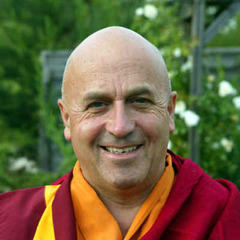
Matthieu Ricard

Matthieu Ricard Books

Monk

Why Meditate?

A source page for quotes linked to Matthieu Ricard.
0 quotes

Related Quotes

“To care for the fate of the 1.6 million other species of animals that inhabit this planet is neither unrealistic nor misguided, because most of the time there is no need to choose between the well-being of humans and the well-being of animals. We live in an essentially interdependent world where the fate of each being, of whatever kind, is intimately linked to that of all the others. So what we are suggesting here is not concern for animals only but concern for animals also.”

“To end suffering - not only by relieving its symptoms but by eradicating its root cause - is precisely the aim of the Buddha's teaching. We must first realize that the true cause of suffering is not outside, but inside. That is why true spiritual practice consists of working on one's own mind. The mind is very powerful. It can create happiness or suffering, heaven or hell. If, with the help of the Dharma, you manage to eliminate your inner poisons, nothing from outside will ever affect your happiness, but as long as those poisons remain in your mind, you will not find the happiness you seek anywhere in the world. (Nyoshul Khen Rinpoche)”

“Imagine a ship that is sinking and needs all the available power to run the pumps to drain out the rising waters. The first class passengers refuse to cooperate because they feel hot and want to use the air-conditioner and other electrical appliances. The second-class passengers spend all their time trying to be upgraded to first-class status. The boat sinks and the passengers all drown. That is where the present approach to climate change is leading.”

“The ultimate reason for meditating is to transform ourselves in order to be better able to transform the world or, to put it another way, to transform ourselves so we can become better human beings in order to serve others in a wiser and more efficient way. It gives your life the noblest possible meaning.”

“We must distinguish between spirituality in general terms, which aims to make us better people, and religion. Adopting a religion remains optional, but becoming a better human being is essential.”

“we find that the optimists have an undeniable advantage over the pessimists. Many studies show that they do better on exams, in their chosen profession, and in their relationships, live longer and in better health, enjoy a better chance of surviving postoperative shock, and are less prone to depression and suicide.”

“If we dedicate a certain amount of time each day to cultivating compassion or any other positive quality, we are likely to attain results, just like when we train the body... Meditation consists of familiarizing ourselves with a new way of being, of managing our thoughts and the way we perceive the world. Through the recent advances in neuroscience it is now possible to evaluate these methods and to verify their impact on the brain and body.”

“[Some of the people I'd met] were wonderful people as human beings, and some people were more difficult. I could not see a correlation between their particular genius in playing chess and music and mathematics, etc. ... with human qualities. Some were really good, wonderful people, and some were difficult characters, but there was no clear correlation. But when I met some spiritual masters, [I thought that] there had to be a correlation, and it turned out to be true.”

“When you see a Tibetan doctor taking care of a patient, first of all, of course there are many wonderful medicines that come from [there in the past] 2,000 years. But this doctor is usually so attentional, so kind, and so careful of what you really feel and then [he sees] you as a human being instead of running you through some quick tests. So that itself, the trust and confidence in someone that cares for you is of course so invigorating... that someone cares.”

“If contemplation of other people's pain just increases distress, then I think we should see it in another way. If we don't center too much on ourselves, then [we] increase our courage and our determination to remedy the pain, not our distress. If we have unconditional compassion, then it increases our courage. So that's the difference, self-centered motivation versus altruistic motivation.”