Quotessence
Home / Authors / Orson Scott Card
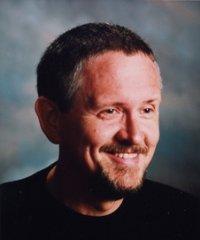
Orson Scott Card

Orson Scott Card Quotes

Novelist

Filter quotes by topic

Famous Orson Scott Card Quotes

“She had always thought that if only people could communicate mind-to-mind, eliminating the ambiguities of language, then understanding would be perfect and there'd be no more needless conflicts. Instead she had discovered that rather than magnifying differences between people, language might just as easily soften them, minimize them, smooth things over so that people could get along even though they really didn't understand each other. The illusion of comprehension allowed people to think they were more alike than they really were. Maybe language was better.”

“Besides," said Suriyawong. "This was not a rescue operation." "What was it, target practice? Chinese skeet?" "An offer of transportation to an invited guest of the Hegemon," said Suriyawong. "And the loan of a knife." Achilles held up the bloody thing, dangling it from the point. "Yours?" he asked. "Unless you want to clean it," said Suriyawong. Achillese handed it to him. Suriyawong took out his cleaning kit and wiped down the blade, then began to polish it. "You wanted me to die," said Achilles quietly. "I expected you to solve your own problems," said Suriyawong.”

“It was not about physical strength, Wit reminded himself. It was 90 percent mental, 10 percent physical. That's what the SEAL instructors were looking for: men and women who could disregard the pleadings of the body. Pain was nothing, sleep was nothing. What was chaffed skin, wrecked muscles, bleeding sores? The body chooses to be sore. The body chooses to be exhausted. But the SEAL mind rejects it. The SEAL mind commands the body, not the other way around.”

“«Eso es la Tierra —pensó—. No un globo de miles de kilómetros, sino un bosque con un lago brillante, una casa escondida en la cresta de la colina, rodeada de árboles, una ladera cubierta de hierba que subía desde el agua, peces saltando y pájaros cayendo en picado para atrapar los insectos que vivían en la frontera entre el agua y el cielo. La Tierra era el ruido constante de grillos y vientos y pájaros.”

“El enemigo no son las otras escuadras. El enemigo son los profesores. Nos obligan a pelearnos unos con otros, a odiarnos unos a otros. Nos estamos matando, nos estamos volviendo locos intentando vencernos unos a otros, y, mientras tanto, esos desgraciados nos observan, nos estudian, descubren nuestros puntos débiles, deciden si somos suficientemente buenos o no. Buenos ¿para qué? (...) Ellos decidieron que yo era bueno para el programa, pero nadie me preguntó si el programa era bueno para mí.”

“It feels like death to me, Human, how ever it feels to you.” “Come and sit in my shade,” said Human, “and see the sunlight through my leaves, and rest your back against my trunk. And do this, also. Add another story to the Hive Queen and the Hegemon. Call it the Life of Human. Tell all the humans how I was conceived on the bark of my father’s tree, and born in darkness, eating my mother’s flesh... And then my friend gave me passage to the third life, to the full light, so that I could rise into the sky and give life to ten thousand children before I die.” “I’ll tell your story,” said Ender. “Then I will truly live forever.”

“Hive Queen: They never know anything. They don't have enough years in their little lives to come to an understanding of anything at all. And yet they think they understand. From earliest childhood, they delude themselves into thinking they comprehend the world, while all that's really going on is that they've got some primitive assumptions and prejudices. As they get older they learn a more elevated vocabulary in which to express their mindless pseudo- knowledge and bully other people into accepting their prejudices as if they were truth, but it all amounts to the same thing. Individually, human beings are all dolts. Pequenino: While collectively... Hive Queen: Collectively, they're a collection of dolts. But in all their scurrying around and pretending to be wise, throwing out idiotic half-understood theories about this and that, one or two of them will come up with some idea that is just a little bit closer to the truth than what was already known. And in a sort of fumbling trial and error, about half the time the truth actually rises to the top and becomes accepted by people who still don't understand it, who simply adopt it as a new prejudice to be trusted blindly until the next dolt accidentally comes up with an improvement.> Pequenino: So you're saying that no one is ever individually intelligent, and groups are even stupider than individuals-- and yet by keeping so many fools engaged in pretending to be intelligent, they still come up with some of the same results that an intelligent species would come up with. Hive Queen: Exactly.”

“I know that you are wise. When you hear a true story, there is a part of you that responds to it regardless of art, regardless of evidence…You believe that the story is true, because you responded to it from that sense of truth deep within you. But that sense of truth does not respond to a story's factuality...[rather] to a story's causality - whether it faithfully shows the way the universe functions.”

“Since we are not yet fully comfortable with the idea that people from the next village are as human as ourselves, it is presumptuous in the extreme to suppose we could ever look at sociable, tool-making creatures who arose from other evolutionary paths and see not beasts but brothers, not rivals by fellow pilgrims journeying to the shrine of intelligence. Yet that is what I see, or yearn to see. The difference between raman and varelse is not in the creature judged but in the creature judging, and when we declare an alien species to be raman, it does not mean that they have passed a threshold of moral maturity. It means that we have.”

“Andrew sighed at Styrka’s unforgiving attitude; it was the fashion among Calvinists at Reykjavik to deny any weight to human motive in judging the good or evil of an act. Acts are good and evil in themselves, they said; and because Speakers for the Dead held as their only doctrine that good or evil exist entirely in human motive, and not at all in the act, it made students like Styrka quite hostile to Andrew.”