Quotessence
Home / Authors / Philippe Falardeau Books
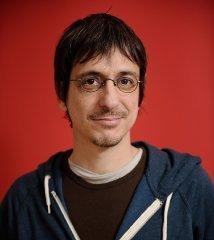
Philippe Falardeau

Philippe Falardeau Books

Film director

No books found for this author.

Related Quotes

“I was interested in immigration and I wanted to use that in the film, not necessarily to talk about immigrants, although I wanted to do that, but to talk about ourselves through the eyes of an immigrant. The film takes place in the school and it tells us a little bit about who we are and where we're at, but through the eyes of someone who has a different background.”

“I needed to create some dramatic tension to sustain the interest of the audience. For instance, the boy in the film is not in the play, so this relationship that he had with the former teacher, and his guilt, this is not at all in the play. I thought it would be interesting to look at in the film, and I added stuff like that around the main character. For me, it was not more difficult or less difficult.”

“Any place where you have to deal with many social actors like a school - you have the parents, the Ministry of Education, the school board, and the teachers - you need all kinds of sets and rules. You're trying to foresee anything that can happen and everything becomes really rigid. They don't want to talk about death because they don't want to overwhelm the children, but that has already happened, so you're not going to overwhelm them more.”

“We also have this reflex of using specialists for everything, instead of having the person who is there every day with them, the teacher, talk about death and suicide. In the film, it's portrayed a little bit like a caricature, but it's the psychologist who comes in and Monsieur Lazhar does not think it's a good idea. He thinks he should be the one who should talk about that with the children.”

“It's a romantic view of Canada. It's like Michael Moore saying we don't lock our doors in Canada. I lock my door mainly because my girlfriend wants me to lock the door, but mind you we lock our doors. It is a little simplistic to say that we blend easily back home with other cultures. It's difficult, but I think it's mainly a big city phenomenon.”

“In the province of Quebec where I come from, we speak French and the only cosmopolitan city is Montreal. Every time we tackle the subject of immigration and racial tension, it's an issue that concerns Montreal. Also, in Quebec, we have this added issue that we want people to speak French, because French is always on the verge of disappearing to some extent. I work, play and do everything in French.”

“My film is actually very critical of the level of French we're using back home. To have an immigrant from an ancient French colony come and do that is a little critical of our education system back home. Balzac is definitely over their heads. It's meant to be funny also because it would be also probably too much for kids in France, but kids in France would know who Balzac is. But, back home at that age, I guarantee you they don't know who he is.”

“What I know is that if I was asked to teach mathematics in French for a week to young kids, I would do my homework and I think I could do a decent job. I don't think a degree in education would make me a better teacher. I sometimes teach in college. I don't teach for long periods of time, but I give workshops and I think I can communicate stuff. So, it's about communicating.”

“At the end, what I like is that it's the girl's decision to go back in the room. She needs a hug, she wants a hug, she asks for a hug and he gives it to her. For me, it's like an act of resistance to go there and to transgress the taboo and to do what started the whole thing in the beginning. It was supposedly a hug that started this whole drama between the character of Simon and the teacher.”

“If you read Herodotus, the first Greek historian 2,500 years ago, he was talking about that - about people mixing with other people. Sometimes it produces great societies. Sometimes it triggers war. But, we're not going to change that. I don't think so. We're living in nations that are state nations and countries.”

“We have a conservative government that only thinks in terms of efficiency. They are spending a lot of money on military expenses and less and less on culture. My position is that culture can actually be economically viable. When I make a film, the film costs $3 million. Now, in Quebec, it grossed $3.5 million, which is a small film. It's not a comedy. There are no stars in it. And, it still grosses $3.5 million. That's just in Quebec.”

“That's grossing money for other people that has a multiplying factor, but the government doesn't see that. It doesn't see that making a film or culture or art is part of our economy. But the main reason is this, it's part of our identity. I think cinema is the memory and the imagination of the country. Take the memory and imagination out of an individual and he's stops being an individual.”

“The irony is I did an intimate film in France with no stars and that got me to Hollywood. It got me to the Oscars. If I had tried to imitate the Americans or the Hollywood movies with a commercial recipe, I'd never have gotten to Hollywood. Although, it was not my goal in any way, and I never thought there was any connection between Monsieur Lazhar and the Oscars.”

“Now I realize that I have to let everyone take what they have to take from the film. No matter what I think about the film, it becomes a little irrelevant. I think I would say that the film is trying to show us that - and I spoke about that earlier - we have to let the teachers invest in their own classroom. There's no use in trying to control everything. Education is fundamental.”

“The teacher will never be a parent. The parents are the parents. But they have to engage in some sort of active education beyond just teaching mathematics and French and English because the kids spend more time there than they do with their parents at that age. We have to accept that other adults will be part of our children's education and they will have bad teachers. That's going to happen.”

“I didn't want the film to be didactic, and this is tough because if you look at the list of issues, you have immigration, the education system, you have the grieving, you have suicide. I think what saved me were two things. I tried to do everything with some level of restraint and let the spectator make up his own mind.”

“If you look at the end of the movie [Monsegnor Lahzar], I give a lot of space to what the spectator can also imagine of what's going to be Bachir's life afterwards. So, there's the restraint part, and there's the fact that the story is happening in the school which allowed me to tackle all these subjects without making it too didactic, because in the school everything happens.”

“If you look at the Oscars and look at the Best Foreign Language series, you see that the films are coming from everywhere - from Quebec, Israel, Poland, and Belgium. It's not the usual French, German, etc. This category is opening up to socially engaged and political films. I think we're going to see a cross over to the main categories also. It's part of this global environment now and I'm grateful that the Academy is having this window on world cinema.”