Quotessence
Home / Authors / Thomas Merton
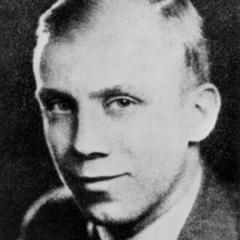
Thomas Merton

Thomas Merton Quotes

Writer

Filter quotes by topic

Famous Thomas Merton Quotes

“First, the desert is the country of madness. Second, it is the refuge of the devil, thrown out into the "wilderness of upper Egypt" to "wander in dry places." Thirst drives man mad, and the devil himself is mad with a kind of thirst for his own lost excellence--lost because he has immured himself in it and closed out everything else. So the man who wanders into the desert to be himself must take care that he does not go mad and become the servant of the one who dwells there in a sterile paradise of emptiness and rage.”

“The world of men has forgotten the joys of silence, the peace of solitude, which is necessary, to some extent, for the fullness of human living. Man cannot be happy for long unless he is in contact with the springs of spiritual life which are hidden in the depths of his own soul. If man is exiled constantly from his own home, locked out of his spiritual solitude, he ceases to be a true person.”

“The psychological impotence of our enraged generation must be traced to the overwhelming accusation of insincerity which every man and woman has to confront, in the depths of his own soul, when he seeks to love merely for his own pleasure.And yet the men of our time do not love with enough courage to risk even discomfort or inconvenience.”

“The illusion that mechanical progress means human improvement ... alienates us from our own being and our own reality. It is precisely because we are convinced that our life, as such, is better if we have a better car, a better TV set, better toothpaste, etc., that we condemn and destroy our own reality and the reality of our natural resources. Technology was made for man, not man for technology. In losing touch with being and thus with God, we have fallen into a senseless idolatry of production and consumption for their own sakes.”

“It is not humility to insist on being someone that you are not. It is as much as saying that you know better than God who you are and who you ought to be. How do you expect to arrive at the end of your own journey if you take the road to another man's city? How do you expect to reach your own perfection by leading somebody else's life? His sanctity will never be yours; you must have the humility to work out your own salvation in a darkness where you are absolutely alone.”

“If you write for God you will reach many men and bring them joy. If you write for men--you may make some money and you may give someone a little joy and you may make a noise in the world, for a little while. If you write for yourself, you can read what you yourself have written and after ten minutes you will be so disgusted that you will wish that you were dead.”

“Many poets are not poets for the same reason that many religious men are not saints: they never succeed in being themselves. They never get around to being the particular poet or the particular monk they are intended to be by God. They never become the man or the artist who is called for by all the circumstances of their individual lives. They waste their years in vain efforts to be some other poet, some other saint...They wear out their minds and bodies in a hopeless endeavor to have somebody else's experiences or write somebody else's poems.”

“Contemplation in the age of Auschwitz and Dachau, Solovky and Karaganda is something darker and more fearsome than contemplation in the age of the Church Fathers. For that very reason, the urge to seek a path of spiritual light can be a subtle temptation to sin. It certainly is sin if it means a frank rejection of the burden of our age, an escape into unreality and spiritual illusion, so as not to share the misery of other men.”

“The lights of prayer that make us imagine we are beginning to be angels are sometimes only signs that we are finally beginning to be men. We do not have a high enough opinion of our own nature. We think we are at the gates of heaven and we are only just beginning to come into our own realm as free and intelligent beings.”

“Only the man who has had to face despair is really convinced that he needs mercy. Those who do not want mercy never seek it. It is better to find God on the threshold of despair than to risk our lives in a complacency that has never felt the need of forgiveness. A life that is without problems may literally be more hopeless than one that always verges on despair.”

“First of all, although men have a common destiny, each individual also has to work out his own personal salvation for himself in fear and trembling. We can help one another to find the meaning of life no doubt. But in the last analysis, the individual person is responsible for living his own life and for "finding himself." If he persists in shifting his responsibility to somebody else, he fails to find out the meaning of his own existence. You cannot tell me who I am and I cannot tell you who you are. If you do not know your own identity, who is going to identify you?”

“It is true that neither the ancient wisdoms nor the modern sciences are complete in themselves. They do not stand alone. They call for one another. Wisdom without science is unable to penetrate the full sapiential meaning of the created and the material cosmos. Science without wisdom leaves man enslaved to a world of unrelated objects in which there is no way of discovering (or creating) order and deep significance in man's own pointless existence. (p. 4)”

“They were in the world and not of it--not because they were saints, but in a different way: because they were artists. The integrity of an artist lifts a man above the level of the world without delivering him from it.”

“The soul of man, left to its own natural level, is a potentially lucid crystal left in darkness. It is perfect in its own nature, but it lacks something that it can only receive from outside and above itself. But when the light shines in it, it becomes in a manner transformed into light and seems to lose its nature in the splendor of a higher nature, the nature of the light that is in it.”

“The logic of worldly success rests on a fallacy: the strange error that our perfection depends on the thoughts and opinions and applause of other men! A weird life it is, indeed, to be living always in somebody else's imagination, as if that were the only place in which one could at last become real!”

“A purely mental life may be destructive if it leads us to substitute thought for life and ideas for actions. The activity proper to man is purely mental because man is not just a disembodied mind. Our destiny is to live out what we think, because unless we live what we know, we do not even know it. It is only by making our knowledge part of ourselves, through action, that we enter into the reality that is signified by our concepts.”

“Everything in modern city life is calculated to keep man from entering into himself and thinking about spiritual things. Even with the best of intentions a spiritual man finds himself exhausted and deadened and debased by the constant noise of machines and loudspeakers, the dead air and the glaring lights of offices and shops, the everlasting suggestion of advertising and propaganda. The whole mechanism of modern life is geared for a flight from God and from the spirit into the wilderness of neurosis.”

“But the man who is not afraid to admit everything that he sees to be wrong with himself, and yet recognizes that he may be the object of God's love precisely because of his shortcomings, can begin to be sincere. His sincerity is based on confidence, not in his own illusions about himself, but in the endless, unfailing mercy of God.”

“The man who fears to be alone will never be anything but lonely, no matter how much he may surround himself with people. But the man who learns, in solitude and recollection, to be at peace with his own loneliness, and to prefer its reality to the illusion of merely natural companionship, comes to know the invisible companionship of God. Such a one is alone with God in all places, and he alone truly enjoys the companionship of other men, because he loves them in God in Whom their presence is not tiresome, and because of Whom his own love for them can never know satiety.”

“As long as we are on earth, the love that unites us will bring us suffering by our very contact with one another, because this love is the resetting of a body of broken bones. Even saints cannot live with saints on this earth without some anguish. There are two things which men can do about the pain of disunion with other men. They can love or they can hate.”

“Some of us need to discover that we will not begin to live more fully until we have the courage to do and see and taste and experience much less than usual... And for a man who has let himself be drawn completely out of himself by his activity, nothing is more difficult than to sit still and rest, doing nothing at all. The very act of resting is the hardest and most courageous act he can perform.”

“As a magnifying glass concentrates the rays of the sun into a little burning knot of heat that can set fire to a dry leaf or a piece of paper, so the mystery of Christ in the Gospel concentrates the rays of God's light and fire to a point that sets fire to the spirit of man. ... Through the glass of His Incarnation He concentrates the rays of His Divine Truth and Love upon us so that we feel the burn, and all mystical experience is communicated to men through the Man Christ.”