Quotessence
Home / Authors / Thomas Merton
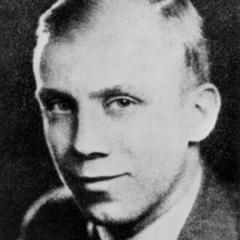
Thomas Merton

Thomas Merton Quotes

Writer

Filter quotes by topic

Famous Thomas Merton Quotes

“There are crimes which no one would commit as an individual which he willingly and bravely commits when acting in the name of his society, because he has been (too easily) convinced that evil is entirely different when it is done 'for the common good.'...one might point to the way in which racial hatreds and even persecution are admitted by people who consider themselves, and perhaps in some sense are, kind, tolerant, civilized and even humane.”

“The danger of education, I have found, is that it so easily confuses means with ends. Worse than that, it quite easily forgets both and devotes itself merely to the mass production of uneducated gradtuates - people literaly unfit for anything except to take part in an elaborate and completely artificial charade which they and their contemporaries have conspired to call "life".”

“In Louisville, at the corner of Fourth and Walnut, in the center of the shopping district, I was suddenly overwhelmed with the realization that I loved all those people, that they were mine and I theirs, that we could not be alien to one another even though we were total strangers.”

“Let me say this before rain becomes a utility that they can plan and distribute for money. By "they" I mean the people who cannot understand that rain is a festival, who do not appreciate its gratuity, who think that what has no price has no value, that what cannot be sold is not real, so that the only way to make something actual is to place it on the market. The time will come when they will sell you even your rain. At the moment it is still free, and I am in it. I celebrate its gratuity and its meaninglessness.”

“In the natural order no matter what ideals may be theoretically possible, most people more or less live for themselves and for their own interests and pleasures or for those of their own family or group, and therefore they are constantly interfering with one another's aims, and hurting one another and injuring one another, whether they mean it or not.”

“If we wait for some people to become agreeable or attractive before we begin to love them, we will never begin. If we are content to give them a cold impersonal 'charity' that is merely a matter of obligation, we will not trouble to understand them or to sympathize with them at all. And in that case we will not really love them, because love implies an efficacious will not only to do good to others exteriorly but also to find some good in them to which we can respond."”

“I stand among you as one who offers a small message of hope. . . there are always people who dare to seek on the margin of society, who are not dependent on social acceptance, not dependent on social routine, and prefer a kind of free-floating existence under a state of risk.”

“Do not depend on the hope of results. You may have to face the fact that your work will be apparently worthless and even achieve no result at all, if not perhaps results opposite to what you expect. As you get used to this idea, you start more and more to concentrate not on the results, but on the value, the rightness, the truth of the work itself. You gradually struggle less and less for an idea and more and more for specific people. In the end, it is the reality of personal relationship that saves everything.”

“The man who fears to be alone will never be anything but lonely, no matter how much he may surround himself with people. But the man who learns, in solitude and recollection, to be at peace with his own loneliness, and to prefer its reality to the illusion of merely natural companionship, comes to know the invisible companionship of God. Such a one is alone with God in all places, and he alone truly enjoys the companionship of other men, because he loves them in God in Whom their presence is not tiresome, and because of Whom his own love for them can never know satiety.”

“We are living in a world that is absolutely transparent and God is shining through it all the time. God manifests Himself everywhere, in everything - in people and in things and in nature and in events ... The only thing is we don't see it ... I have no program for this seeing. It is only given. But the gate of heaven is everywhere.”

“If a writer is so cautious that he never writes anything that cannot be criticized, he will never be able to write anything that can be read. If you want to help other people you have got to make up your mind to write things that some men will condemn.”

“In order to find God in ourselves, we must stop looking at ourselves, stop checking and verifying ourselves in the mirror of our own futility, and be content to be in Him and to do whatever He wills, according to our limitations, judging our acts not in the light of our own illusions, but in the light of His reality which is all around us in the things and people we live with.”

“After all, what is your personal identity? It is what you really are, your real self. None of us is what he thinks he is, or what other people think he is, still less what his passport says he is. And it is fortunate for most of us that we are mistaken. We do not generally know what is good for us. That is because, in St. Bernard's language, our true personality has been concealed under the 'disguise' of a false self, the ego, whom we tend to worship in place of God.”

“The devil is no fool. He can get people feeling about heaven the way they ought to feel about hell. He can make them fear the means of grace the way they do not fear sin. And he does so, not by light but by obscurity, not by realities but by shadows; not by clarity and substance, but by dreams and the creatures of psychosis. And men are so poor in intellect that a few cold chills down their spine will be enough to keep them from ever finding out the truth about anything.”

“I have the immense joy of being man, a member of a race in which God Himself became incarnate. As if the sorrows and stupidities of the human condition could overwhelm me, now that I realize what we all are. And if only everybody could realize this! But it cannot be explained. There is no way of telling people that they are all walking around shining like the sun.”

“I am willing to admit that some people might live there for years, or even a lifetime, so protected that they never sense the sweet stench of corruption that is all around them - the keen, thin scent of decay that pervades everything and accuses with a terrible accusation the superficial youthfulness, the abounding undergraduate noise, that fills those ancient buildings.”

“The importance of detachment from things, the importance of poverty, is that we are supposed to be free from things that we might prefer to people. Wherever things have become more important than people, we are in trouble. That is the crux of the whole matter.”

“I am beginning to realize that "sanity" is no longer a value or an end in itself. The "sanity" of modern man is about as useful to him as the huge bulk and muscles of the dinosaur. If he were a little less sane, a little more doubtful, a little more aware of his absurdities and contradictions, perhaps there might be a possibility of his survival.”

“It is a glorious destiny to be a member of the human race, now I realize what we all are . If only they [people] could all see themselves as they really are I suppose the big problem would be that we would fall down and worship each other At the center of our being is a point of nothingness which is untouched by sin and by illusions, a point of pure truth This little point is the pure glory of God in us. It is in everybody.”

“To some men peace merely means the liberty to exploit other people without fear of retaliation or interference. To others peace means the freedom to rob others without interruption. To still others it means the leisure to devour the goods of the earth without being compelled to interrupt their pleasures to feed those whom their greed is starving. And to practically everybody peace simply means the absence of any physical violence that might cast a shadow over lives devoted to the satisfaction of their animal appetites for comfort and pleasure.”

“Creation was given to people as a clean window through which the light of God could shine into people's souls. Sun and moon, night and day, rain, sea, the crops, the flowering tree, all these things were transparent. They spoke to people not of themselves but only of Him who made them. Nature was symbolic. But the progressive degradation of humans led them further and further from this truth. Nature became opaque.”