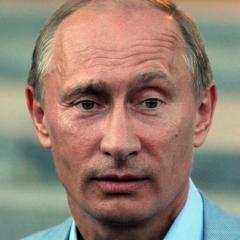
“Therefore, I do not think we should go only 60 years back but should look deeper, centuries back. Maybe this will give us [Russia and Japan] an opportunity to look at the future from a more remote perspective.” ThinkingGivingShouldYearsLooksOpportunityCenturyPerspectiveDeeperRussiaJapan Author:Vladimir Putin
“As for these 60 years, and in general more than a hundred years, we have had different periods in relations and there have been tragic pages in our history, but since 1956 when we restored diplomatic relations, regrettably, we have not had a foundation on which to build ties that would correspond to our wishes and that are currently required in bilateral cooperation with Japan.” YearsHas BeensDifferentWishPeriodsPagesHundredRelationFoundationTiesJapanTragicCooperationDiplomaticDiplomatic Relations Author:Vladimir Putin
“We are natural partners [with Japan] in the world and the Far East, but the absence of a peace treaty does not allow us to develop the full range of our relations. Therefore, we will naturally strive to sign this treaty.” WorldDoeNaturalRelationStriveEastAbsencePartnersRangeJapanTreatiesPeace Treaties Author:Vladimir Putin
“We want full-scale normalisation of relations [with Japan].” WantRelationScalesJapan Author:Vladimir Putin
“The absence of a peace treaty [with Japan] is an anachronism we inherited from the past and it must be removed. However, how to do this is a complicated issue.” PastIssuesComplicatedAbsenceJapanTreatiesAnachronismPeace Treaties Author:Vladimir Putin
“You recalled the 1956 declaration, and this declaration established the rules that should be followed by both sides and that should be put into the foundation of a peace treaty. If you carefully read the text of this document, you will see that the declaration will take effect after we sign a peace treaty and the two islands [Kunashir and Shikotan] are transferred to Japan. It does not say on what terms they should be transferred and what side will exercise sovereignty over them.” IfsShouldDoeTwoSidesTermEffectsExerciseFoundationIslandsJapanDocumentsDeclarationBoth SidesSovereigntyTreatiesIf You CarePeace Treaties Author:Vladimir Putin
“Japan announced that it would not comply with this declaration [ 1956]. Later on, the Soviet Union also declared that the declaration could not be fulfilled unilaterally, by the USSR alone.” UnionsJapanSovietFulfilledDeclarationSoviet UnionUssr Author:Vladimir Putin
“In 2000 the then Prime Minister of Japan [Yoshirō Mori] asked me to return to this process, this conversation, these talks, and to do so, incidentally, on the basis of the 1956 declaration. I agreed. Since then we have conducted dialogue in this regard but I cannot say that our Japanese partners and friends have remained within the limits of the 1956 declaration.” ProcessReturnConversationLimitsBasesRegardPartnersDialogueMinistersJapanPrimeDeclarationPrime Minister Author:Vladimir Putin
“Of course, we will work towards that end. Of course, we will work to achieve this result. However, you have just mentioned the 1956 agreement, and one may recall that these negotiations were later terminated, in effect, on Japan's initiative.” MayEndsCoursesResultsAchieveEffectsJapanAgreementInitiativeRecallsNegotiation Author:Vladimir Putin
“At the request of my Japanese colleagues, in 2000 we revisited the possibility of signing a peace treaty based on the 1956 agreement.” PossibilityAgreementColleaguesRequestTreatiesSigningPeace Treaties Author:Vladimir Putin
“However, the 1956 agreement refers to two islands while the Prime Minister [Shindzo Abe] is talking about four islands.” TwoTalkingFourMinistersIslandsAgreementPrimePrime MinisterAbe Author:Vladimir Putin
“I believe it is no secret that I like Japan very much - Japanese culture, sport, including judo, but it will not offend anyone if I say that I like Russia even more.” IfsBelieveCultureI BelieveSportsSecretIncludingRussiaJapanJudoJapanese Culture Author:Vladimir Putin
“The Prime Minister [Shindzo Abe] and I will negotiate proceeding from our national interests: the interests of Russia and the interests of Japan. We should find a compromise.” ShouldInterestRussiaCompromiseMinistersJapanPrimePrime MinisterProceedingNational InterestsAbe Author:Vladimir Putin
“We [with Shindzo Abe] should understand that the results of that terrible tragedy of the 20th century, namely World War II, are enshrined in corresponding international documents, and finding a way to settle all disputes without destroying the entire foundation of international law that evolved as a result of World War II is a highly delicate task. Therefore, I would like to reiterate that we cannot second-guess the course, let alone the outcome of our negotiations.” WorldWayShouldWarLawCoursesResultsCenturyTerribleFindingsTasksTragedyFoundationInternationalSettlingWar Of The WorldsOutcomesDestroyingWorld War IiDelicateWorld War IDocuments20th CenturyNegotiationDisputesCorrespondingInternational LawAbeTerrible Tragedy Author:Vladimir Putin
“Everything that we [with Shindzo Abe] are talking about has come to us as a result of the events of 70 years ago. In some way or other, during these 70 years we have been involved in some kind of dialogue on the issue, and that includes the conclusion of a peace treaty.” WayYearsKindHas BeensResultsTalkingIssuesEventsInvolvedYears AgoDialogueConclusionTreatiesAbePeace Treaties Author:Vladimir Putin
“I wish that in the course of my visit to places the Prime Minister [Shindzo Abe] calls home, all of a sudden, we would reach a clear understanding on how we can resolve the matters. We will be very glad if that happens. Are there any chances? Perhaps.” IfsMatterHomeHappensCoursesWishUnderstandingChanceClearGladMinistersResolvePrimePrime MinisterAbe Author:Vladimir Putin
“There is always a chance [for negotiations with Japan], or else it makes no sense to talk. How great is it? Right now, it is difficult for me to say, because this will depend, among other things, on the flexibility of our partners.” DifficultChanceDependsRight NowPartnersJapanNegotiationFlexibility Author:Vladimir Putin
“You have made a very good point: both the Prime Minister [Shindzo Abe] and I enjoy a fairly high level of trust among the citizens of our countries.” MadeCountryEnjoyLevelsCitizensVery GoodOur CountryMinistersPrimePrime MinisterHigh LevelAbe Author:Vladimir Putin
“However, personally, I see this as not having the right to abuse this trust [among the citizens of Russia and Japan], and any decision we reach should correspond to the national interests of the Russian Federation.” ShouldInterestDecisionCitizensAbuseRussiaJapanNational InterestsFederation Author:Vladimir Putin
“Yet our interests, the interests of the Russian Federation, include the normalisation of relations with Japan, which is not at the bottom of the agenda. The whole range of what will be proposed for a solution, the entire range of matters related to the normalisation of our relations and what that would bring after normalisation, this is the whole range of issues to be discussed and decided, and those decisions should be of a practical nature.” ShouldMatterWholeInterestDecisionIssuesSolutionsDecidedRelationBottomPracticalsRangeRelatedJapanAgendasFederation Author:Vladimir Putin
“Prime Minister [Shinzō Abe] and I have spoken a lot, and we said all the right things, in my opinion, about creating an atmosphere of trust and friendship between our nations and peoples.” SaidNationsOpinionCreatingAtmosphereMinistersRight ThingPrimePrime MinisterAbeTrust And Friendship Author:Vladimir Putin
“Our agreements on creating the conditions for preparing a peace treaty [with Japan] should be rooted in this trust. This may be achieved, for example, by large-scale economic activities that will also cover the Kuril Islands. It may be achieved by solving purely humanitarian issues, for instance, unhindered visa-free travel by former residents of the Southern Kuril Islands to where they used to live: visiting cemeteries, native places and so on.” ShouldMayUsedIssuesEconomicConditionsExampleActivityCreatingHumanitarianScalesInstanceFormerIslandsNativeJapanAgreementSouthernRootedPreparingVisitingTreatiesCemeteryResidentsVisaLarge ScalePeace TreatiesNative Place Author:Vladimir Putin
“This is the large range of issues we have to discuss [with Shinzō Abe] and make a decision on each one of them. Look, after the resumption of the negotiating process in 2000, we did not refuse to consistently work toward signing this peace treaty.” LooksProcessDecisionIssuesRefuseRangeConsistentlyTreatiesSigningNegotiatingAbePeace TreatiesResumption Author:Vladimir Putin
“At some point a few years ago Japan unilaterally stopped those talks and broke off contacts with us. It was not we who broke off contacts with Japan, it was the Japanese side that broke off contacts with us.” YearsSidesYears AgoContactBrokeJapan Author:Vladimir Putin
“Japan has joined the sanctions against the Russian Federation. How are we going to further economic relations on a new and much higher basis, at a higher level under the sanctions regime?” LevelsEconomicHigherBasesRelationJapanRegimesSanctionsHigher LevelFederation Author:Vladimir Putin
“I will not offer my thoughts on what Japan could and should have done, this is none of my business, it is the business of the Japanese leadership. But we should understand how practicable all our agreements are as a whole given the allied obligations Japan has assumed, how much independence there is in making those decision, and what we can hope for, what we can ultimately arrive at.” ShouldDoneWholeGivenDecisionOffersShould HaveIndependenceObligationJapanAgreementMy Thoughts Author:Vladimir Putin
“As regards humanitarian issues and how to handle them, that was the Prime Minister's [Shinzō Abe] initiative. He brought the matter up at our last meeting in Lima and asked me straightforwardly whether we would agree to let Japanese citizens travel on a visa-free basis, resolve the issue in such a way as to enable them to visit the South Kurils, visit their native areas. I said at once that it was quite possible.” WaySaidMatterLastsIssuesCitizensAreasBasesRegardAgreeMeetingsSouthHumanitarianHandleMinistersNativeResolvePrimeInitiativePrime MinisterVisaAbe Author:Vladimir Putin
“Our foreign ministries will simply need to sort out some purely technical matters. I see no political restraints here. The same applies to economic matters. We, on our part, are ready. However, let me repeat once again, given that Japan has joined the anti-Russian sanctions, how ready is Japan and how can it do that without breaching its commitments to its allies? We do not know the answer. Only Japan itself knows the answer.” KnowsNeedsMatterPoliticalGivenAnswersEconomicReadyCommitmentLet MeRepeatsJapanAlliesMinistryRestraintSanctions Author:Vladimir Putin
“We negotiated the construction of a gas pipeline system along the bottom of the Black Sea to Bulgaria. We signed certain treaties of a technical nature, contracts for laying the gas pipeline. And then Bulgaria created such conditions that the project's implementation became impossible, which was obviously against its own national interests. The former Bulgarian leadership was, in fact, aware of that and acknowledged it. But we trusted them when we were launching that project. We sustained losses amounting to millions, several million dollars. We would not want to get into such situations.” WantFactsCertainBlackInterestLossSituationMillionsImpossibleSeaConditionsProjectsDollarsBottomFormerGasContractsConstructionTrustedMillion DollarsTreatiesImplementationPipelineLaunchingNational InterestsBulgariaBulgarians Author:Vladimir Putin
“I do not want to speak about our cooperation with Japan now. Thank God, we have had no such problems there. Nor would we want any to arise in the future. Therefore, everything needs to be pre-calculated, and we need to agree upon everything in advance.” WantNeedsProblemSpeakAgreeAriseJapanCooperationThank GodAgree Upon Author:Vladimir Putin
“We were in negotiations, but then the Japanese side suspended them unilaterally. Now, at the request of our Japanese partners, we have reopened these talks.” SidesPartnersNegotiationRequestSuspended Author:Vladimir Putin
“At the request of our Japanese partners, we have reopened these talks [about territories]. What command is given in this case in judo? You probably know better than I do: Yoshi (continue). So we will continue.” KnowsGivenCasesPartnersCommandTerritoryRequestJudo Author:Vladimir Putin
“I believe there are a lot of questions today that require expert analysis by various agencies: political agencies, foreign ministries, economic agencies and security agencies. We need to assess everything and understand what we can agree on and what the implications will be both for Japan and for Russia so that both the Russian people and the Japanese people come to the conclusion that these compromise solutions are acceptable and are in our countries' interests.” PeopleNeedsBelieveCountryTodayPoliticalI BelieveInterestEconomicSecuritySolutionsAgreeVariousRussiaConclusionCompromiseOur CountryAnalysisExpertsAgencyJapanAcceptableMinistryImplications Author:Vladimir Putin
“We believe we have no territorial problems at all. It is only Japan that believes it has territorial problems with Russia. We are ready to talk about this.” BelieveProblemReadyRussiaJapanTerritorial Author:Vladimir Putin
“There is progress in the sense that the Prime Minister [Shinzō Abe] has proposed, outlined, as it were, directions for movement toward a peace treaty and the resolution of issues related to territorial problems. Now, what did he propose? He proposed promoting an environment of trust and cooperation. I believe it is even hard to imagine that it can be any different, that we can agree to sign the documents that we are talking about without trusting each other or without cooperation. That is simply impossible even to imagine.” BelieveDifferentHardProblemI BelieveTalkingIssuesEnvironmentImagineProgressImpossibleMovementAgreeMinistersRelatedResolutionPrimeCooperationImagine ThatDocumentsPrime MinisterPromotingProposeTreatiesTerritorialAbeWithout TrustPeace TreatiesTrusting Each Other Author:Vladimir Putin
“The Prime Minister [Shinzō Abe] proposed advancing to a new level of economic engagement, putting forward eight lines of cooperation in the most important and interesting areas both for Russia and for Japan.” ImportantLinesInterestingLevelsEconomicAreasEightRussiaMinistersJapanPrimeCooperationEngagementPrime MinisterAdvancingAbe Author:Vladimir Putin
“The Prime Minister [Shinzō Abe] also highlighted the need to address general humanitarian issues. We already mentioned one of these issues: visa-free travel by Japanese citizens to the South Kuril Islands.” NeedsIssuesCitizensSouthHumanitarianMinistersIslandsAddressesPrimePrime MinisterVisaAbe Author:Vladimir Putin
“There are also other areas. For example, culture. This is extremely important. We keep revisiting sport, judo, because I practice it, but other than that, there is also culture. Every year events that are in some way or other related to Russia take place in Japan.” WayYearsImportantCultureSportsPracticeEventsExampleAreasRussiaRelatedJapanJudo Author:Vladimir Putin
“Next year [2017], we are going to hold a series of events there that we would like to call Russian Seasons [in Japan]. Over 40 different activities - and what is more, in different cities.” YearsDifferentNextCitiesEventsActivitySeasonsSeriesJapanNext Year Author:Vladimir Putin
“I assure you that interest in Japanese culture in Russia is just as strong as interest in Russian culture in Japan.” CultureStrongInterestRussiaJapanJapanese Culture Author:Vladimir Putin
“It is simply that we treat Japanese history, the history of the Japanese people and its unique culture with greater respect and interest. This generates enormous interest in Russia!” PeopleCultureInterestGreaterUniqueTreatsRussiaEnormous Author:Vladimir Putin
“If we do it, if we work to achieve all this [cultural exchange with Japan], we can and should talk about joint efforts toward ensuring international security, and not only in the Far East.” IfsShouldEffortAchieveSecurityInternationalEastJapanNational SecurityJointsCultural ExchangeJoint Efforts Author:Vladimir Putin
“Are we not concerned, for example, by the growing danger related to the proliferation of weapons of mass destruction and missile technology? All of this poses a clear threat to the world, to the region. However, we have obvious points of convergence that are related to our interests.” WorldInterestTechnologyClearGrowingDangerExampleWeaponsMassConcernedDestructionThreatObviousRelatedRegionsMissilesWeapons Of Mass DestructionMass DestructionProliferationConvergence Author:Vladimir Putin
“If we act together along these lines, we will create conditions, the conditions for trust that Shinzō Abe speaks about, so as to take another step and conclude a peace treaty on certain terms. However, first, it is essential to cover this part of the way and then agree on the terms for signing a peace treaty. Both are challenging tasks but they are feasible.” IfsWayFirstsTogetherCertainSpeakTermChallengesLinesStepsConditionsEssentialsTasksAgreeTreatiesSigningAbePeace Treaties Author:Vladimir Putin
“We conducted talks on border issues with our friends in the People's Republic of China for 40 years. There were also issues related to specific territories.” PeopleYearsIssuesChinaBordersRelatedRepublicTerritory Author:Vladimir Putin
“Now we characterise Russian-Chinese relations as a strategic partnership, even a special strategic partnership. We have never had such a level of trust with China before. China is our major trade and economic partner among foreign states. We implement joint multi-billion projects. We cooperate not only within the UN Security Council, which is logical, as both China and Russia are permanent members of the UN Security Council, but also within such regional organisations as the Shanghai Cooperation Organisation, BRICS, etc.” StatesLevelsEconomicSpecialSecurityMembersProjectsMajorsRelationTradeChinaPartnersBillionsRussiaChinesePermanentEtcLogicalCooperationPartnershipCouncilJointsStrategicOrganisationSecurity CouncilShanghaiBrics Author:Vladimir Putin
“Now we are talking about concluding a free trade agreement between the Eurasian Economic Council, recently established in the post-Soviet space, and China. A similar agreement was concluded a short time ago with Vietnam. Then, we will coordinate, at least we are ready to do this, the Chinese concept of the Silk Road Economic Belt with our newly-created regional organisation. So, do you understand how diverse, multi-faceted and deep Russian-Chinese ties have become over the last couple of decades? And we resolved the border issue.” LastsSpaceTalkingIssuesEconomicReadyCoupleConceptsTradeChinaDecadesPostsChineseBordersTiesAgreementVietnamSovietDiverseCouncilBeltsOrganisationSilkShort TimeFree TradeCoordinatesTrade AgreementsConcludingSilk Road Author:Vladimir Putin
“If there were any in China and Russia in this connection, though we both made some compromises. But these were compromises between friendly countries. I think it is almost impossible to achieve such compromise in other ways.” IfsThinkingWayMadeCountryImpossibleAchieveConnectionsChinaRussiaCompromiseFriendly Author:Vladimir Putin
“I think Shidzo Abe's proposal may be the only way to achieving our goal.” ThinkingWayMayGoalAchieveProposalAbe Author:Vladimir Putin
“I only had a telephone conversation with [Donald Trump], whereas [Shinzō ] Abe met with him in person.” PersonsTrumpMetsConversationTelephonesAbe Author:Vladimir Putin