Quotessence
Home / Authors / William O. Douglas Books
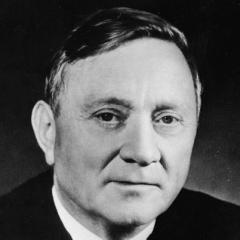
William O. Douglas

William O. Douglas Books

Former Associate Justice of the Supreme Court of the United States

Related Quotes

“These examples and many others demonstrate an alarming trend whereby the privacy and dignity of our citizens is being whittled away by sometimes imperceptible steps. Taken individually, each step may be of little consequence. But when viewed as a whole, there begins to emerge a society quite unlike any we have seen -- a society in which government may intrude into the secret regions of man's life at will." [Osborn v. United States, 385 U.S. 323, 343 (1966) (dissenting)]”

“I think that the influence towards suppression of minority views - towards orthodoxy in thinking about public issues - has been more subconscious than unconscious, stemming to a very great extent from the tendency of Americans to conform...not to deviate or depart from an orthodox point of view.”

“The people, the ultimate governors, must have absolute freedom of, and therefore privacy of, their individual opinions and beliefs regardless of how suspect or strange they may appear to others. Ancillary to that principle is the conclusion that an individual must also have absolute privacy over whatever information he may generate in the course of testing his opinions and beliefs.”

“There is no superior person by constitutional standards. An applicant who is white is entitled to no advantage by reason of that fact, nor is he subject to any disability, no matter what his race or color. Whatever his race, an applicant has a constitutional right to have his application considered on its individual merits.”

“We recognize the force of the argument that the effects of war under modern conditions may be felt in the economy for years and years, and that if the war power can be used in days of peace to treat all the wounds which war inflicts on our society, it may not only swallow up all other powers of Congress but largely obliterate the Ninth and the Tenth Amendments as well.”

“Inanimate objects are sometimes parties to litigation. A ship has a legal personality, a fiction found useful for maritime purposes. The corporation sole - a creature of ecclesiastical law - is an acceptable adversary, and large fortunes ride on its cases... So it should be as respects valleys, alpine meadows, rivers, lakes, estuaries, beaches, ridges, groves of trees, swampland, or even air that feels the destructive pressures of modern technology and modern life.”

“The river, for example, is the living symbol of all the life it sustains or nourishes - fish, aquatic insects, water ouzels, otter, fisher, deer, elk, bear, and all other animals, including man, who are dependent on it or who enjoy it for its sight, its sound, or its life. The river as plaintiff speaks for the ecological unit of life that is part of it.”

“What we must remember, however, is that preservation of liberties does not depend on motives. A suppression of liberty has the same effect whether the suppressor be a reformer or an outlaw. The only protection against misguided zeal is constant alertness to infractions of the guarantees of liberty contained in our Constitution. Each surrender of liberty to the demands of the moment makes easier another, larger surrender. . .”

“The First Amendment, however, does not say that in every and all respects there shall be a separation of Church and State. Rathe, it studiously defines the manner, the specific ways, in which there shall be no concert or union or dependency one on the other. That is the common sense of the matter. Otherwise the state and religion would be aliens to each other.”

“The First Amendment...does not say that in every respect there shall be a separation of Church and State....Otherwise the state and religion would be aliens to each other - hostile, suspicious, and even unfriendly....The state may not establish a 'religion of secularism' in the sense of affirmatively opposing or showing hostility to religion, thus preferring those who believe in no religion over those who do believe.”

“Discovery is adventure. There is an eagerness, touched at times with tenseness, as man moves ahead into the unknown. Walking the wilderness is indeed like living. The horizon drops away, bringing new sights, sounds, and smells from the earth. When one moves through the forests, his sense of discovery is quickened. Man is back in the environment from which he emerged to build factories, churches, and schools. He is primitive again, matching his wits against the earth and sky. He is free of the restraints of society and free of its safeguards too.”

“The privacy and dignity of our citizens is being whittled away by sometimes imperceptible steps. Taken individually, each step may be of little consequence. But when viewed as a whole, there begins to emerge a society quite unlike any we have seen - a society in which government may intrude into the secret regions of a life.”