Quotessence
Home / Quotes / Quote by Linda Colley

Quote by Linda Colley

“A British imperium enabled Scots to feel themselves peers of the Ebglish in a way still denied them in an island kingdom. The language bears that out very clearly. The English and the foreign are still all too inclined to refer to the island of Great Britain as 'England'. But at no time have they ever customarily referred to an English empire.”

Quote by Linda Colley

Author
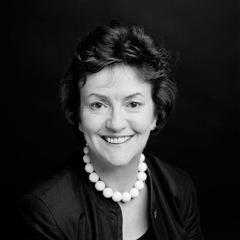
Linda Colley
Linda Colley

Linda Colley is a prominent historian specializing in British history, with a particular focus on the history of the British Empire. Born on September 13, 1949, she has made significant contributions to the field with her insightful analyses and scholarly writings. more

You May Also Like

“Can it be entirely accidental that the most famous fictional spy of them all, James Bond, Number 007, deadly marksman, intriguer, the ultimate man behind the curtain, sexual athlete and ruthless patriot, is also a Scot, as was the author, whose wish-fulfilment he was?”

“In the past, the British had signally failed to build an effective structure of royal authority and administration in their American colonies. As a result, no possibility existed of soothing and winning over influential and talented Americans, in the way that influential and talented Scotsmen were increasingly being won over, by giving them increased access to state employment.”

“Virtually every war fought since the Act of Union had gone badly at some stage, but before 1783 none had ended in defeat. Nor would any major war in which Britain was involved after this date end in defeat. Those who are curious about this country's peculiar social and political stability probably need look no further than this for essential cause.”

“These developments - a massive transfer of land by way of inheritance and purchase, an unprecedented rise in the profitability of land and increasing intermarriage between Celtic and English dynasties - helped to consolidate a new unitary ruling class in place of the more separate and specific landed establishments that had characterised England, Scotland, Wales and Ireland in the Tudor and Stuart eras.”

“As a freshman in college, I was having a lot of trouble adjusting. I took a meditation class to handle anxiety. It really helped. Then as a grad student at Harvard, I was awarded a pre-doctoral traveling fellowship to India, where my focus was on the ancient systems of psychology and meditation practices of Asia.”

“Human beings are many-layered creatures, and do not succumb to the hegemony of others as easily as historians and politicians sometimes imply. Those Welsh, Scottish and Anglo-Irish individuals who became part of the British Establishment in this period did not in the main sell out in the sense of becoming Anglicised look-alikes. Instead, they became British in a new and intensely profitable fashion, while remaining in their own minds and behavior Welsh, or Scottish, or Irish aswell.”

“Today a Scot is leading a British army in France [Field Marshall Douglas Haig], another is commanding the British Grand Fleet at sea [Admiral David Beatty], while a third directs the Imperial General Staff at home [Sir William Roberton]. The Lord Chancellor is a Scot [Viscount Finlay]; so are the Chancellor of the Exchequer and the Foreign Secretary [Bonar Law and Arthur Balfour]. The Prime Minister is a Welshman [David Lloyd George], and the First Lord of the Admiralty is an Irishman [Lord Carson]. Yet no one has ever brought in a bill to give home rule to England!”