Quotessence
Home / Quotes / Quote by David Hume

Quote by David Hume

“The heroes in paganism correspond exactly to the saints in popery, and holy dervises in MAHOMETANISM. The place of, HERCULES, THESEUS, HECTOR, ROMULUS, is now supplied by DOMINIC, FRANCIS, ANTHONY, and BENEDICT. Instead of the destruction of monsters, the subduing of tyrants, the defence of our native country; whippings and fastings, cowardice and humility, abject submission and slavish obedience, are become the means of obtaining celestial honours among mankind.”

Quote by David Hume

Work

Delphi Complete Works of David Hume (Illustrated)

The Delphi Complete Works of David Hume (Illustrated) is a meticulously curated compilation of Hume's extensive writings, covering his philosophical, historical, and political essays. This illustrated edition aims to provide readers with a rich and accessible experience of Hume's intellectual contributions, featuring detailed illustrations that complement the text. more

Author
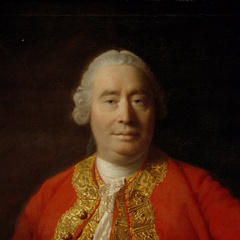
David Hume
David Hume

David Hume, born on May 7, 1711, in Edinburgh, Scotland, and died on August 25, 1776, was an outstanding philosopher, historian, and economist. Known for his contributions to empiricism and skepticism, his works have had a profound impact on subsequent philosophy, economics, and psychology. more

You May Also Like

“THERE is no method of reasoning more common, and yet none more blameable, than, in philosophical disputes, to endeavour the refutation of any hypothesis, by a pretence of its dangerous consequences to religion and morality. When any opinion leads to absurdities, it is certainly false; but it is not certain that an opinion is false, because it is of dangerous consequence. Such topics, therefore, ought entirely to be forborne; as serving nothing to the discovery of truth, but only to make the person of an antagonist odious.”

“The most perfect philosophy of the natural kind only staves off our ignorance a little longer: as perhaps the most perfect philosophy of the moral or metaphysical kind serves only to discover larger portions of it. Thus the observation of human blindness and weakness is the result of all philosophy, and meets us at every turn, in spite of our endeavours to elude or avoid it.”

“If nature has been frugal in her gifts and endowments, there is the more need of art to supply her defects. If she has been generous and liberal, know that she still expects industry and application on our part, and revenges herself in proportion to our negligent ingratitude. The richest genius, like the most fertile soil, when uncultivated, shoots up into the rankest weeds; and instead of vines and olives for the pleasure and use of man, produces, to its slothful owner, the most abundant crop of poisons.”

“It must appear impossible, that theism could, from reasoning, have been the primary religion of human race, and have afterwards, by its corruption, given birth to polytheism and to all the various superstitions of the heathen world. Reason, when obvious, prevents these corruptions: When abstruse, it keeps the principles entirely from the knowledge of the vulgar, who are alone liable to corrupt any principle or opinion.”

“A wise man's kingdom is his own breast: or, if he ever looks farther, it will only be to the judgment of a select few, who are free from prejudices, and capable of examining his work. Nothing indeed can be a stronger presumption of falsehood than the approbation of the multitude; and Phocion, you know, always suspected himself of some blunder when he was attended with the applauses of the populace.”

“He (King Philip) wanted as many Greeks as possible to take part in the festivities in honour of the gods, and so planned brilliant musical contests and lavish banquets for his friends and guests. Out of all Greece he summoned his personal guest-friends and ordered the members of his court to bring along as many as they could of their acquaintances from abroad.”