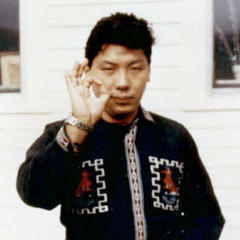
“As long as a person is involved with warfare, trying to defend or attack, then his action is not sacred; it is mundane, dualistic, a battlefield situation.”
Source: The Collected Works of Chogyam Trungpa: Volume Three: Cutting Through Spiritual Materialism; The Myth of Freedom; The Heart of the Bud dha; Selected Writings
“As in music, when we hear the crescendo building, suddenly if the music stops, we begin to hear the silence as part of the music.”
Source: The Collected Works of Chogyam Trungpa: Volume Three: Cutting Through Spiritual Materialism; The Myth of Freedom; The Heart of the Bud dha; Selected Writings
“We do not have to be ashamed of what we are. As sentient beings we have wonderful backgrounds. These backgrounds may not be particularly enlightened or peaceful or intelligent. Nevertheless, we have soil good enough to cultivate; we can plant anything in it.”
Source: The Sanity We Are Born With: A Buddhist Approach to Psychology
“If you are involved with the intensity of crescendo situations, with the intensity of tragedy, you might begin to see the humor of these situations as well. As in music, when we hear the crescendo building, suddenly if the music stops, we begin to hear the silence as part of the music.”
Source: The Collected Works of Chogyam Trungpa: Volume Three: Cutting Through Spiritual Materialism; The Myth of Freedom; The Heart of the Bud dha; Selected Writings
“The bad news is you're falling through the air, nothing to hang on to, no parachute. The good news is, there's no ground.”
“Artistic vision is having the clarity to fall in love with what you see.”
“Look. This is your world! You can't not look. There is no other world. This is your world; it is your feast. You inherited this; you inherited these eyeballs; you inherited this world of color. Look at the greatness of the whole thing. Look! Don't hesitate - look! Open your eyes. Don't blink, and look, look - look further.”
Source: The Collected Works of Chogyam Trungpa: Volume Eight: Great Eastern Sun; Shambhala; Selected Writings
“We could say that compassion is the ultimate attitude of wealth: an anti-poverty attitude, a war on want. It contains all sorts of heroic, juicy, positive, visionary, expansive qualities. And it implies larger scale thinking, a freer and more expansive way of relating to yourself and the world.”
Source: The Collected Works of Chogyam Trungpa: Volume Three: Cutting Through Spiritual Materialism; The Myth of Freedom; The Heart of the Bud dha; Selected Writings
“We say that the sun is behind the clouds, but actually it is not the sun but the city from which we view it that is behind the clouds. If we realized that the sun is never behind the clouds we might have a different attitude toward the whole thing.”
“Compassion has nothing to do with achievement at all. It is spacious and very generous. When a person develops real compassion, he is uncertain whether he is being generous to others or to himself because compassion is enviromental generosity, without direction, without " for me" and without " for them". It is filled with joy, spontaneously existing joy, constant joy in the sense of trust, in the sense that joy contains tremendous wealth, richness.”
“Free passion is radiation without a radiator, a fluid, pervasive warmth that flows effortlessly. It is not destructive because it is a balanced state of being and highly intelligent. Self-consciousness inhibits this intelligent, balanced state of being. By opening, by dropping our self-conscious grasping, we see not only the surface of an object, but we see the whole way through.”
Source: The Collected Works of Chogyam Trungpa: Volume Three: Cutting Through Spiritual Materialism; The Myth of Freedom; The Heart of the Bud dha; Selected Writings
“Anything that is created must sooner or later die. Enlightenment is permanent because we have not produced it; we have merely discovered it.”
Source: The Collected Works of Chogyam Trungpa: Volume Three: Cutting Through Spiritual Materialism; The Myth of Freedom; The Heart of the Bud dha; Selected Writings
“What the warrior renounces is anything in his experience that is a barrier between himself and others. In other words, renunciation is making yourself more available, more gentle and open to others.”
Source: The Collected Works of Chogyam Trungpa: Volume Eight: Great Eastern Sun; Shambhala; Selected Writings
“Tantra is the hot blood of spiritual practice. It smashes the taboo against unreasonable happiness; a thunderbolt path, swift, joyful, and fierce. There is no authentic Tantra without profound commitment, discipline, courage, and a sense of wild, foolhardy, fearless abandon.”
“The way of cowardice is to embed ourselves in a cocoon, in which we perpetuate our habitual patterns. When we are constantly recreating our basic patterns of habits and thought, we never have to leap into fresh air or onto fresh ground.”
“The everyday practice is simply to develop a complete acceptance and openness to all situations and emotions
and to all people, experiencing everything totally without mental reservations and blockages,
so that one never withdraws or centralizes into oneself.”
“Disappointment is a good sign of basic intelligence. It cannot be compared to anything else: it is so sharp, precise, obvious, and direct. If we can open, then we suddenly begin to see that our expectations are irrelevant compared with the reality of the situations we are facing.”
Source: The Collected Works of Chogyam Trungpa: Volume Three: Cutting Through Spiritual Materialism; The Myth of Freedom; The Heart of the Bud dha; Selected Writings
“In Tibetan, authentic presence is wangthang, which literally means, 'field of power'... The cause or the virtue that brings about authentic presence is emptying out and letting go. You have to be without clinging.”
“Walking the spiritual path properly is a very subtle process; it is not something to jump into naively. There are numerous sidetracks which leades to a distorted, ego-centered version of spirituality; we can deceive ourselves into thinking we are developing spiritually when instead we are strengthening our egocentricity through spiritual techniques. This fundamental distortion may be referred to as spiritual materialism”
“To be a warrior is to learn to be genuine in every moment of your life.”
Source: Shambhala: The Sacred Path of the Warrior
“When we talk about compassion we talk in terms of being kind. But compassion is not so much being kind; it is being creative [enough] to wake a person up”
“The challenge of warriorship is to live fully in the world as it is and to find within this world, with all its paradoxes, the essence of nowness. If we open our eyes, if we open our minds, if we open our hearts, we will find that this world is a magical place.”
Source: The Collected Works of Chogyam Trungpa: Volume Eight: Great Eastern Sun; Shambhala; Selected Writings
“Enlightenment is like witnessing the brilliant sun for the first time in the morning. It is like seeing the beautiful flowers that grow in the woods , the frolicking deer, a bird flying proudly, or fish swimming. Life is not all that grim. In the morning when you brush your teeth, you can see how shiny they are. Reality has its own gallantry, spark, and arrogance. You can study life while you are alive. You can study how you can achieve the brilliance of life.”
“Our life is an endless journey; it is like a broad highway that extends infinitely into the distance. The practice of meditation provides a vehicle to travel on that road. Our journey consists of constant ups and downs.”
Source: Shambhala: The Sacred Path of the Warrior
“For the very reason that we expect things to be good and beautiful, they won't be. In genuine spirituality, we don't look for bliss.”
“The charnel ground is that great graveyard in which the complexities of samsara and nirvana lie buried.”
“Watchfulness is experiencing a sudden glimpse of something without any qualifications - just the sudden glimpse itself.”
Source: True Perception: The Path of Dharma Art
“The essence of warriorship, or the essence of human bravery, is refusing to give up on anyone or anything. We can never say that we are simply falling to pieces or that anyone else is, and we can never say that about the world either. Within our lifetime there will be great problems in the world, but let us make sure than within our lifetime do disasters happen. We can prevent them. It is up to us.”
Source: Shambhala: The Sacred Path of the Warrior
“A genuine sense of humor is having a light touch: not beating reality into the ground but appreciating reality with a light touch. The basis of Shambhala vision is rediscovering that perfect and real sense of humor, that light touch of appreciation.”
Source: The Collected Works of Chogyam Trungpa: Volume Eight: Great Eastern Sun; Shambhala; Selected Writings
“We have a fear of facing ourselves. That is the obstacle. Experiencing the innermost core of our existence is very embarrassing to a lot of people. A lot of people turn to something that they hope will liberate them without their having to face themselves. That is impossible. We can't do that. We have to be honest with ourselves. We have to see our gut, our excrement, our most undesirable parts. We have to see them. That is the foundation of warriorship, basically speaking. Whatever is there, we have to face it, we have to look at it, study it, work with it and practice meditation with it.”
Source: Ocean of Dharma: The Everyday Wisdom of Chogyam Trungpa
“Even fear itself is frightened by the bodhisattva's fearlessness.”
“In the garden of gentle sanity,
May you be bombarded by coconuts of wakefulness.”
“Compassion is not having any hesitation to reflect your light on things”
Source: The Collected Works of Chögyam Trungpa, Volume 10: Work, Sex, Money - Mindfulness in Action - Devotion and Crazy Wisdom - Selected Writings
“Too often, people think that solving the world's problems is based on conquering the earth, rather than touching the earth, touching ground.”
Source: The Collected Works of Chogyam Trungpa: Volume Eight: Great Eastern Sun; Shambhala; Selected Writings
“Sanity lies somewhere between the inhibitions of conventional morality and the looseness of extreme impulse, but the area in-between is very fuzzy.”
“Helping others is a question of being genuine and projecting that genuineness to others. This way of being doesn't have to have a title or a name particularly. It is just being ultimately decent.”
Source: Ocean of Dharma: The Everyday Wisdom of Chogyam Trungpa
“When you are frightened by something, you have to relate with fear, explore why you are frightened, and develop some sense of conviction. You can actually look at fear. Then fear ceases to be the dominant situation that is going to defeat you. Fear can be conquered. You can be free from fear if you realize that fear is not the ogre. You can step on fear, and therefore, you can attain what is known as fearlessness. But that requires that, when you see fear, you smile.”
Source: The Collected Works of Chogyam Trungpa: Volume Eight: Great Eastern Sun; Shambhala; Selected Writings
“We must be willing to be completely ordinary people, which means accepting ourselves as we are without trying to become greater, purer, more spiritual, more insightful. If we can accept our imperfections as they are, quite ordinarily, then we can use them as part of the path. But if we try to get rid of our imperfections, then they will be enemies, obstacles on the road to our ‘self-improvement’.”
Source: The Collected Works of Chogyam Trungpa: Volume Three: Cutting Through Spiritual Materialism; The Myth of Freedom; The Heart of the Bud dha; Selected Writings
“Any perception can connect us to reality, properly and fully. What we see doesn't have to be pretty, particularly; we can appreciate anything that exists. There is some principle of magic in everything, some living quality. Something living, something real, is taking place in everything.”
Source: The Collected Works of Chogyam Trungpa: Volume Eight: Great Eastern Sun; Shambhala; Selected Writings
“Things get very clear when you're cornered.”
Source: The Collected Works of Chogyam Trungpa: Volume Four: Journey without Goal; The Lion's Roar; The Dawn of Tantra; An Interview with Cho gyam Trungpa
“The warrior is not afraid of space”
Source: Ocean of Dharma: The Everyday Wisdom of Chogyam Trungpa
“Chaos should be regarded as extremely good news!”
Source: The Collected Works of Chogyam Trungpa: Volume Three: Cutting Through Spiritual Materialism; The Myth of Freedom; The Heart of the Bud dha; Selected Writings
“Magic is the power within oneself. You have enough strength and exertion and energy to view things as they are, personally, properly, and directly. You have the chance to experience the brightness of life and the haziness of life, which is also a source of power. The fantastically sharp-edged quality of life can be experienced personally and directly. There is a powerful sense of perception available to you.”
“When human beings lose their connection to nature, to heaven and earth, then they do not know how to nurture their environmect or how to rule their world - which is saying the same thing. Human beings destroy their ecology at the same time that they destroy one another. From that perspective, healing our society goes hand in hand with healing our personal, elemental connection with the phenomenal world.”
“The Shambhala teachings are founded on the premise that there is basic human wisdom that can help to solve the world's problems. This wisdom does not belong to any one culture or religion, nor does it come only from the West or the East. Rather it is a tradition of human warrior-ship that has existed in many cultures at many times throughout history.”
Source: The Collected Works of Chogyam Trungpa: Volume Eight: Great Eastern Sun; Shambhala; Selected Writings
“Good and bad, happy and sad, all thoughts vanish into emptiness like the imprint of a bird in the sky.”
Source: The Collected Works of Chögyam Trungpa, Volume 10: Work, Sex, Money - Mindfulness in Action - Devotion and Crazy Wisdom - Selected Writings
“There is no need to struggle to be free; the absence of struggle is in itself freedom.”
Source: The Collected Works of Chogyam Trungpa: Volume Three: Cutting Through Spiritual Materialism; The Myth of Freedom; The Heart of the Bud dha; Selected Writings
“The idea of buddha mind is not purely a concept or a theoretical, metaphysical idea. It is something extremely real that we can experience ourselves. In fact, it is the ego that feels that we have an ego. It is ego that tells us, My ego is bothering me. I feel very self-conscious about having to be me. I feel that I have a tremendous burden in me, and I wonder what the best way to get rid of it is. Yet all those expressions of restlessness that keep coming out of us are the expression of buddha nature: the expression of our unborn, unobstructed, and nondwelling nature.”
“We cannot change the way the world is, but by opening ourselves to the world as it is, we may find that gentleness, decency and bravery are available - not only to us, but to all human beings.”
Source: The Collected Works of Chogyam Trungpa: Volume Eight: Great Eastern Sun; Shambhala; Selected Writings
“We could almost say that being willing to be a fool is one of the first wisdoms. So acknowledging foolishness is always a very important and powerful experience. The phenomenal world can be perceived and seen properly if we see it from the perspective of being a fool. There is very little distance between being a fool and being wise; they are extremely close. When we are really, truly fools, when we actually acknowledge our foolishness, then we are way ahead. We are not even in the process of becoming wise — we are already wise.”