Quotessence
Home / Authors / Edith Wharton Books
Edith Wharton

Edith Wharton Books

Novelist

The Touchstone

A source page for quotes linked to Edith Wharton.
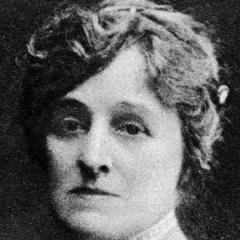
0 quotes

Related Quotes

“One of the conditions of citizenship is not to think too much about money, and the only way not to think about money is to have a great deal of it.” “You might as well say that the only way not to think about air is to have enough to breathe. That is true enough in a sense; but your lungs are thinking about the air, if you are not. And so it is with your rich people—they may not be thinking of money, but they’re breathing it all the while; take them into another element and see how they squirm and gasp!”

“In her inmost heart Lily knew it was not by appealing to the fraternal instinct that she was likely to move Gus Trenor; but this way of explaining the situation helped to drape its crudity, and she was always scrupulous about keeping up appearances to herself. Her personal fastidiousness had a moral equivalent, and when she made a tour of inspection in her own mind, there were certain closed doors she did not open.”

“One may be strengthened & fed without the aid of Joy, & no one knows it better than I do; & I believe I know the only cure, which is to make one’s center of life inside of one’s self, not selfishly or excludingly, but with a kind of unassailable serenity—to decorate one’s inner house so richly that one is content there, glad to welcome anyone who wants to come and stay, but happy all the same when one is inevitably alone.”

“I have tried hard - but life is difficult, and I am a very useless person. I can hardly be said to have an independent existence. I was just a screw or a cog in the great machine called life, and when I dropped out of it I found I was no use anywhere else. What can one do when one finds out that one only fits into one hole? One must go back to it or be thrown out into the rubbish heap - and you don't know what it's like in the rubbish heap!”

“Do you know, I began to see what marriage is for. It’s to keep people away from each other. Sometimes I think that two people who love each other can be saved from madness only by the things that come between them—children, duties, visits, bores, relations—the things that protect married people from each other. We’ve been too close together—that has been our sin. We’ve seen the nakedness of each other’s souls.”

“There were moments when Nona felt oppressed by responsibilities and anxieties not of her age, apprehensions that she could not shake off and yet had not enough experience of life to know how to meet. One or two of her girl friends—in the brief intervals between whirls and thrills—had confessed to the same vague disquietude. It was as if, in the beaming determination of the middle-aged, one and all of them, to ignore sorrow and evil, "think them away" as superannuated bogies, survivals of some obsolete European superstition unworthy of enlightened Americans, to whom plumbing and dentistry had given higher standards, and bi-focal glasses a clearer view of the universe—as if the demons the elder generation ignored, baulked of their natural prey, had cast their hungry shadow over the young. After all, somebody in every family had to remember now and then that such things as wickedness, suffering and death had not yet been banished from the earth; and with all those bright-complexioned white-haired mothers mailed in massage and optimism, and behaving as if they had never heard of anything but the Good and the Beautiful, perhaps their children had to serve as vicarious sacrifices. There were hours when Nona Manford, bewildered little Iphigenia, uneasily argued in this way: others when youth and inexperience reasserted themselves, and the load slipped from her, and she wondered why she didn't always believe, like her elders, that one had only to be brisk, benevolent and fond to prevail against the powers of darkness.”

“The immense accretion of flesh which had descended on her in middle life like a flood of lava on a doomed city had changed her from a plump active little woman with a neatly-turned foot and ankle into something as vast and august as a natural phenomenon. She had accepted this submergence as philosophically as all her other trials, and now, in extreme old age, was rewarded by presenting to her mirror an almost unwrinkled expanse of firm pink and white flesh, in the centre of which the traces of a small face survived as if awaiting excavation. A flight of smooth double chins led down to the dizzy depths of a still-snowy bosom veiled in snowy muslins that were held in place by a miniature portrait of the late Mr. Mingott; and around and below, wave after wave of black silk surged away over the edges of a capacious armchair, with two tiny white hands poised like gulls on the surface of the billows.”

“Вместо возможной зависимости, вынужденного возврата к прежней жизни, состоящей из компромиссов и уступок, она увидела перед собой — когда решит выбрать их — свободу, силу и достоинство. ...которое в таком мире, как их мир, могут обеспечить лишь богатство и положение в обществе. (Сюзи Бранч)”

“The "Hazeldean heart" was a proverbial boast in the family; the Hazeldeans privately considered it more distinguished than the Sillerton gout, and far more refined than the Wesson liver; and it had permitted most of them to survive, in valetudinarian ease, to a ripe old age, when they died of some quite other disorder. But Charles Hazeldean had defied it, and it took its revenge, and took it savagely.”

“I went on steadily trying to 'find out how to'; but I wrote two or three novels without feeling that I had made much progress. It was not until I wrote "Ethan Frome" that I suddenly felt the artisan's full control of his implements. When "Ethan Frome" first appeared I was severely criticized by the reviewers for what was considered the clumsy structure of the tale. I had pondered long on this structure, had felt its peculiar difficulties, and possible awkwardness, but could think of no alternative which would serve as well in the given case: and though I am far from thinking "Ethan Frome" my best novel, and am bored and even exasperated when I am told that it is, I am still sure that its structure is not its weak point.”

“I don't want them to think that we dress like savages,' she replied, with a scorn that Pocahontas might have resented; and he was struck again by the religious reverence of even the most unworldly American women for the social advantages of dress. 'It's their armour,' he thought, 'their defence against the unknown, and their defiance of it.' And he understood for the first time the earnestness with which May, who was incapable of tying a ribbon in her hair to charm him, had gone through the solemn rite of selecting and ordering her extensive wardrobe.”

“In the rosy glow it diffused her companions seemed full of amiable qualities. She liked their elegance; their lightness, their lack of emphasis: even the self-assurance which at times was so like obtuseness now seemed the natural sign of social ascendency. They were lords of the only world she cared for, and they were ready to admit her to their ranks and let her lord it with them. Already she felt within her a stealing allegiance to their standards, an acceptance of their limitations, a disbelief in the things they did not believe in, a contemptuous pity for the people who were not able to live as they lived.”

“The noble buoyancy of her attitude, its suggestion of soaring grace, revealed the touch of poetry in her beauty that Selden always felt in her presence, yet lost the sense of when he was not with her. Its expression was now so vivid that for the first time he seemed to see before him the real Lily Bart, divested of all the trivialities of her little world, and catching for a moment a note of that eternal harmony of which her beauty was a part.”