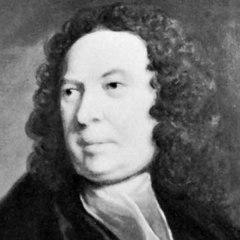
“'T is impious in a good man to be sad.”
Source: The Complete Works, Poetry and Prose of the Rev. Edward Young, LL.D.: Revised and Collated with the Earliest Editions. To which is Prefixed A Life of the Author
“Horace appears in good humor while he censures, and therefore his censure has the more weight, as supposed to proceed from judgment and not from passion.”
“Affliction is the good man's shining scene; prosperity conceals his brightest ray; as night to stars, woe lustre gives to man.”
Source: Night thoughts on life, death, and immortality. [Followed by] A paraphrase on part of the book of Job
“Man makes a death which Nature never made. And feels a thousand deaths in fearing one.”
Source: Night Thoughts ... With notes ... by the Rev. C. E. de Coetlogon ... To which are added the author's poem on the Last Day, the paraphrase on part of the Book of Job [with other poems], and his life
“There buds the promise of celestial worth.”
Source: Night Thoughts ... With notes ... by the Rev. C. E. de Coetlogon ... To which are added the author's poem on the Last Day, the paraphrase on part of the Book of Job [with other poems], and his life
“Unlearned men of books assume the care,
As eunuchs are the guardians of the fair.”
Source: The Complete Works, Poetry and Prose of the Rev. Edward Young, LL.D.: Revised and Collated with the Earliest Editions. To which is Prefixed A Life of the Author
“Night, sable goddess! from her ebon throne, In rayless majesty, now stretches forth Her leaden sceptre o'er a slumbering world.”
“Pygmies are pygmies still, though percht on Alps; And pyramids are pyramids in vales. Each man makes his own stature, builds himself. Virtue alone outbuilds the Pyramids; Her monuments shall last when Egypt's fall.”
“The man that makes a character, makes foes.”
Source: Imperium Pelagi, a naval lyric. Epistles to Mr. Pope, concerning the authors of the age. Sea-piece. The foreign address; or the best argument for peace. Epitaph on Lord Aubrey Beauclerk. Reflections on the public situation of the kingdom. An epistle to the right hon. Sir Robert Walpole. The old man's relapse. Resignation. Tragedies. Prose works
“Insatiate archer! could not one suffice? Thy shaft flew thrice, and thrice my peace was slain; And thrice, ere thrice yon moon had filled her horn.”
Source: The Poems of Edward Young
“Who knows if Shakespeare might not have thought less if he had read more?”
Source: Conjectures on Original Composition: In a Letter to the Author of Sir Charles Grandison
“Thy purpose firm is equal to the deed: Who does the best his circumstance allows Does well, acts nobly; angels could no more.”
Source: Night Thoughts on Life, Death and Immortality
“The man that blushes is not quite a brute.”
Source: The Complaint; Or, Night Thoughts
“An undevout astronomer is mad.”
“Man wants little, nor that little long.”
“Life's cares are comforts; such by Heav'n design'd; He that hath none must make them, or be wretched.”
Source: Night Thoughts on Life, Death and Immortality
“Ambition! powerful source of good and ill!”
Source: The Complaint; Or, Night Thoughts
“To frown at pleasure, and to smile in pain.”
Source: The complete poetical works of Edward Young. With life
“Thoughts shut up want air, And spoil, like bales unopen'd to the sun.”
Source: Night Thoughts ... With notes ... by the Rev. C. E. de Coetlogon ... To which are added the author's poem on the Last Day, the paraphrase on part of the Book of Job [with other poems], and his life
“Final Ruin fiercely drives Her ploughshare o'er creation.”
Source: Night Thoughts on Life, Death, and Immortality
“A foe to God ne'er was true friend to man, Some sinister intent taints all he does.”
“Heaven wills our happiness, allows our doom.”
Source: Young ́s Night Thoughts
“Sweet instinct leaps; slow reason feebly climbs.”
Source: The Complaint: Or, Night Thoughts
“As night to stars, woe lustre gives to man.”
Source: The Complaint; Or, Night Thoughts
“Accept a miracle, instead of wit See two dull lines, with Stanhope's pencil writ.”
Source: The Poetical works
“We wish our names eternally to live; Wild dream! which ne'er had haunted human thought, Had not our natures been eternal too.”
Source: The Complaint; Or, Night Thoughts
“Midway from Nothing to the Deity!”
Source: Night thoughts on life, death and immortality: With a memoir of the author, a critical view of his writings, and explanatory notes
“The soft whispers of the God in man.”
“A dearth of words a woman need not fear; But 'tis a task indeed to learn to hear: In that the skill of conversation lies; That shows and makes you both polite and wise.”
Source: The Poetical Works of Milton, Young, Gray, Beattie, and Collins
“Inhumanity is caught from man, From smiling man.”
Source: Night thoughts on life death and immortality ... to which are added the life of the author and a paraphrase on part of the Book of Job
“The melancholy ghosts of dead renown, Whispering faint echoes of the world's applause.”
Source: The Complaint; Or, Night Thoughts on Life, Death, and Immortality
“The qualities all in a bee that we meet, In an epigram never should fail; The body should always be little and sweet, And a sting should be felt in its tail.”
“And can eternity belong to me, Poor pensioner on the bounties of an hour?”
Source: Night thoughts on life death and immortality ... to which are added the life of the author and a paraphrase on part of the Book of Job
“Narcissus is the glory of his race: For who does nothing with a better grace?.”
“Where, where for shelter shall the guilty fly, When consternation turns the good man pale?”
Source: The poetical works of Edward Young. Collated with the best eds.: by T. Park
“Let no man trust the first false step of guilt; it hangs upon a precipice, whose steep descent in last perdition ends.”
Source: Busiris, King of Egypt. A tragedy, etc
“A land of levity is a land of guilt.”
Source: Night thoughts on life death and immortality ... to which are added the life of the author and a paraphrase on part of the Book of Job
“A man I knew who lived upon a smile, And well it fed him; he look'd plump and fair, While rankest venom foam'd through every vein.”
Source: The Complete Works, Poetry and Prose of the Rev. Edward Young, LL.D.: Revised and Collated with the Earliest Editions. To which is Prefixed A Life of the Author
“He that's ungrateful has no guilt but one; All other crimes may pass for virtues in him.”
Source: The Works of the Author of The Night-thoughts
“Body and soul, like peevish man and wife, United jar, and yet are loth to part.”
Source: Night thoughts on life death and immortality ... to which are added the life of the author and a paraphrase on part of the Book of Job
“We cry for mercy to the next amusement, The next amusement mortgages our fields”
Source: Night Thoughts on Life, Death, and Immortality
“What is a miracle?--'Tis a reproach, 'Tis an implicit satire on mankind; And while it satisfies, it censures too.”
Source: Night thoughts on life, death, and immortality. [Followed by] A paraphrase on part of the book of Job
“Groan under gold, yet weep for want of bread.”
Source: The Complaint, Or, Night Thoughts, on Life, Death, and Immortality: To which is Added a Paraphrase on Part of the Book of Job
“In chambers deep, Where waters sleep, What unknown treasures pave the floor.”
Source: The poetical works of Edward Young
“Ocean into tempest wrought, To waft a feather, or to drown a fly.”
Source: Night thoughts on life death and immortality ... to which are added the life of the author and a paraphrase on part of the Book of Job
“When pain can't bless, heaven quits us in despair.”
Source: Extracts from Young's Night thoughts, with observations upon them
“Oh, how portentous is prosperity! How comet-like, it threatens while it shines.”
Source: The Complaint; Or, Night-thoughts on Life, Death, & Immortality ... To which is Added, A Paraphrase on Part of the Book of Job
“What is revenge but courage to call in our honor's debts, and wisdom to convert others' self-love into our own protection?”
“Satire recoils whenever charged too high; round your own fame the fatal splinters fly.”
Source: The Poems of Edward Young ...
“Give me, indulgent gods with mind serene, And guiltless heart, to range the sylvan scene, No splendid poverty, no smiling care, No well-bred hate, or servile grandeur, there.”
Source: The Works of the Author of the Night-thoughts: In Four [i.e. Five] Volumes