Quotessence
Home / Authors / Elizabeth Gaskell
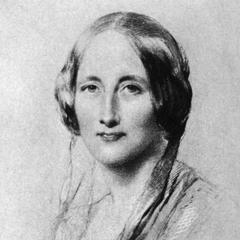
Elizabeth Gaskell

Elizabeth Gaskell Quotes

Novelist

Filter quotes by topic

Famous Elizabeth Gaskell Quotes

“When oranges came in, a curious proceeding was gone through. Miss Jenkyns did not like to cut the fruit, for, as she observed, the juice all ran out nobody knew where, sucking [only I think she used some more recondite word] was in fact the only way of enjoying oranges; but then there was the unpleasant association with a ceremony frequently gone through by little babies; and so, after dessert, in orange season, Miss Jenkyns and Miss Matty used to rise up, possess themselves each of an orange in silence, and withdraw to the privacy of their own rooms to indulge in sucking oranges.”

“It was her brother,' said Mr. Thornton to himself. 'I am glad.I may never see her again; but it is comfort-a relief-to know that much. I knew she could not be unmaidenly; and yet I yearned for conviction. Now I am glad!' It was a little golden thread running through the dark web of his present fortunes; which were growing ever gloomier and more gloomy.”

“Well, He had known what love was-a sharp pang, a fierce experience, in the midst of whose flames he was struggling! but, through that furnace he would fight his way out into the serenity of middle age,-all the richer and more human for having known this great passion.”

“The question always is, has everything been done to make the sufferings of these exceptions as small as possible? Or, in the triumph of the crowded procession, have the helpless been trampled on, instead of being gently lifted aside out of the roadway of the conqueror, whom they have no power to accompany on his march?”

“It is the first changes among familiar things that make such a mystery of time to the young; afterwards we lose the sense of the mysterious. I take changes in all I see as a matter of course. The instability of all human things is familiar to me, to you it is new and oppressive." (Mr. Bell)”

“Oh yes!' and suddenly the wintry frost-bound look of care had left Mr. Thornton's face, as if some soft summer gale had blown all anxiety away from his mind; and, though his mouth was as much compressed as before, his eyes smiled out benignly on his questioner.”

“God has made us so that we must be mutually dependent. We may ignore our own dependence, or refuse to acknowledge that others depend upon us in more respects than the payment of weekly wages; but the thing must be, nevertheless. Neither you nor any other master can help yourselves. The most proudly independent man depends on those around him for their insensible influence on his character - his life.”

“How shall I ever tell Aunt Shaw?' she whispered, after some time of delicious silence. 'Let me speak to her.' 'Oh, no! I owe it to her, - but what will she say?' 'I can guess. Her first exclamation will be, "That man!" ' 'Hush!' said Margaret, 'or I shall try and show you your mother's indignant tones as she says, "That woman!"”

“She stood by the tea-table in a light-coloured muslin gown, which had a good deal of pink about it. She looked as if she was not attending to the conversation, but solely busy with the tea-cups, among which her round ivory hands moved with pretty, noiseless, daintiness.”

“"Mr. Thornton," said Margaret, shaking all over with her passion, "go down this instant, if you are not a coward. Go down and face them like a man. Save these poor strangers, whom you have decoyed here. Speak to your workmen as if they were human beings. Speak to them kindly. Don't let the soldiers come in and cut down poor-creatures who are driven mad. I see one there who is. If you have any courage or noble quality in you, go out and speak to them, man to man."”

“She had a bracelet on one taper arm, which would fall down over her round wrist. Mr. Thornton watched the replacing of this troublesome ornament with far more attention than he listened to her father. It seemed as if it fascinated him to see her push it up impatiently, until it tightened her soft flesh; and then to mark the loosening—the fall. He could almost have exclaimed—'There it goes, again!”

“For all his pain, he longed to see the author of it. Although he hated Margaret at times, when he thought of that gentle familiar attitude and all the attendant circumstances, he had a restless desire to renew her picture in his mind - a longing for the very atmosphere she breathed. He was in the Charybdis of passion, and must perforce circle and circle ever nearer round the fatal centre.”

“Mr Thornton would rather have heard that she was suffering the natural sorrow. In the first place, there was selfishness enough in him to have taken pleasure in the idea that his great love might come in to comfort and console her; much the same kind of strange passionate pleasure which comes stinging through a mother's heart, when her drooping infant nestles close to her, and is dependent upon her for everything.”

“Neither loss of father, nor loss of mother, dear as she was to Mr Thornton, could have poisoned the remembrance of the weeks, the days, the hours, when a walk of two miles, every step of which was pleasant, as it brought him nearer and nearer to her, took him to her sweet presence - every step of which was rich, as each recurring moment that bore him away from her made him recal some fresh grace in her demeanour, or pleasant pungency in her character.”

“Again, stepping nearer, he besought her with another tremulous eager call upon her name. 'Margaret!' Still lower went the head; more closely hidden was the face, almost resting on the table before her. He came close to her. He knelt by her side, to bring his face to a level with her ear; and whispered-panted out the words: — 'Take care. — If you do not speak — I shall claim you as my own in some strange presumptuous way.”

“On some such night as this she remembered promising to herself to live as brave and noble a life as any heroine she ever read or heard of in romance, a life sans peur et sans reproche; it had seemed to her then that she had only to will, and such a life would be accomplished. And now she had learnt that not only to will, but also to pray, was a necessary condition in the truly heroic. Trusting to herself, she had fallen.”

“I value my own independence so highly that I can fancy no degradation greater than that of having another man perpetually directing and advising and lecturing me, or even planning too closely in any way about my actions. He might be the wisest of men, or the most powerful - I should equally rebel and resent his interference.”

“If Mr. Thornton was a fool in the morning, as he assured himself at least twenty times he was, he did not grow much wiser in that afternoon. All that he gained in return for his sixpenny omnibus ride, was a more vivid conviction that there never was, never could be, any one like Margaret; that she did not love him and never would; but that she — no! nor the whole world — should never hinder him from loving her.”

“Mr. Thornton felt that in this influx no one was speaking to Margaret, and was restless under this apparent neglect. But he never went near her himself; he did not look at her. Only, he knew what she was doing — or not doing — better than anyone else in the room. Margaret was so unconscious of herself, and so much amused by watching other people, that she never thought whether she was left unnoticed or not.”

“He had tenderness in his heart — ‘a soft place,’ as Nicholas Higgins called it; but he had some pride in concealing it; he kept it very sacred and safe, and was jealous of every circumstance that tried to gain admission. But if he dreaded exposure of his tenderness, he was equally desirous that all men should recognize his justice; and he felt that he had been unjust, in giving so scornful a hearing to anyone who had waited, with humble patience, for five hours, to speak to him.”