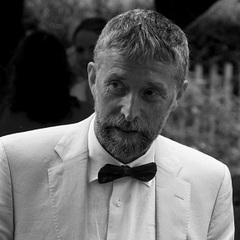
“I'm not sure that I 'am' a philosopher - but I do engage with questions that are generally recognized as philosophical questions, such as the character of human existence and what makes for a good human life.” HumansCharacterExistencePhilosophicalPhilosopherHuman LifeNot SureHuman ExistencePhilosophical Questions Author:George Pattison
“In a sense these are questions that most people ask themselves to some extent. They become philosophical when asked with a persistence and rigour that pushes past conventional or evasive answers. It's nothing to do with acquiring a technical facility in an academic discipline.” PeoplePastAsksAnswersDisciplinePhilosophicalPersistenceAcademicConventionalFacilityRigour Author:George Pattison
“Perhaps this is an area where every generation starts from scratch. Although the crisis of the First World War inaugurated an especially strong period of disillusion with regard to the optimism of the previous age, the pattern has repeated itself in many ways in more recent times, e.g., the loss of faith in politics as a means of advancing human well-being. And perhaps this also has to do with basic elements in growing up.” WorldWayFirstsHumansWellsMeanWarAgeStrongLossGrowing UpGrowingGenerationsPeriodsElementsAreasOptimismRegardCrisisPatternsWell BeingWar Of The WorldsWorld War IScratchesAdvancingDisillusionFirst World WarLoss Of Faith Author:George Pattison
“I still read a lot about teenage angst! Of course, any kind of mourning CAN become pathological and then it 'has to stop', but to move through life untouched by the loss of hopes, beliefs and aspirations once cherished is also questionable.” KindStillsMovingCoursesBeliefLossMourningAspirationTeenageAngstQuestionableTeenage Angst Author:George Pattison
“I'm not sure how far Derrida's later 'theological' interests are really rooted in post-structuralism or whether they don't rather reflect a kind of Kantian-Marxist trajectory - with a French twist on the centrality of liberty, equality and fraternity (cf. Politics of Friendship). Not to mention the role of Levinas and, behind Levinas, Judaism's twinning of eschatology and the call for justice.” KindInterestJusticeBehindsLibertyRolesPostsNot SureRootedJudaismTwistsTheologicalMarxistFraternityTrajectoryCfsEschatologyDerridaStructuralism Author:George Pattison
“What it does remind us is that 'God' is not to be separated from the quest for the Kingdom of God and is not and cannot be the object of any detached 'scientific' contemplation. Heidegger's critique of onto-theology is also driving a wedge between speaking of God and the aims of science - not so as to get rid of God but rather to free God from a false objectification.” DoeObjectsAimDrivingTheologyKingdomsContemplationQuestsKingdom Of GodCritiqueDetachedObjectificationWedgesHeidegger Author:George Pattison
“However, in brief, I think the connecting of 'God' and 'Being' is one of these things for which there seems to be a natural impulse in human thinking but it can also lead to confusions. Religious believers mostly want to see God as the epitome of what is most really real and in some non-theistic contexts, people talk simply of 'Isness'.” PeopleThinkingWantHumansRealSeemsNaturalReligiousBelieverConfusionImpulseConnectingEpitome Author:George Pattison
“It seems that just Being, the sheer fact of existence, that there is something rather than nothing, already inspires a wonder akin to religion. But - as in my comment about the Kingdom of God in the last answer - Jewish and Christian traditions are also prepared to challenge what 'is' for the sake of what could be.” FactsSeemsChristianLastsChallengesAnswersExistenceWonderInspireTraditionPreparedSakeKingdomsCommentJust BeingSheerKingdom Of God Author:George Pattison
“Religious life is about something real in human experience that is not constrained by what Wittgenstein called 'all that is the case'. In this sense Heidegger is not simply 'mistaken' - he just asks us, as philosophers mostly do, to think more carefully about what we're saying.” ThinkingHumansRealLife IsAsksReligiousCasesPhilosopherMistakenHuman ExperienceSomething RealReligious LifeHeidegger Author:George Pattison
“But why should a religious person be interested in a work like Heidegger's that many regard as the epitome of nihilism? For a start, because Heidegger forces us in a way that few philosophers do to really think through the seriousness and all-encompassing nature of our mortality.” ThinkingWayShouldPersonsForceReligiousRegardPhilosopherMortalitySeriousnessNihilismEpitomeReligious PersonHeidegger Author:George Pattison
“Positively, he [Heidegger] shows that the prospect of death doesn't of itself destroy all possibilities of meaning but calls instead for these to be relocated from fantasies about a future post-mortem life. However, I don't think he does enough in this work to show that this relocation has - I believe - a primarily ethical character (in Levinas's sense of 'ethical').” ThinkingBelieveDoeEnoughCharacterShowsI BelieveFantasyPossibilityPostsEthicalPositivelyHeidegger Author:George Pattison
“In brief, I regard love as a more decisive focus of meaning than death. In terms of Heidegger's argument, this is because I think he misdescribes the importance of the deaths of others and focuses exclusively on my relation to my own death. But, in reality, the deaths of others have a more urgent and immediate impact on our lives than the purely notional knowledge that I too will one day die.” ThinkingRealityDiesTermMy OwnFocusOur LivesOne DayArgumentImportanceRelationRegardImpactUrgentHeidegger Author:George Pattison
“Ethics arises in the recognition of our obligation to care for others as beings, like us, exposed to mortality - that is, beings who need our help. Buddhism, not wrongly, extends this to 'all sentient beings'.” NeedsHelpingCareBuddhismEthicsAriseObligationRecognitionMortalityExposedSentient Beings Author:George Pattison
“Of course, it's always difficult to disentangle fact from fiction in relation to, e.g., the singularity project. Many scientists I know are dismissive of transhumanist claims, BUT the last 100 years has surely taught us never to underestimate the pace and scope of scientific progress. However, even if much of this turns out to be science-fiction, it also reveals a way of thinking about human life that I find deeply troubling.” IfsThinkingKnowsWayYearsHumansFactsLastsTurnsCoursesDifficultFictionProgressTaughtProjectsScientistClaimsRelationScience FictionHuman LifePaceUnderestimateScopeWay Of ThinkingTaught UsSingularityScientific Progress Author:George Pattison
“When I'm on the operating table, I'm happy for the surgeon to treat me as a machine, but the moment I return to consciousness I have other needs and aspirations that should be recognized. We're not here only to survive or extend our individual or species life but to do something seemingly more difficult, for which I've used words and phrases like 'love' and the 'Kingdom of God'.” NeedsShouldMomentsUsedIndividualDifficultConsciousnessReturnMachinesTreatsTablesSpeciesKingdomsPhrasesAspirationKingdom Of GodSurgeonsLike Love Author:George Pattison
“I think he [Heidegger] sets the question up in a useful way and, despite appearances, he's not 'against' technology. He just wants us to have a questioning and thoughtful relation to it. This must be relevant to any approach.” ThinkingWayWantTechnologyApproachRelationAppearanceDespiteThoughtfulRelevantQuestioningWant UHeidegger Author:George Pattison
“Essentially I see the new atheism as largely part of the crisis of the left. Having failed to carry through its agenda in relation to political and economic life it's rounding on religion, ignoring the fact that, in some key respects, many believers are likely to share leftist aspirations.” FactsPoliticalLeftShareAtheismEconomicKeysRelationCrisisBelieverAspirationAgendasLeftists Author:George Pattison
“One of the most violent attacks on the Church in the Soviet Union was under Kruschev when, during a period of economic and political liberalization, he attacked the Church to demonstrate to old Party members that he hadn't lost it.” PoliticalLostChurchPartyEconomicPeriodsMembersUnionsViolentSovietSoviet Union Author:George Pattison
“At a theoretical level, I think a naturalist approach to religion is just asking questions I'm not interested in. They're perfectly legitimate in their own terms, but they don't address the actual experience of how one or other aspect of religion becomes existentially meaningful to us in our actual lives. The fact that we ourselves are the subject of investigation makes all the difference.” ThinkingFactsTermDifferencesLevelsSubjectsApproachAspectAskingMeaningfulAddressesInvestigationNot InterestedTheoreticalAsking QuestionsNaturalistActual Life Author:George Pattison
“I'm not sure if Cupitt himself still uses this term, but it's useful in suggesting that, actually, there are more choices than the choice between nihilism and faith. In fact, the issue may not be faith as such but the fact that for millennia, Christianity has buttressed itself with a particular kind of metaphysics that has now seemingly reached the end of its life-span. But perhaps Buddhist metaphysics could provide an alternative here - or, at least, offer a direction of travel.” IfsKindMayStillsEndsFactsUseChoicesTermChristianityIssuesParticularOffersBuddhistAlternativesNot SureMetaphysicsNihilismSuggestingLife Span Author:George Pattison
“Now, as at the beginning of the 19th century, there is a certain discovery of Eckhart and related figures. There are questions as to how far our Eckhart accords with the real medieval teacher of that name, but there are certainly images in his work that help us work our way past several of the aporia with which we're confronted in our attempts to think about God.” ThinkingWayRealHelpingPastCertainNamesTeacherCenturyFiguresDiscoveryRelatedMedievalAccord19th Century Author:George Pattison
“Perhaps - and this goes for the Kyoto School too - one of these insights is that nothingness and unknowing don't have to be equated with a destructive nihilism but with the experience of unity and participation - whilst resisting the tendency of objectifying metaphysics to claim that we can in some way 'know' that this experienced unity is really the truth of how things are, i.e., reveals being itself.” KnowsWaySchoolClaimsUnityInsightTendenciesDestructiveNothingnessMetaphysicsParticipationNihilismResistingKyotoUnknowingObjectifying Author:George Pattison
“And one thing the void certainly can teach us is how to wait, how to become truly patient, and how to let go of superfluous intellectual baggage - all of which is a good lesson for hyper-agitated multi-tasking goal-focussed contemporary human beings.” HumansWaitingGoalHuman BeingsTeachOne ThingLessonsLetting GoIntellectualPatientContemporaryVoidBaggageSuperfluousHyperMulti Tasking Author:George Pattison
“Perhaps unsurprisingly, there's a paradox here! Kierkegaard's own indirect communication proposes that we start with the experience of those who don't believe and meet them on their own ground. His success in doing this is evidenced by the fact that, at least for some periods of the 20th century, aspects of his work became a major focus for radical thinkers of various kinds, including the non-religious and, interestingly, a significant number of Jewish thinkers (Buber, Rosenzweig, Taubes, and others).” BelieveKindFactsReligiousNumbersFocusCenturyCommunicationPeriodsMajorsAspectDon't BelieveIncludingVariousSignificantRadicalParadoxThinker20th CenturyProposeIndirectSignificant NumbersNon Religious Author:George Pattison
“But, inevitably, as he [Kierkegaard] approaches what we might call his Christocentric climax many readers drop off. Many scholars just leave that part of his authorship alone.” MightReaderApproachScholarAuthorshipClimax Author:George Pattison
“Of course, if one's reading Kierkegaard for personal interest that's fine - but it's sloppy scholarship just to cherry pick what suits one from a particular author, whether it's Kierkegaard, Heidegger, or whoever. Nevertheless, it does seem to me that even the more religious parts of the authorship can offer significant insights into the meaning of the human condition to those who can't then say that, e.g., they believe Jesus Christ is the Son of God and their personal Saviour.” IfsBelieveHumansDoeSeemsCoursesReadingJesusInterestChristReligiousConditionsParticularSonFineOffersPicksJesus ChristInsightSignificantSuitsHuman ConditionNeverthelessScholarshipSaviourCherriesAuthorshipSloppyPersonal InterestHeidegger Author:George Pattison
“Sartre is one example of someone who does just this. Every text is, after all, a human document and whatever Kierkegaard thought about God was clearly a matter of human thought that can, in principle, be retrieved and interpreted by other human beings. A phenomenological approach to religion must, it seems to me, adopt the old adage: nothing human is alien to me.” HumansDoeMatterSeemsHuman BeingsPrinciplesExampleApproachAliensDocumentsAdagesHuman Thought Author:George Pattison
“There are kinds of unity other than those of the explicit and systematic unity that Poole is attacking. There are kinds of movement - in music or athletics, for example - that present themselves as having a certain unity about them. In some sphere we might talk about 'style'.” KindMightCertainStyleExampleMovementUnitySpheresAttackingAthleticsSystematicExplicit Author:George Pattison
“Every stroke a tennis player plays is different, yet we perceive them as playing in a distinctive and unique way. It's what Heidegger called a certain 'how' of existing. It's ultimately always singular, and the double task of (a) getting it in view and (b) communicating it to others will inevitably be marked more often by failure than success!” WayDifferentPlayCertainViewsPlayerUniqueTasksCommunicatePerceiveTennisStrokesDistinctiveTennis PlayerHeidegger Author:George Pattison
“Interpretation is a task that we repeatedly have to take up and start again from the beginning, Sisyphus-like. But, as Camus said, we must always imagine Sisyphus happy, and this is not so difficult when it's a matter of texts that reveal important truths about being human.” HumansSaidImportantMatterDifficultImagineTasksInterpretationBeing HumanSisyphus Author:George Pattison
“Barth's approach tears up any possibility of dialogue between faith and unfaith or between theology and other human sciences. Theology just says what it says on the basis of scripture, and that's that.” HumansPossibilityTearsApproachBasesScriptureTheologyDialogue Author:George Pattison
“Schleiermacher, however, starts by attempting to find what he takes to be a basic element of the human condition as such, namely, that we did not invent ourselves but find ourselves born into a life and a world that precedes us in manifold ways.” WorldWayHumansBornConditionsElementsHuman ConditionAttemptingManifold Author:George Pattison
“Ultimately, we live in the face of an irresolvable mystery about our origin and, for that matter, about our end. And what Schleiermacher would have us do is (a) acknowledge that this is the case and (b) accept it as something positive, a point of departure for a life of trusting joy.” EndsMatterFacesJoyAcceptingCasesMysteryAcknowledgeDeparture Author:George Pattison
“And this is also what he takes Christian doctrine, in all its complexity, to be centrally about, that is, teaching an attitude rather than a set of propositions. Call it joyous openness to life. What's not relevant about that?” ChristianAttitudeTeachingDoctrineComplexityOpennessRelevantPropositionsJoyousChristian Doctrine Author:George Pattison
“It's strange that in an age when we pride ourselves on our independence of thought we meekly submit without further question to the declaration of a clearly unbalanced nineteenth century philosopher that God is dead! That's cheeky, of course - and one rarely comes away from reading Nietzsche without learning something new and significant. He's certainly FAR more unsettling for faith than any contemporary atheist I know of.” KnowsAgeCoursesReadingCenturyStrangePrideIndependenceAtheistPhilosopherSignificantContemporarySomething NewSubmitDeclarationNineteenth CenturyUnbalancedGod Is DeadLearning Something NewCheekyIndependence Of Thought Author:George Pattison
“But my point is that 'the death of God' is not something like the Battle of Waterloo or Magna Charta. It's not a historic event of that kind. For many people it hasn't happened yet. Others - to recur to an earlier question - are still in the phase of intense shock.” PeopleKindStillsHappenedEventsBattleIntenseShockPhasesHistoricWaterloo Author:George Pattison
“For others the mourning is over. Others would say that whilst one God has died - the God of ontotheology perhaps? - this allows for the good news of a God who is to come, a God who will be better able to gather up and give justice to all the manifold aspirations of human life towards goodness and meaning (and not just to those who are able to fit into a narrow 'religious' framework).” GivingHumansAbleReligiousJusticeFitGoodnessNewsDiedHuman LifeMourningAspirationGood NewsFrameworkManifold Author:George Pattison
“And perhaps this has to do with what I sense is a turning away from the idea of religion as being about conserving a certain heritage from the past towards religion as having to do with how we orientate ourselves to the future, to all we truly long for, to hope.” LongIdeasPastCertainHeritageConserving Author:George Pattison