Quotessence
Home / Authors / George Saunders
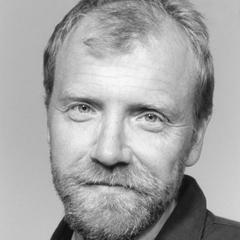
George Saunders

George Saunders Quotes

Writer

Filter quotes by topic

Famous George Saunders Quotes

“There's also a way that you have of being precise but also allusive, that works well for me - it's something about the open-hearted way you frame your queries. Instead of feeling daunted or discouraged, I feel excited to give whatever it is a try. This takes a lot of editorial wisdom and confidence - to know just how to get the writer to take that extra chance.”

“I love story-writing because I can (more or less, on occasion) actually DO it. That's really the truth. I like the idea that a story is sort of a site for making cool language effects - a site for celebrating language, and, therefore, the world. And the brevity is part of the challenge. I like stories because I get them - I know how to make beauty, or something like beauty, in that mode.”

“On a more technical level, a story takes a lot of words. And to generate words and phrases and images and so on, that will compel the reader to continue reading - that stand a chance of really grabbing a reader - the writer has to work out of a place of, let's say, familiarity and affection. The matrix of the story has to be made out of stuff the writer really knows about and likes. The writer can't be stretching and (purely) inventing all the time. Well, I can't, anyway.”

“I always cheerfully say, "Well, you know, the species is adapting, and whatever it needs to do, it'll do," but I do think it's maybe a little bit alarming. Everybody knows that one thing we really have to do is to be more wherever we are, more present, that's just kind of a commonplace. And the whole mobile phone thing is completely 100% the opposite - to never be where you are because you can always be somewhere else; and yet it's so fun and addictive.”

“I think that tri [to Ram Bahadur Bomjon] was the first time I'd even seen something that made me think, or really feel: "Ah, I don't know what's really going on in the world - I think I do, and it feels like I do, but whatever is really going on is, de facto, beyond the scope of my comprehension - the best we can do is look for hints." I'd known that intellectually before but that was the first time I really believed it viscerally.”

“My general approach to writing fiction is that you try to have as few conceptual notions as possible and you just respond to the energy that the story is making rather than having a big over plan. I think if you have a big over plan, the danger is that you might just take your plan and then you bore everybody. I always joke that it's like going on a date with index cards. You know, at 7:30 p.m. I should ask about her mother. You keep all the control to yourself but you are kind of insulting to the other person.”

“All I really know in nonfiction is that when I come home, I've got all these notes and I'm trying to figure out what actually happened to me. I usually kind of know what happened, but as you work through the notes, you find that certain scenes write well and some don't even though they should. Those make a constellation of meaning that weirdly ends up telling you what you just went through. It's a slightly different process, but still there's mystery because when you're bearing down on the scenes, sometimes you find out they mean something different than what you thought.”

“I don't know how you feel, but I feel like writing, clarity of thought, and truth have been validated because we see what happens when we get lax in those areas. I'm excited by the idea that writers like us can actually reach out and try to understand and prod and agitate the people who are in support of Trump because we have the tools to do it. We're language people and we're idea people.”

“One of the ways that we cope with anxiety is by over planning and over controlling. If we know where it's going to, we can just relax and do it. Unfortunately, in my experience, that's not the way it works. The story doesn't want to be told what to do. You have to enter into this process with a high level of trust that the many hours of choosing that you're doing every day will gradually clarify the narrative for you. And that's what happens.”

“If you understand writing as primarily engaging an imaginary reader, well, you've kind of been doing that your whole life. You walk into a room and you're engaging with imaginary strangers because you don't actually know who they are. For me, it was really empowering to say: this is a branch of entertainment and communication and engagement, as opposed to jumping over some perceived literary high bar. That was the buzzkill.”

“My mind has an obsessive, neurotic quality, but I also have a very hard work ethic. I know that a lot of people think, oh, you have a wild imagination. I don't, really. If ten people are sitting around and someone says, "Hey complete this sentence in a funny way," I'm never ahead of the pack.”

“I think it is time for a new pride in the intellectual life, and a new impatience with people who take pride in ignorance, or somehow use "elite" to mean "person who has taken the time to know" and then are eager to dismiss, say, striving, or the notion that improving one's self out of difficult conditions is a noble thing.”

“I know this will sound naïve, but I often wonder what America would be like if our national ethos was simply to minimize suffering. Period. To try, every day, to convert our wonderful wealth and national energy into the cessation of suffering wherever we find it. Imagine if that was our national mindset. Well, we can-we must-dream.”

“Down in the city are the nice houses and the so-so houses and the lovers making out in dark yards and the babies crying for their moms, and I wonder if, other than Jesus, has this ever happened before. Maybe it happens all the time. Maybe there's angry dead all over, hiding in rooms, covered with blankets, bossing around their scared, embarrassed relatives. Because how would we know?”

“Each of us is born with a series of built-in confusions that are probably somehow Darwinian. These are: (1) we're central to the universe (that is, our personal story is the main and most interesting story, the only story, really); (2) we're separate from the universe (there's US and then, out there, all that other junk - dogs and swing-sets, and the State of Nebraska and low-hanging clouds and, you know, other people), and (3) we're permanent (death is real, o.k., sure - for you, but not for me).”

“Now, we don't really believe these things - intellectually we know better - but we believe them viscerally, and live by them, and they cause us to prioritize our own needs over the needs of others, even though what we really want, in our hearts, is to be less selfish, more aware of what's actually happening in the present moment, more open, and more loving.”

“That luminous part of you that exists beyond personality - your soul, if you will - is as bright and shining as any that has ever been. Bright as Shakespeare’s, bright as Gandhi’s, bright as Mother Theresa’s. Clear away everything that keeps you separate from this secret luminous place. Believe it exists, come to know it better, nurture it, share its fruits tirelessly.”