Quotessence
Home / Authors / Gustave Le Bon Books
Gustave Le Bon

Gustave Le Bon Books

Social Psychologist

The Crowd

A source page for quotes linked to Gustave Le Bon.
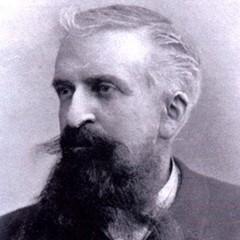
0 quotes

Related Quotes

“A civilization, when the moment has come for crowds to acquire a high hand over it, is at the mercy of too many chances to endure for long. Could anything postpone for a while the hour of its ruin, it would be precisely the extreme instability of the opinions of crowds and their growing indifference and lack of respect for all general beliefs.”

“Between the extreme limits of this series would find a place all the forms of prestige resulting from the different elements composing a civilisation -- sciences, arts, literature, &c. -- and it would be seen that prestige constitutes the fundamental element of persuasion. Consciously or not, the being, the idea, or the thing possessing prestige is immediately imitated in consequence of contagion, and forces an entire generation to adopt certain modes of feeling and of giving expression to its thought. This imitation, moreover, is, as a rule, unconscious, which accounts for the fact that it is perfect. The modern painters who copy the pale colouring and the stiff attitudes of some of the Primitives are scarcely alive to the source of their inspiration. They believe in their own sincerity, whereas, if an eminent master had not revived this form of art, people would have continued blind to all but its naïve and inferior sides. Those artists who, after the manner of another illustrious master, inundate their canvasses with violet shades do not see in nature more violet than was detected there fifty years ago; but they are influenced, "suggestioned," by the personal and special impressions of a painter who, in spite of this eccentricity, was successful in acquiring great prestige. Similar examples might be brought forward in connection with all the elements of civilisation. It is seen from what precedes that a number of factors may be concerned in the genesis of prestige; among them success was always one of the most important. Every successful man, every idea that forces itself into recognition, ceases, ipso facto, to be called in question. The proof that success is one of the principal stepping-stones to prestige is that the disappearance of the one is almost always followed by the disappearance of the other. The hero whom the crowd acclaimed yesterday is insulted to-day should he have been overtaken by failure. The re-action, indeed, will be the stronger in proportion as the prestige has been great. The crowd in this case considers the fallen hero as an equal, and takes its revenge for having bowed to a superiority whose existence it no longer admits.”

“To the Jacobins of this epoch [the French Revolution], as well as to those of our times, this popular entity constitutes a superior personality possessing attributes peculiar to the gods of never having to answer for their actions and never making a mistake. Their wishes must be humbly acceded to. The people may kill, burn, ravage, commit the most frightening cruelties, glorify their hero today and throw him into the gutter tomorrow, it is all the same; the politicians will not cease to vaunt the people's virtues and to bow to their every decision.”

“The crowds have never thirsted after truth. They turn aside from any evidence that is not to their preference, preferring to worship falsehood, if falisty seduces them. Whoever can supply them with delusions becomes their master; whoever attempts to destroy their illusions becomes their victim. An individual in a crowd is a grain of sand among other grains of sand, which the wind stirs up at will.”

“The crowds have never thirsted after truth. They ignore any evidence that is not to their preference, preferring to worship falsehood, if falsity seduces them. Whoever can supply them with delusions becomes their master; whoever attempts to destroy their illusions becomes their victim.”

“So far as the majority of their acts are considered, crowds display a singularly inferior mentality; yet there are other acts in which they appear to be guided by those mysterious forces which the ancients denominated destiny, nature, or providence, which we call the voices of the dead, and whose power it is impossible to overlook, although we ignore their essence. It would seem, at times, as if there were latent forces in the inner being of nations which serve to guide them.”

“Şüphesiz kalabalıklar, bir inancın yahut bir fikrin zaferi için kolayca canlarını fedaya kadar gidebilirler. Hemen hemen ekmeksiz ve silahsız olarak Haçlı Seferleri esnasında olduğu gibi, bir ilahın mezarını tekrar ele geçirmek için, yahut 93'te olduğu gibi vatan topraklarını savunmak için, harekete getirilirler. Elbette bu kahramanlıklar biraz şuursuzdur, fakat tarih böyle kahramanlıklarla yapılır.”

“One of the most constant characteristics of beliefs is their intolerance. The stronger the belief, the greater its intolerance. Men dominated by a certitude cannot tolerate those who do not accept it.”

“We see, then, that the disappearance of the conscious personality, the predominance of the unconscious personality, the turning by means of suggestion and contagion of feelings and ideas in an identical direction, the tendency to immediately transform the suggested ideas into acts; these, we see, are the principal characteristics of the individual forming part of a crowd. He is no longer himself, but has become an automaton who has ceased to be guided by his will.”

“The images evoked by words being independent of their sense, they vary from age to age and from people to people, the formulas remaining identical. Certain transitory images are attached to certain words: the word is merely as it were the button of an electric bell that calls them up.”

“A crowd thinks in images, and the image itself calls up a series of other images, having no logical connection with the first...A crowd scarcely distinguishes between the subjective and the objective. It accepts as real the images invoked in its mind, though they most often have only a very distant relation with the observed facts....Crowds being only capable of thinking in images are only to be impressed by images.”

“The real cause of the great upheavals which precede changes of civilisations, such as the fall of the Roman Empire and the rise of the Arabian Empire, is a profound modification in the ideas of the peoples .... The memorable events of history are the visible effects of the invisible changes of human thought .... The present epoch is one of these critical moments in which the thought of mankind is undergoing a process of transformation.”

“At the bidding of a Peter the Hermit millions of men hurled themselves against the East; the words of an hallucinated enthusiast such as Mahomet created a force capable of triumphing over the Graeco-Roman world; an obscure monk like Luther bathed Europe in blood. The voice of a Galileo or a Newton will never have the least echo among the masses. The inventors of genius hasten the march of civilization. The fanatics and the hallucinated create history.”