Quotessence
Home / Authors / Herman Melville Books
Herman Melville

Herman Melville Books

Novelist

White Jacket

A source page for quotes linked to Herman Melville.
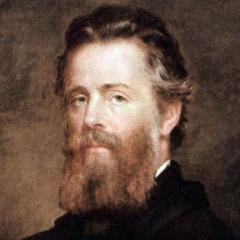
0 quotes

Benito Cereno

A source page for quotes linked to Herman Melville.

0 quotes

Billy Budd

A source page for quotes linked to Herman Melville.

0 quotes

Encatadas

A source page for quotes linked to Herman Melville.

0 quotes

Redburn

A source page for quotes linked to Herman Melville.

0 quotes

Related Quotes

“Is it not curious, that so vast a being as the whale should see the world through so small an eye, and hear the thunder through an ear which is smaller than a hare's? But if his eyes were broad as the lens of Herschel's great telescope; and his ears capacious as the porches of cathedrals; would that make him any longer of sight, or sharper of hearing? Not at all.—Why then do you try to "enlarge" your mind? Subtilize it”

“Natural Depravity: a depravity according to nature." A definition which tho' savoring of Calvinism, by no means involves Calvin's dogmas as to total mankind. Evidently its intent makes it applicable but to individuals. Not many are the examples of this depravity which the gallows and jail supply. At any rate for notable instances, since these have no vulgar alloy of the brute in them, but invariably are dominated by intellectuality, one must go elsewhere. Civilization, especially if of the austerer sort, is auspicious to it. It folds itself in the mantle of respectability. It has its certain negative virtues serving as silent auxiliaries.”

“But what is worship? thought I. Do you suppose now, Ishmael, that the magnanimous God of heaven and earth—pagans and all included—can possibly be jealous of an insignificant bit of black wood? Impossible! But what is worship?—to do the will of God—that is worship. And what is the will of God?—to do to my fellow man what I would have my fellow man to do to me—that is the will of God.”

“So, therefore, that mortal man who hath more of joy than sorrow in him, that mortal man cannot be true--not true, or undeveloped. With books the same. The truest of all men was the Man of Sorrows, and the truest of all books is Solomon's, and Ecclesiastes is the fine hammered steel of woe. "All is vanity." ALL. This wilful world hath not got hold of unchristian Solomon's wisdom yet. But he who dodges hospitals and jails, and walks fast crossing graveyards, and would rather talk of operas than hell; call Cowper, Young, Pascal, Rousseau, poor devils all of sick men; and throughout a care-free lifetime swears by Rabelais as passing wise, and therefore jolly; not that man is fitted to sit down on tomb-stones, and break the green damp mould with unfathomably wondrous Solomon.”

“The sea had jeeringly kept his finite body up, but drowned the infinite of his soul. Not drowned entirely, though. Rather carried down alive to wondrous depths, where strange shapes of the unwarped primal world glided to and fro before his passive eyes; and the miser-merman, Wisdom, revealed his hoarded heaps; and among the joyous, heartless, ever-juvenile eternities, Pip saw the multitudinous, God-omnipresent, coral insects, that out of the firmament of waters heaved the colossal orbs. He saw God’s foot upon the treadle of the loom, and spoke it; and therefore his shipmates called him mad. So man’s insanity is heaven’s sense; and wandering from all mortal reason, man comes at last to that celestial thought, which, to reason, is absurd and frantic; and weal or woe, feels then uncompromised, indifferent as his God.”

“Yea, more than equally, thought Ahab; since both the ancestry and posterity of Grief go further than the ancestry and posterity of Joy. For, not to hint of this: that it is an inference from certain canonic teachings, that while some natural enjoyments here shall have no children born to them for the other world, but, on the contrary, shall be followed by the joy-childlessness of all hell's despair; whereas, some guilty mortal miseries shall still fertilely beget to themselves an eternally progressive progeny of griefs beyond the grave; not at all to hint of this, there still seems an inequality in the deeper analysis of the thing. For, thought Ahab, while even the highest earthly felicities ever have a certain unsignifying pettiness lurking in them, but, at bottom, all heart-woes, a mystic significance, and, in some men, an archangelic grandeur; so do their diligent tracings-out not belie the obvious deduction. To trail the genealogies of these high mortal miseries, carries us at last among the sourceless primogenitures of the gods; so that, in the face of all the glad, hay-making suns, and soft-cymballing, round harvest-moons, we must needs give in to this: that the gods themselves are not for ever glad. The ineffaceable, sad birth-mark in the brow of man, is but the stamp of sorrow in the signers.”

“Though I cannot tell why it was exactly that those stage managers, the Fates, put me down for this shabby part of a whaling voyage, when others were set down for magnificent parts in high tragedies, and short and easy parts in genteel comedies, and jolly parts in faces—though I cannot tell why this was exactly; yet, now that I recall all the circumstances, I think I can see a little into the springs and motives which being cunningly presented to me under various disguises, induced me to set about performing the part I did, besides cajoling me into the delusion that it was a choice resulting from my own unbiased freewill and discriminating judgment.”

“What is it, what nameless, inscrutable, unearthly thing is it; what cozening, hidden lord and master, and cruel, remorseless emperor commands me; that against all natural lovings and longings, I so keep pushing, and crowding, and jamming myself on all the time; recklessly making me ready to do what in my own proper, natural heart, I durst not so much as dare? Is Ahab, Ahab? Is it I, God, or who, that lifts this arm? But if the great sun move not of himself; but is as an errand-boy in heaven; nor one single star can revolve, but by some invisible power; how then can this one small heart beat; this one small brain think thoughts; unless God does that beating, does that thinking, does that living, and not I. By heaven, man, we are turned round and round in this world, like yonder windlass, and Fate is the handspike. And all the time, lo! that smiling sky, and this unsounded sea! Look! see yon Albicore! who put it into him to chase and fang that flying-fish? Where do murderers go, man! Who's to doom, when the judge himself is dragged to the bar? But it is a mild, mild wind, and a mild looking sky; and the air smells now, as if it blew from a far-away meadow; they have been making hay somewhere under the slopes of the Andes, Starbuck, and the mowers are sleeping among the new-mown hay. Sleeping? Aye, toil we how we may, we all sleep at last on the field. Sleep? Aye, and rust amid greenness; as last year's scythes flung down, and left in the half-cut swaths--Starbuck!”

“What is it, what nameless, inscrutable, unearthly thing is it; what cozening, hidden lord and master, and cruel, remorseless emperor commands me; that against all natural lovings and longings, I so keep pushing, and crowding, and jamming myself on all the time; recklessly making me ready to do what in my own proper, natural heart, I durst not so much as dare? Is Ahab, Ahab? Is it I, God, or who, that lifts this arm? But if the great sun move not of himself; but is as an errand-boy in heaven; nor one single star can revolve, but by some invisible power; how then can this one small heart beat; this one small brain think thoughts; unless God does that beating, does that thinking, does that living, and not I. By heaven, man, we are turned round and round in this world, like yonder windlass, and Fate is the handspike. And all the time, lo! that smiling sky, and this unsounded sea! Look! see yon Albicore! who put it into him to chase and fang that flying-fish? Where do murderers go, man! Who's to doom, when the judge himself is dragged to the bar? But it is a mild, mild wind, and a mild looking sky; and the air smells now, as if it blew from a far-away meadow; they have been making hay somewhere under the slopes of the Andes, Starbuck, and the mowers are sleeping among the new-mown hay. Sleeping? Aye, toil we how we may, we all sleep at last on the field. Sleep? Aye, and rust amid greenness; as last year's scythes flung down, and left in the half-cut swaths--Starbuck!" But blanched to a corpse's hue with despair, the Mate had stolen away. Ahab crossed the deck to gaze over on the other side; but started at two reflected, fixed eyes in the water there. Fedallah was motionlessly leaning over the same rail.”

“I turn my body from the sun. What ho, Tashtego! let me hear thy hammer. Oh! ye three unsurrendered spires of mine; thou uncracked keel; and only god-bullied hull; thou firm deck, and haughty helm, and Pole-pointed prow,--death-glorious ship! must ye then perish, and without me? Am I cut off from the last fond pride of meanest shipwrecked captains? Oh, lonely death on lonely life! Oh, now I feel my topmost greatness lies in my topmost grief. Ho, ho! from all your furthest bounds, pour ye now in, ye bold billows of my whole foregone life, and top this one piled comber of my death! Towards thee I roll, thou all-destroying but unconquering whale; to the last I grapple with thee; from hell's heart I stab at thee; for hate's sake I spit my last breath at thee. Sink all coffins and all hearses to one common pool! and since neither can be mine, let me then tow to pieces, while still chasing thee, though tied to thee, thou damned whale! THUS, I give up the spear!”

“The ship! The hearse!--the second hearse!" cried Ahab from the boat; "its wood could only be American!" Diving beneath the settling ship, the whale ran quivering along its keel; but turning under water, swiftly shot to the surface again, far off the other bow, but within a few yards of Ahab's boat, where, for a time, he lay quiescent. "I turn my body from the sun. What ho, Tashtego! let me hear thy hammer. Oh! ye three unsurrendered spires of mine; thou uncracked keel; and only god-bullied hull; thou firm deck, and haughty helm, and Pole-pointed prow,--death-glorious ship! must ye then perish, and without me? Am I cut off from the last fond pride of meanest shipwrecked captains? Oh, lonely death on lonely life! Oh, now I feel my topmost greatness lies in my topmost grief. Ho, ho! from all your furthest bounds, pour ye now in, ye bold billows of my whole foregone life, and top this one piled comber of my death! Towards thee I roll, thou all-destroying but unconquering whale; to the last I grapple with thee; from hell's heart I stab at thee; for hate's sake I spit my last breath at thee. Sink all coffins and all hearses to one common pool! and since neither can be mine, let me then tow to pieces, while still chasing thee, though tied to thee, thou damned whale! THUS, I give up the spear!”

“Through the breach, they heard the waters pour, as mountain torrents down a flume. "The ship! The hearse!--the second hearse!" cried Ahab from the boat; "its wood could only be American!" Diving beneath the settling ship, the whale ran quivering along its keel; but turning under water, swiftly shot to the surface again, far off the other bow, but within a few yards of Ahab's boat, where, for a time, he lay quiescent. "I turn my body from the sun. What ho, Tashtego! let me hear thy hammer. Oh! ye three unsurrendered spires of mine; thou uncracked keel; and only god-bullied hull; thou firm deck, and haughty helm, and Pole-pointed prow,--death-glorious ship! must ye then perish, and without me? Am I cut off from the last fond pride of meanest shipwrecked captains? Oh, lonely death on lonely life! Oh, now I feel my topmost greatness lies in my topmost grief. Ho, ho! from all your furthest bounds, pour ye now in, ye bold billows of my whole foregone life, and top this one piled comber of my death! Towards thee I roll, thou all-destroying but unconquering whale; to the last I grapple with thee; from hell's heart I stab at thee; for hate's sake I spit my last breath at thee. Sink all coffins and all hearses to one common pool! and since neither can be mine, let me then tow to pieces, while still chasing thee, though tied to thee, thou damned whale! THUS, I give up the spear!" The harpoon was darted; the stricken whale flew forward; with igniting velocity the line ran through the grooves;--ran foul. Ahab stooped to clear it; he did clear it; but the flying turn caught him round the neck, and voicelessly as Turkish mutes bowstring their victim, he was shot out of the boat, ere the crew knew he was gone. Next instant, the heavy eye-splice in the rope's final end flew out of the stark-empty tub, knocked down an oarsman, and smiting the sea, disappeared in its depths. For an instant, the tranced boat's crew stood still; then turned. "The ship? Great God, where is the ship?" Soon they through dim, bewildering mediums saw her sidelong fading phantom, as in the gaseous Fata Morgana; only the uppermost masts out of water; while fixed by infatuation, or fidelity, or fate, to their once lofty perches, the pagan harpooneers still maintained their sinking lookouts on the sea. And now, concentric circles seized the lone boat itself, and all its crew, and each floating oar, and every lance-pole, and spinning, animate and inanimate, all round and round in one vortex, carried the smallest chip of the Pequod out of sight. But as the last whelmings intermixingly poured themselves over the sunken head of the Indian at the mainmast, leaving a few inches of the erect spar yet visible, together with long streaming yards of the flag, which calmly undulated, with ironical coincidings, over the destroying billows they almost touched;--at that instant, a red arm and a hammer hovered backwardly uplifted in the open air, in the act of nailing the flag faster and yet faster to the subsiding spar. A sky-hawk that tauntingly had followed the main-truck downwards from its natural home among the stars, pecking at the flag, and incommoding Tashtego there; this bird now chanced to intercept its broad fluttering wing between the hammer and the wood; and simultaneously feeling that etherial thrill, the submerged savage beneath, in his death-gasp, kept his hammer frozen there; and so the bird of heaven, with archangelic shrieks, and his imperial beak thrust upwards, and his whole captive form folded in the flag of Ahab, went down with his ship, which, like Satan, would not sink to hell till she had dragged a living part of heaven along with her, and helmeted herself with it. Now small fowls flew screaming over the yet yawning gulf; a sullen white surf beat against its steep sides; then all collapsed, and the great shroud of the sea rolled on as it rolled five thousand years ago.”

“The frenzies of the chase had by this time worked them bubblingly up, like old wine worked anew. Whatever pale fears and forebodings some of them might have felt before; these were not only now kept out of sight through the growing awe of Ahab, but they were broken up, and on all sides routed, as timid prairie hares that scatter before the bounding bison. The hand of Fate had snatched all their souls; and by the stirring perils of the previous day; the rack of the past night's suspense; the fixed, unfearing, blind, reckless way in which their wild craft went plunging towards its flying mark; by all these things, their hearts were bowled along. The wind that made great bellies of their sails, and rushed the vessel on by arms invisible as irresistible; this seemed the symbol of that unseen agency which so enslaved them to the race. They were one man, not thirty. For as the one ship that held them all; though it was put together of all contrasting things — oak, and maple, and pine wood; iron, and pitch, and hemp — yet all these ran into each other in the one concrete hull, which shot on its way, both balanced and directed by the long central keel; even so, all the individualities of the crew, this man's valor, that man's fear; guilt and guiltiness, all varieties were welded into oneness, and were all directed to that fatal goal which Ahab their one lord and keel did point to. The rigging lived. The mast-heads, like the tops of tall palms, were outspreadingly tufted with arms and legs. Clinging to a spar with one hand, some reached forth the other with impatient wavings; others, shading their eyes from the vivid sunlight, sat far out on the rocking yards; all the spars in full bearing of mortals, ready and ripe for their fate. Ah! how they still strove through that infinite blueness to seek out the thing that might destroy them!”

“However, a good laugh is a mighty good thing , and rather too scarce a good thing; the more's the pity. So, if any one man, in his own proper person, afford stuff for a good joke to anybody, let him not be backward, but let him cheerfully allow himself to spend and be spent in that way. And the man that has anything bountifully laughable about him, be sure there is more in that man than you perhaps think.”

“But I now leave my cetological System standing thus unfinished, even as the great Cathedral of Cologne was left, with the crane still standing upon the top of the uncompleted tower. For small erections may be finished by their first architects; grand ones, true ones, ever leave the copestone to posterity. God keep me from ever completing anything. This whole book is but a draught—nay, but the draught of a draught. Oh, Time, Strength, Cash, and Patience!”

“It was a black and hooded head; and hanging there in the midst of so intense a calm, it seemed the Sphynx’s in the desert. “Speak, thou vast and venerable head,” muttered Ahab, “which, though ungarnished with a beard, yet here and there lookest hoary with mosses; speak, mighty head, and tell us the secret thing that is in thee. Of all divers, thou hast dived the deepest. That head upon which the upper sun now gleams, has moved amid this world’s foundations. Where unrecorded names and navies rust, and untold hopes and anchors rot; where in her murderous hold this frigate earth is ballasted with bones of millions of the drowned; there, in that awful water-land, there was thy most familiar home. Thou hast been where bell or diver never went; hast slept by many a sailor’s side, where sleepless mothers would give their lives to lay them down. Thou saw’st the locked lovers when leaping from their flaming ship; heart to heart they sank beneath the exulting wave; true to each other, when heaven seemed false to them. Thou saw’st the murdered mate when tossed by pirates from the midnight deck; for hours he fell into the deeper midnight of the insatiate maw; and his murderers still sailed on unharmed—while swift lightnings shivered the neighboring ship that would have borne a righteous husband to outstretched, longing arms. O head! thou hast seen enough to split the planets and make an infidel of Abraham, and not one syllable is thine!”

“So true it is, and so terrible too, that up to a certain point the thought or sight of misery enlists our best affections; but, in certain special cases, beyond that point it does not. They err who would assert that invariably this is owing to the inherent selfishness of the human heart. It rather proceeds from a certain hopelessness of remedying excessive and organic ill. To a sensitive being, pity is not seldom pain. And when at last it is perceived that such pity cannot lead to effectual succor, common sense bids the soul rid of it.”

“With any other man I should have flown outright into a dreadful passion, scorned all further words, and thrust him ignominiously from my presence. But there was something about Bartleby that not only strangely disarmed me, but in a wonderful manner touched and disconcerted me”