Quotessence
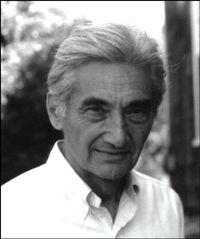
Home / Authors / Howard Zinn
Howard Zinn

Howard Zinn Quotes

Historian

Filter quotes by topic

Famous Howard Zinn Quotes

“Against the claims of a violent "human nature" there is enormous historical evidence that people, when free of a manufactured nationalist or religious hysteria, are more inclined to be compassionate than cruel. When citizens have an opportunity to learn of vicious acts committed by their own governments, they react with indignation and protest. So long as atrocities remain remote, abstract, they will be tolerated, even by decent people.”

“The argument that there are just wars often rests on the social system of the nation engaging in war. It is supposed that if a ‘liberal’ state is at war with a ‘totalitarian’ state, then the war is justified. The beneficent nature of a government was assumed to give rightness to the wars it wages. ...Woodrow Wilson and Franklin Roosevelt were liberals, which gave credence to their words exalting the two world wars, just as the liberalism of Truman made going into Korea more acceptable and the idealism of Kennedy’s New Frontier and Johnson’s Great Society gave an early glow of righteousness to the war in Vietnam. What the experience of Athens suggests is that a nation may be relatively liberal at home and yet totally ruthless abroad. Indeed, it may more easily enlist its population in cruelty to others by pointing to the advantages at home. An entire nation is made into mercenaries, being paid with a bit of democracy at home for participating in the destruction of life abroad.”

“In Guatemala, in 1954, a legally elected government was overthrown by an invasion force of mercenaries trained by the CIA at military bases in Honduras and Nicaragua and supported by four American fighter planes flown by American pilots. The invasion put into power Colonel Carlos Castillo Armas, who had at one time received military training at Fort Leavenworth, Kansas. The government that the United States overthrew was the most democratic Guatemala had ever had. The President, Jacobo Arbenz, was a left-of-center Socialist; four of the fifty-six seats in the Congress were held by Communists. What was most unsettling to American business interests was that Arbenz had expropriated 234,000 acres of land owned by United Fruit, offering compensation that United Fruit called "unacceptable." Armas, in power, gave the land back to United Fruit, abolished the tax on interest and dividends to foreign investors, eliminated the secret ballot, and jailed thousands of political critics.”

“When Chief Black Hawk was defeated and captured in 1832, he made a surrender speech: I fought hard. But your guns were well aimed. The bullets flew like birds in the air, and whizzed by our ears like the wind through the trees in the winter. My warriors fell around me. . . The sun rose dim on us in the morning, and at night it sunk in a dark cloud, and looked like a ball of fire. That was the last sun that shone on Black Hawk. . . He is now a prisoner to the white men. . . He has done nothing for which an Indian ought to be ashamed. He has fought for his countrymen, the squaws and papooses, against white men, who came year after year, to cheat them and take away their lands. You know the cause of out making war. It is known to all white men. They ought to be ashamed of it. Indians are not deceitful. The white men speak bad of the Indian and look at him spitefully. But the Indian does not tell lies. Indians do not steal.”

“When the Democrats are attacked for [inciting class warfare] they shrink back. They don't say what obviously should be said, "Yes, there is class warfare. There has always been class warfare in this country." The reason the Democrats shrink back is because the Democrats and the Republicans are on the same side of the class war. They have slightly different takes. The Democrats are part of the upper class that is more willing to make concessions to the lower class in order to maintain their power.”

“Indeed, it is impossible to be neutral. In a world already moving in certain directions, where wealth and power are already distributed in certain ways, neutrality means accepting the way things are now. It is a world of clashing interests – war against peace, nationalism against internationalism, equality against greed, and democracy against elitism – and it seems to me both impossible and undesirable to be neutral in those conflicts.”

“I came to the conclusion that war was an unacceptable way of solving whatever problems there were in the world--that there would be problems of tyranny, of injustice, of nations crossing frontiers and that injustice and tyranny should not be tolerated and should be fought and resisted, but the one thing that must not be used to solve that problem is war. Because war is inevitably the indiscriminate killing of large numbers of people. And that fact overwhelms whatever moral cause is somewhere buried in the history of that war.”

“What happened in World War II was what happened in war generally, and that was whatever the initiating cause, and however clear the moral reason is for the war in which one side looks better than the other, by the time the war ends both sides have been engaged in evil.”

“There is the past and its continuing horrors: violence, war, prejudices against those who are different, outrageous monopolization of the good earth's wealth by a few, political power in the hands of liars and murderers, the building of prisons instead of schools, the poisoning of the press and the entire culture by money. It is easy to become discouraged observing this, especially since this is what the press and television insist that we look at, and nothing more.”

“Not only did waging war against Hitler fail to save the Jews, it may be that the war itself brought on the Final Solution of genocide. This is not to remove the responsibility from Hitler and the Nazis, but there is much evidence that Germany's anti-Semitic actions, cruel as they were, would not have turned to mass murder were it not for the psychic distortions of war, acting on already distorted minds. Hitler's early aim was forced emigration, not extermination, but the frenzy of it created an atmosphere in which the policy turned to genocide.”

“I did not know much history when I became a bombardier in the U.S. Air Force in World War II. Only after the War did I see that we, like the Nazis, had committed atrocities... Hiroshima, Nagasaki, Dresden, my own bombing missions. And when I studied history after the War, I learned from reading on my own, not from my university classes, about the history of U.S. expansion and imperialism.”

“Richard Nixon was not the lesser evil, he was the greater evil, but in his administration the war was finally brought to an end, because he had to deal with the power of the anti-war movement as well as the power of the Vietnamese movement. I will vote, but always with a caution that voting is not crucial, and organizing is the important thing.”

“If we trace origins of anarchism in the United States, then probably Henry David Thoreau is the closest you can come to an early American anarchist. You do not really encounter anarchism until after the Civil War, when you have European anarchists, especially German anarchists, coming to the United States. They actually begin to organize. The first time that anarchism has an organized force and becomes publicly known in the United States is in Chicago at the time of Haymarket Affair.”

“We need to organize ourselves and protest against existing order - against war, against economic and sexual exploitation, against racism, etc. But to organize ourselves in such a way that means correspond to the ends, and to organize ourselves in such a way as to create kind of human relationship that should exist in future society. That would mean to organize ourselves without centralize authority, without charismatic leader, in a way that represents in miniature the ideal of the future egalitarian society.”

“Beyond the futility of armed force, and ultimately more important, is the fact that war in our time inevitably results in the indiscriminate killing of large numbers of people. To put it more bluntly, war is terrorism. That is why a 'war on terrorism' is a contradiction in terms.”

“The United States government was proud that, although perhaps 100,000 Iraqis had died in the Gulf War of 1991, there were only 48 American battle casualties. What it has concealed from the public is that 206,000 veterans of that war filed claims with the VA for injuries and illnesses. In the years since that war, 8,300 veterans have died, and 160,000 claims for disability have been recognized by the VA.”

“The film's title You Can't Be Neutral on a Moving Train. comes from something I used to say in teaching my students "This is not going to be a neutral class." The world is already moving in certain directions and wars are going on and children are going hungry. Terrible things are happening. And so to be neutral in a situation like this is to collaborate with whatever is going on. And I don't want to collaborate with the world as it is. I want to intrude myself. I want to participate in changing the direction of things. So that's the origin of the title.”

“I began to think of war, even so-called "good wars" like World War II, as corrupting everybody. Violence begetting violence. The good guys beginning to act like the bad guys. And when I studied the history of wars, it seemed to me that that was the case. Athens vs. Sparta in the Peloponnesian War. The Athenians presumably the democratic state. The Spartans the totalitarian state. But as the war went on, the Athenians began to act like the Spartans. They began committing atrocities and cruelties. So I saw this as a characteristic of war, even so-called "good wars."”

“Here's a president who gets 47 or 48 percent of the vote and takes 100 percent of the power, as if he had a mandate. He snuck into the presidency with the aid of political cronies, his father's having appointed members of the Supreme Court, his brother governor of Florida. And then he takes total control. And this is a president who seems to react to everything with force. Now we've had two wars. We've killed a lot of people. For anybody who is interested in not being a warlike nation anymore, and becoming a nation respected in the world, it becomes important to defeat Bush.”

“The problem of giving health care to everybody cannot be solved so long as we're spending huge sums of money for war. Already we have a very wasteful healthcare system, the most wasteful healthcare system in the world. I mean, we spend the most money and still have 40 million people without insurance. Compare us to Cuba. Cuba is our enemy, run by a dictator, Fidel Castro. But people in Cuba get health care at least equal to that of the United States - with very scarce resources. So I think this issue is the most important domestic issue.”

“Though the Americans can be fooled, as they have been, and they can be propagandized, as they have been... But, as Lincoln said, "You can fool all of the people some of the time, and some of the people all of the time. But you can't fool all of the people all of the time." And so hope lies in the fact that little by little, even if the American people can be fooled, even if they continue to be fooled in the 2004 presidential election, they will gradually learn, as they have learned - for instance, in the Vietnam War and turned against the Vietnam War.”

“Civil disobedience is not our problem. Our problem is civil obedience. Our problem is that people all over the world have obeyed the dictates of leaders…and millions have been killed because of this obedience…Our problem is that people are obedient allover the world in the face of poverty and starvation and stupidity, and war, and cruelty. Our problem is that people are obedient while the jails are full of petty thieves… (and) the grand thieves are running the country. That’s our problem.”

“I see this as the central issue of our time: how to find a substitute for war in human ingenuity, imagination, courage, sacrifice, patience... War is not inevitable, however persistent it is, however long a history it has in human affairs. It does not come out of some instinctive human need. It is manufactured by political leaders, who then must make a tremendous effort--by enticement, by propaganda, by coercion--to mobilize a normally reluctant population to go to war.”

“With the indiscriminate nature of modern military technology (no such thing as a "smart bomb," it turns out) all wars are wars against civilians, and are therefore inherently immoral. This is true even when a war is considered "just," because it is fought against a tyrant, against an aggressor, to correct a stolen boundary.”

“We cannot be secure by limiting our liberties, as some of our political leaders are demanding, but only by expanding themWe should take our example not from the military and political leaders shouting 'retaliate' and 'war' but from the doctors and nurses and firemen and policemen who have been saving lives in the midst of mayhem, whose first thoughts are not violence, but healing, and not vengeance, but compassion.”