Quotessence
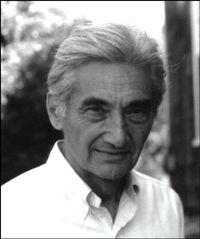
Home / Authors / Howard Zinn
Howard Zinn

Howard Zinn Quotes

Historian

Filter quotes by topic

Famous Howard Zinn Quotes

“What is called “apathy” is, I believe, a feeling of helplessness on the part of the ordinary citizen, a feeling of impotence in the face of enormous power. It’s not that people are apathetic; they do care about what is going on, but don’t know what to do about it, so they do nothing, and appear to be indifferent.”

“Scholars, who pride themselves on speaking their minds, often engage in a form of self-censorship which is called "realism." To be "realistic" in dealing with a problem is to work only among the alternatives which the most powerful in society put forth. It is as if we are all confined to a, b, c, or d in the multiple choice test, when we know there is another possible answer. American society, although it has more freedom of expression than most societies in the world, thus sets limits beyond which respectable people are not supposed to think or speak.”

“It's not right to respond to terrorism by terrorizing other people. And furthermore, it's not going to help. Then you might say, "Yes, it's terrorizing people, but it's worth doing because it will end terrorism." But how much common sense does it take to know that you cannot end terrorism by indiscriminately dropping bombs?”

“I did not know much history when I became a bombardier in the U.S. Air Force in World War II. Only after the War did I see that we, like the Nazis, had committed atrocities... Hiroshima, Nagasaki, Dresden, my own bombing missions. And when I studied history after the War, I learned from reading on my own, not from my university classes, about the history of U.S. expansion and imperialism.”

“I will try not to overlook the cruelties that victims inflict on one another as they are jammed together in the boxcars of the system. I don’t want to romanticize them. But I do remember (in rough paraphrase) a statement I once read: “The cry of the poor is not always just, but if you don’t listen to it, you will never know what justice is.”

“I had always insisted that a good education was a synthesis of book learning and involvement in social action, that each enriched the other. I wanted my students to know that the accumulation of knowledge, while fascinating in itself, is not sufficient as long as so many people in the world have no opportunity to experience that fascination.”