Quotessence
Home / Authors / Howard Zinn
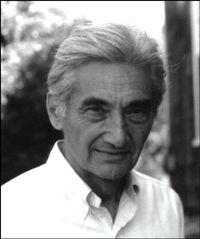
Howard Zinn

Howard Zinn Quotes

Historian

Filter quotes by topic

Famous Howard Zinn Quotes

“Indeed, it is impossible to be neutral. In a world already moving in certain directions, where wealth and power are already distributed in certain ways, neutrality means accepting the way things are now. It is a world of clashing interests – war against peace, nationalism against internationalism, equality against greed, and democracy against elitism – and it seems to me both impossible and undesirable to be neutral in those conflicts.”

“Scholars, who pride themselves on speaking their minds, often engage in a form of self-censorship which is called "realism." To be "realistic" in dealing with a problem is to work only among the alternatives which the most powerful in society put forth. It is as if we are all confined to a, b, c, or d in the multiple choice test, when we know there is another possible answer. American society, although it has more freedom of expression than most societies in the world, thus sets limits beyond which respectable people are not supposed to think or speak.”

“I came to the conclusion that war was an unacceptable way of solving whatever problems there were in the world--that there would be problems of tyranny, of injustice, of nations crossing frontiers and that injustice and tyranny should not be tolerated and should be fought and resisted, but the one thing that must not be used to solve that problem is war. Because war is inevitably the indiscriminate killing of large numbers of people. And that fact overwhelms whatever moral cause is somewhere buried in the history of that war.”

“What happened in World War II was what happened in war generally, and that was whatever the initiating cause, and however clear the moral reason is for the war in which one side looks better than the other, by the time the war ends both sides have been engaged in evil.”

“Behind the deceptive words designed to entice people into supporting violence -- words like democracy, freedom, self-defense, national security -- there is the reality of enormous wealth in the hands of a few, while billions of people in the world are hungry, sick, homeless.”

“I start from the supposition that the world is topsyturvy, that things are all wrong, that the wrong people are in jail and the wrong people are out of jail, that the wrong people are in power and the wrong people are out of power, that the wealth is distributed in this country and the world in such a way as not simply to require small reform but to require a drastic reallocation of wealth. I start from the supposition that we don't have to say too much about this because all we have to do is think about the state of the world today and realize that things are all upside down.”

“We are not hated because we practice democracy, value freedom, or uphold human rights. We are hated because our government denies these things to people in Third World countries whose resources are coveted by multinational corporations. That hatred we have sown has come back to haunt us in the form of terrorism....”

“I did not know much history when I became a bombardier in the U.S. Air Force in World War II. Only after the War did I see that we, like the Nazis, had committed atrocities... Hiroshima, Nagasaki, Dresden, my own bombing missions. And when I studied history after the War, I learned from reading on my own, not from my university classes, about the history of U.S. expansion and imperialism.”

“There is a hard core of people in the United States who will not be moved, whatever facts you present, from their conviction that this nation means only to do good, and almost always does good, in the world, that it is the beacon of liberty and freedom.”

“I am totally confident not that the world will get better, but that we should not give up the game before all the cards have been played. The metaphor is deliberate; life is a gamble. Not to play is to foreclose any chance of winning. To play, to act, is to create at least a possibility of changing the world.”

“The film's title You Can't Be Neutral on a Moving Train. comes from something I used to say in teaching my students "This is not going to be a neutral class." The world is already moving in certain directions and wars are going on and children are going hungry. Terrible things are happening. And so to be neutral in a situation like this is to collaborate with whatever is going on. And I don't want to collaborate with the world as it is. I want to intrude myself. I want to participate in changing the direction of things. So that's the origin of the title.”

“I began to think of war, even so-called "good wars" like World War II, as corrupting everybody. Violence begetting violence. The good guys beginning to act like the bad guys. And when I studied the history of wars, it seemed to me that that was the case. Athens vs. Sparta in the Peloponnesian War. The Athenians presumably the democratic state. The Spartans the totalitarian state. But as the war went on, the Athenians began to act like the Spartans. They began committing atrocities and cruelties. So I saw this as a characteristic of war, even so-called "good wars."”

“Here's a president who gets 47 or 48 percent of the vote and takes 100 percent of the power, as if he had a mandate. He snuck into the presidency with the aid of political cronies, his father's having appointed members of the Supreme Court, his brother governor of Florida. And then he takes total control. And this is a president who seems to react to everything with force. Now we've had two wars. We've killed a lot of people. For anybody who is interested in not being a warlike nation anymore, and becoming a nation respected in the world, it becomes important to defeat Bush.”

“The problem of giving health care to everybody cannot be solved so long as we're spending huge sums of money for war. Already we have a very wasteful healthcare system, the most wasteful healthcare system in the world. I mean, we spend the most money and still have 40 million people without insurance. Compare us to Cuba. Cuba is our enemy, run by a dictator, Fidel Castro. But people in Cuba get health care at least equal to that of the United States - with very scarce resources. So I think this issue is the most important domestic issue.”

“Civil disobedience is not our problem. Our problem is civil obedience. Our problem is that people all over the world have obeyed the dictates of leaders…and millions have been killed because of this obedience…Our problem is that people are obedient allover the world in the face of poverty and starvation and stupidity, and war, and cruelty. Our problem is that people are obedient while the jails are full of petty thieves… (and) the grand thieves are running the country. That’s our problem.”

“The pretense in disputed elections is that the great conflict is between the two major parties. The reality is that there is a much bigger conflict that the two parties jointly wage against large numbers of Americans who are represented by neither party and against powerless millions around the world." (p. 65)”

“We don't have to engage in grand, heroic actions to participate in the process of change. Small acts, when multiplied by millions of people, can transform the world.”

“What most of us must be involved in--whether we teach or write, make films, write films, direct films, play music, act, whatever we do--has to not only make people feel good and inspired and at one with other people around them, but also has to educate a new generation to do this very modest thing: change the world.”

“The democratic principle, enunciated in the words of the Declaration of Independence, declared that government was secondary, that the people who established it were primary. Thus, the future of democracy depended on the people, and their growing consciousness of what was the decent way to relate to their fellow human beings all over the world.”

“There is a power that can be created out of pent-up indignation, courage, and the inspiration of a common cause, and that if enough people put their minds and bodies into that cause, they can win. It is a phenomenon recorded again and against in the history of popular movements against injustice all over the world.”

“I had always insisted that a good education was a synthesis of book learning and involvement in social action, that each enriched the other. I wanted my students to know that the accumulation of knowledge, while fascinating in itself, is not sufficient as long as so many people in the world have no opportunity to experience that fascination.”

“If patriotism were defined, not as blind obedience to government, not as submissive worship to flags and anthems, but rather as love of one's country, one's fellow citizens (all over the world), as loyalty to the principles of justice and democracy, then patriotism would require us to disobey our government, when it violated those principles.”

“Whenever I become discouraged (which is on alternate Tuesdays, between three and four) I lift my spirits by remembering: The artists are on our side! I mean those poets and painters, singers and musicians, novelists and playwrights who speak to the world in a way that is impervious to assault because they wage the battle for justice in a sphere which is unreachable by the dullness of ordinary political discourse.”

“The historian's distortion is more than technical, it is ideological; it is released into a world of contending interest, where any chosen emphasis supports some kind of interest, whether economic or political or racial, or national or sexual.”

“Nations are not communities and never have been. The history of any country, presented as the history of a family, conceals the fierce conflicts of interest (sometimes exploding, often repressed) between conquerors and conquered, masters and slaves, capitalists and workers, dominators and dominated in race and sex. And in such as world of conflict, a world of victims and executioners, it is the job of thinking people, as Albert Camus suggested, not to be on the side of the executioners.”

“What we choose to emphasize in this complex history will determine our lives. If we see only the worst, it destroys our capacity to do something. If we remember those times and places--and there are so many--where people have behaved magnificently, this gives us the energy to act, and at least the possibility of sending this spinning top of a world in a different direction.”