Quotessence
Home / Authors / James A. Michener Books
James A. Michener

James A. Michener Books

Author

Hawaii: A Novel

A source page for quotes linked to James A. Michener.
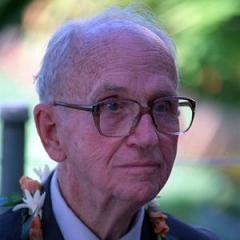
0 quotes

Poland: A Novel

A source page for quotes linked to James A. Michener.

0 quotes

Space: A Novel

A source page for quotes linked to James A. Michener.

0 quotes

Texas: A Novel

A source page for quotes linked to James A. Michener.

0 quotes

Centennial

A source page for quotes linked to James A. Michener.

0 quotes

Chesapeake

A source page for quotes linked to James A. Michener.

0 quotes

SPACE

A source page for quotes linked to James A. Michener.

0 quotes

The Novel

A source page for quotes linked to James A. Michener.

0 quotes

The Source

A source page for quotes linked to James A. Michener.

0 quotes

Related Quotes

“On the day I started my self-examination I asked myself these questions: ‘Am I interested in people? Do ideas excite me? Am I knowledgeable enough about novels to write one?’ I’m sure there were other questions, but I forget them now. My earliest memories involve being one among many other children, so I did not grow up with a self-centered view of myself, and because of my early jobs I knew a great deal about life. I had knocked about America as a lad, seen Europe in my college years and had been in the Pacific as an adult. But most important, I had always loved people, their histories, the prestigious things they did and said, and I especially relished their stories about themselves. I was so eager to collect information about everyone I met that I was practically a voyeur, and always it was their accounts that mattered, not mine, for I was a listener, not a talker. If the writing of fiction was the reporting of how human beings behaved, I was surely eligible, for I liked not only their stories, I liked them. As for ideas on which to base my writing, I was interested in everything—I was a kind of intellectual vacuum cleaner that picked up not only the oddest collection of facts imaginable but also solid material on the basic concerns of life.” —Chapter XI, “Intellectual Equipment”, page 297”

“I am a humanist because I think humanity can, with constant moral guidance, create reasonably decent societies. I think that young people who want to understand the world can profit from the works of Plato and Socrates, the behaviour of the three Thomases, Aquinas, More and Jefferson — the austere analyses of Immanuel Kant and the political leadership of Abraham Lincoln and Franklin Roosevelt. [The World Is My Home (1991)]”

“I decided (after listening to a "talk radio" commentator who abused, vilified, and scorned every noble cause to which I had devoted my entire life) that I was both a humanist and a liberal, each of the most dangerous and vilified type. I am a humanist because I think humanity can, with constant moral guidance, create a reasonably decent society. I am terrified of restrictive religious doctrine, having learned from history that when men who adhere to any form of it are in control, common men like me are in peril. I do not believe that pure reason can solve the perpetual problems unless it is modified by poetry and art and social vision. So I am a humanist. And if you want to charge me with being the most virulent kind—a secular humanist—I accept the accusation. [Interview, Parade magazine, 24 November 1991]”

“Because I am for them, Commander, because their ancestors stood up to that Nazi, Bligh, just like I would be for one little Jew, terrified and hungry, crossing the Pyrenees to get away to freedom from the Gestapo. One little Jew. You wouldn't have him in your house. He stinks, he has lice. But, you know what, Commander? I am for him, every time.” And he would punch me in the shoulder and lug his M-1 up onto the ridge, night after night.”

“No writer ever knows enough words but he doesn’t have to try to use all that he does know. Tests would show that I had an enormous vocabulary and through the years it must have grown, but I never had a desire to display it in the way that John Updike or William Buckley or William Safire do to such lovely and often surprising effect. They use words with such spectacular results; I try, not always successfully, to follow the pattern of Ernest Hemingway who achieved a striking style with short familiar words. I want to avoid calling attention to mine, judging them to be most effective as ancillaries to a sentence with a strong syntax. My approach has been more like that of Somerset Maugham, who late in life confessed that when he first thought of becoming a writer he started a small notebook in which he jotted down words that seemed unusually beautiful or exotic, such as chalcedony, for as a novice he believed that good writing consisted of liberally sprinkling his text with such words. But years later, when he was a successful writer, he chanced to review his list and found that he had never used even one of his beautiful collection. Good writing, for most of us, consists of trying to use ordinary words to achieve extraordinary results. I struggle to find the right word and keep always at hand the largest dictionary my workspace can hold, and I do believe I consult it at least six or seven times each working day, for English is a language that can never be mastered.* [*Even though I have studied English for decades I am constantly surprised to find new definitions I have not known: ‘panoply’ meaning ‘a full set of armor’, ‘calendar’ meaning ‘a printed index to a jumbled group of related manuscripts or papers’. —Chapter IX “Intellectual Equipment”, page 306”

“I suppose my attitude toward the creative process is much like that of Alexandre Dumas pere when he was approached by a young aspirant who boasted that he was going to write a novel much better than either “The Three Musketeers” or “The Count of Monte Cristo”. ‘Have you an attractive setting?’ the veteran writer asked politely, and the young man replied: ‘The greatest! Ominous islands. Gleaming castles. Wooded glens with gracious mansions.’ ‘Have you interesting characters?’ ‘Kings and princesses and dubious cardinals.’ ‘But have you a logical plot to tie this together?’ ‘A most ingenious one. Twists and turns that will bewilder and delight.’ Said Dumas: ‘Young man, you’re in excellent shape. Now all you need are two hundred thousand words, and they’d better be all the right ones.’” —Chapter IX, “Intellectual Equipment”, pages 311-312”

“I kept careful record of the impact of religion on the election in my county. The religious issue permeated every meeting I conducted. It influenced Republicans and Democrats alike. Ministers preached politics publicly and churches distributed the most vicious electioneering materials. Practically no one I met escaped the pressure of this overriding problem and both parties were ultimately forced to make their major calculations with the religious question a foremost consideration.”

“For all its enormous range of space, climate, and physical appearance, and for all the internal squabbles, contentions, and strivings, what you northerners never appreciate...is that Texas is so big that you can live your life within its limits and never give a damn about what anyone in Boston or San Francisco thinks.”

“I thought that perhaps the most creative mix for a society would be nine parts solid worker from institutions like MIT to one part poet from Marrakech, but in spite of the fact that I myself had been trained to be one of the solid workers, which meant that all of my sympathies lay with that group, I would not surrender the poet. The problem was to find him.”

“I would suppose I learned how to write when I was very young indeed. When I read a child's book about the Trojan War and decided that the Greeks were really a bunch of frauds with their tricky horses and the terrible things they did, stealing one another's wives, and so on, so at that very early age, I re-wrote the ending of the Iliad so that the Trojans won. And boy, Achilles and Ajax got what they wanted, believe me. And thereafter, at frequent intervals, I would write something. It was really quite extraordinary. Never of very high merit, but the daringness of it was.”

“Millions upon millions of years ago, when the continents were already formed and the principal features of the earth had been decided, there existed, then as now, one aspect of the world that dwarfed all other ... a mighty ocean, resting uneasily to the east of the largest continent, a restless ever-changing, gigantic body of water that would later be described as Pacific.”

“Not too many people work in a job where, waiting out there are three or four hundred people who are paid to tear apart what you've done. And often they are brighter than you are, or they know more about the subject than you do, or they wish they had written a book themselves, or done a lot better. Or they just don't like it! And you have to live with it.”